Mountain West Jetting
Mountain West logoMountain West Hydro Jetting & Sewer Maintenance LLC

SEWER CAMERA INSPECTION NEAR ME: WHAT IT SHOWS, WHEN YOU NEED ONE, AND WHAT IT COSTS

Blog Article

Story by Mountain West Hydro JettingPublished June 18, 2026Sewer Camera InspectionServing Northern Utah and the Salt Lake corridor

Sewer Camera Inspection Near Me: What It Shows, When You Need One, and What It Costs

A sewer camera inspection is the most underused and most valuable service in residential drain and sewer work. It is the only way to see what is actually happening inside your sewer line — pipe material, condition, blockage type, root entry points, grade problems, and structural damage. Every other decision — whether to clean, how often to maintain, whether to repair or replace — is a guess without it. This article covers what the inspection shows, when you need one, what the process looks like, and what affects the cost.

Start Here

Most homeowners never see the inside of their sewer line. They find out it has a problem when a drain backs up, and they find out what kind of problem when a technician tells them — sometimes without any camera evidence at all.

What This Article Helps You Do

  • Understand what a sewer camera inspection shows and why it matters
  • Determine whether your situation calls for a standalone inspection
  • Know what happens during the visit and what you should see on screen
  • Understand what changes the price and how to evaluate what you are paying for

Quick Takeaway

A sewer camera inspection is a 15- to 30-minute diagnostic that shows you the inside of your sewer line on a live screen. It identifies pipe material, damage type, damage location, root intrusion, grease buildup, bellies, offsets, and structural condition. It is worth paying for whenever the alternative is guessing — at the cause of a backup, at the right maintenance schedule, at whether a line needs repair, or at the condition of a line you are about to buy. Cost varies by access, line length, and whether cleaning is needed first, but a standalone inspection is almost always less expensive than a single emergency service call — and it prevents the emergency call.

Sewer Camera Inspection

Most homeowners never see the inside of their sewer line. They find out it has a problem when a drain backs up, and they find out what kind of problem when a technician tells them — sometimes without any camera evidence at all.

A camera inspection changes that. In 15 to 30 minutes, you see every foot of your sewer line on a live screen. You see the pipe material, the condition of the joints, whether roots have entered, whether grease is coating the walls, whether the grade is correct, and whether the pipe has any structural damage. That information is what every other decision is built on — cleaning schedule, maintenance interval, repair method, repair vs. replacement.

It is also the single best protection against being told your line needs work it does not need. When you have seen the footage yourself, no one can describe a problem that is not there.

What Changes The Number

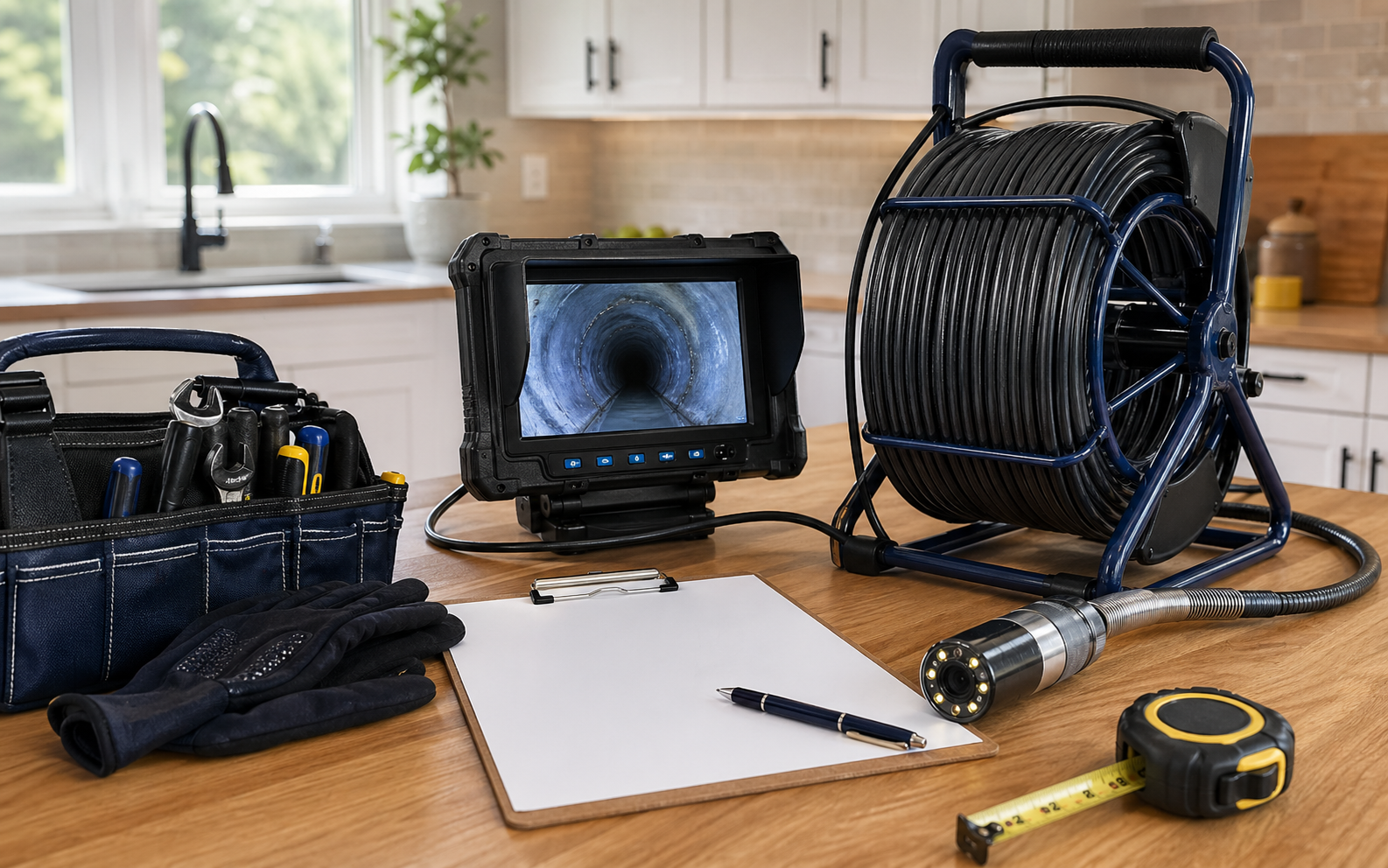
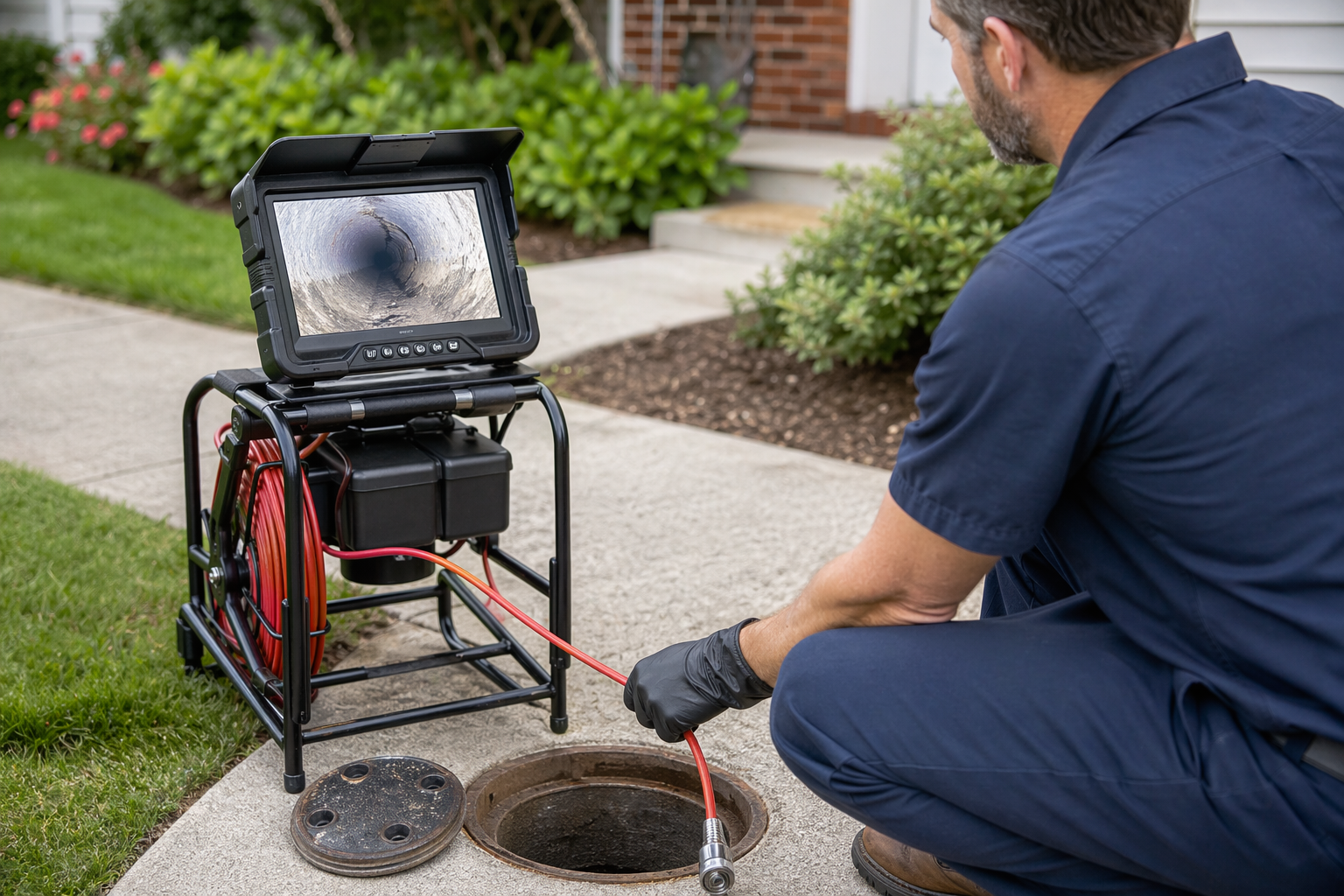
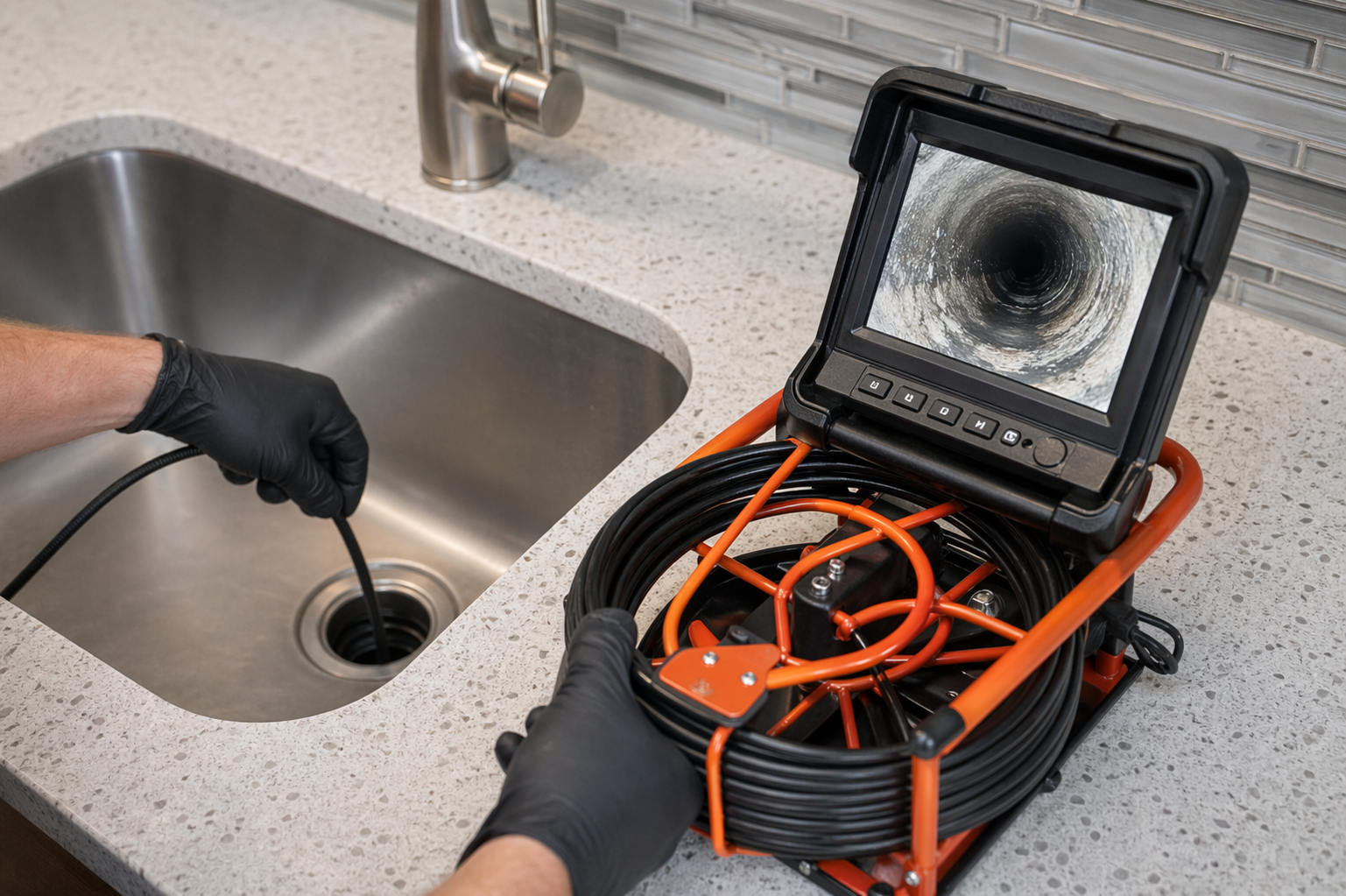
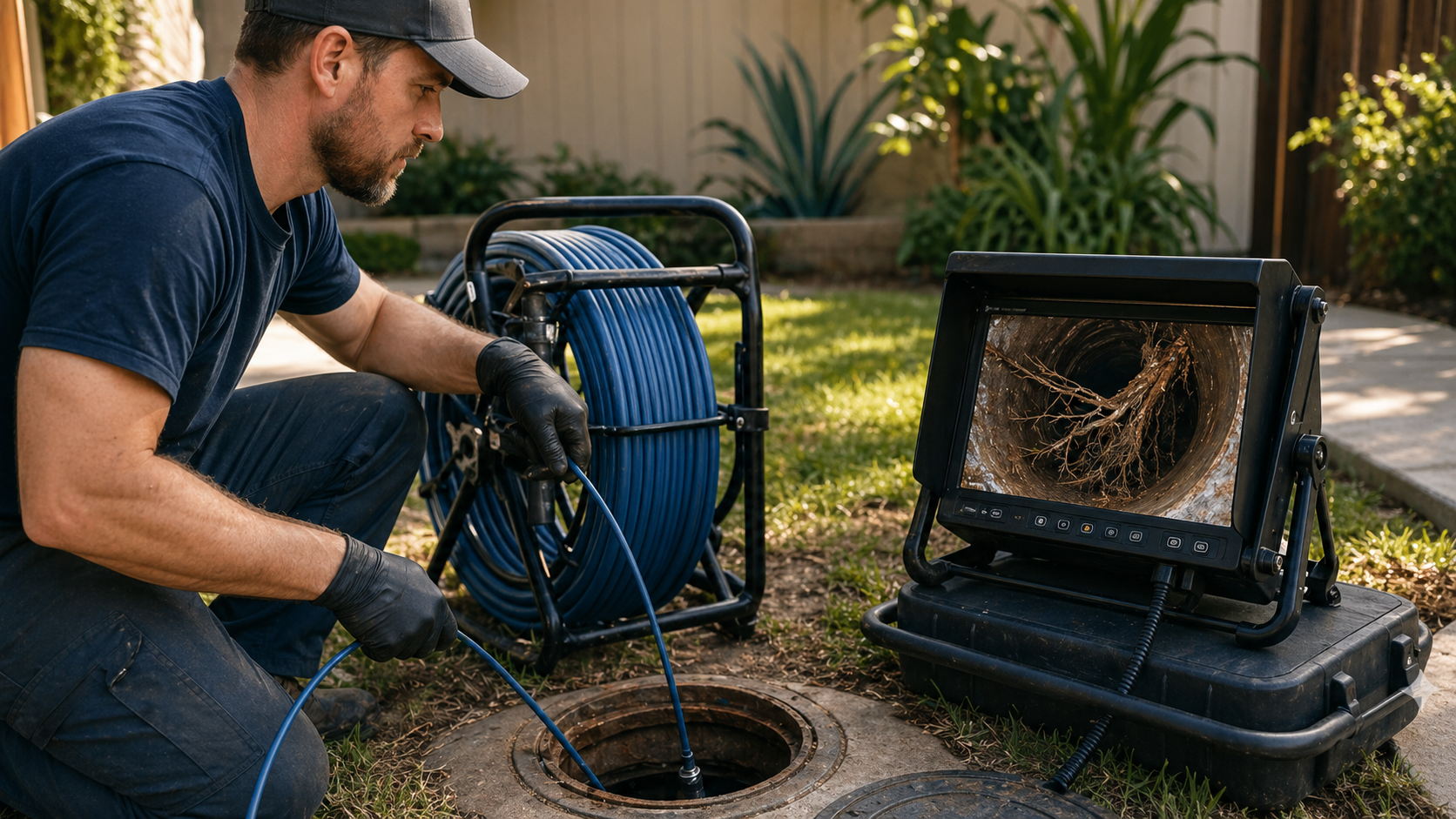
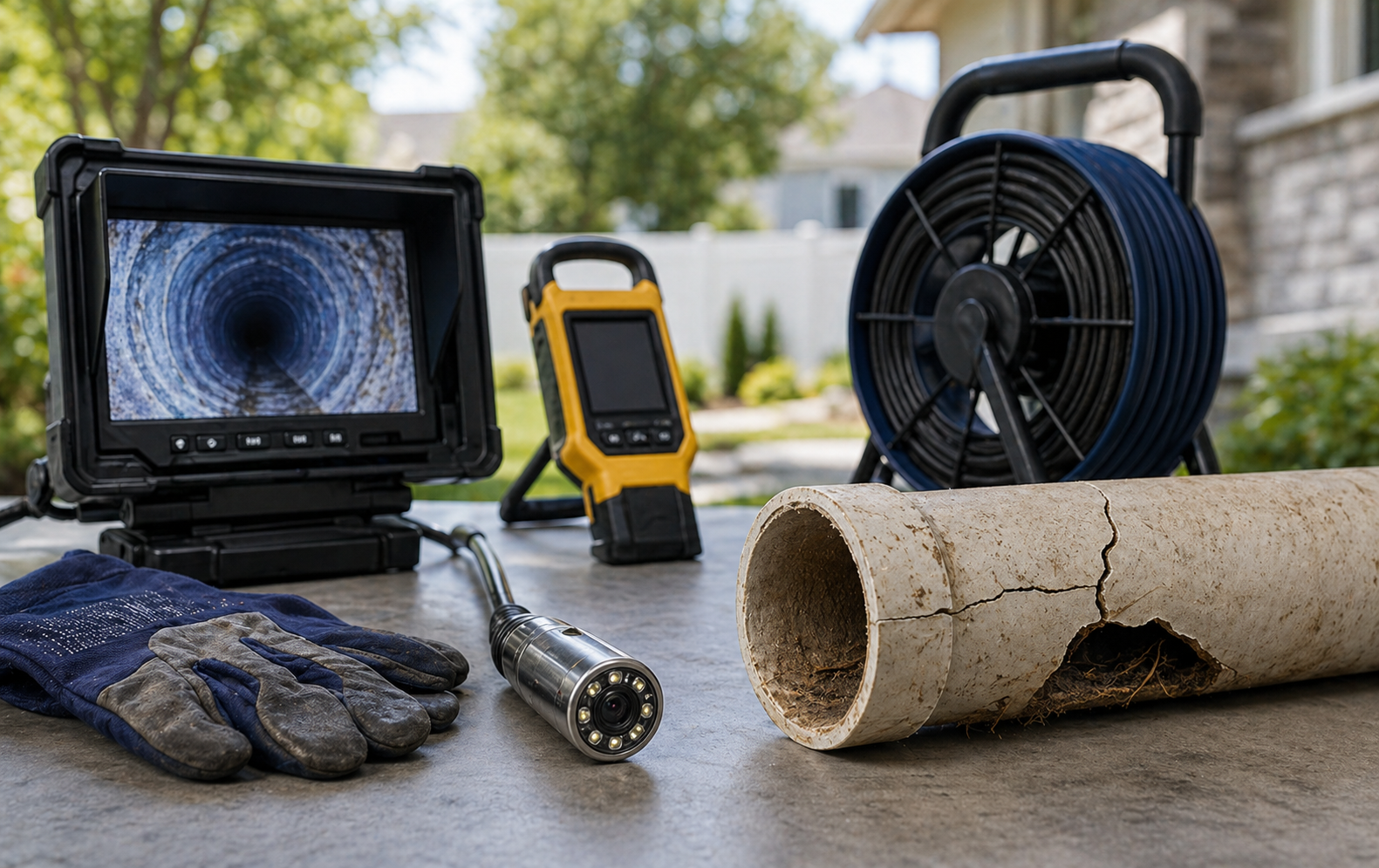
What a Sewer Camera Inspection Shows The camera is a waterproof, lighted camera head attached to a flexible push rod. It feeds into the sewer line through the cleanout and advances through the pipe while the technician and homeowner watch a live video feed on a monitor.

Start with the normal pattern: wastewater should move away from the fixture, through the branch line, into the larger building drain or sewer lateral, and out toward the public or private collection system. Most confusion starts when one symptom is judged without locating where that pattern is breaking down.

For sewer camera inspection questions, the useful first step is separating a local fixture issue from a deeper line condition, because those two situations can look similar at the surface but lead to different next steps.

  1. Pipe material. PVC, cast iron, clay, ABS, or Orangeburg. The material is immediately visible on camera and tells you the pipe's expected lifespan and vulnerability to specific failure modes. In Northern Utah, homes built before ~1970 typically have clay or cast iron. The 1970-1985 transition period may have clay, cast iron, or early PVC. Post-1985 is almost always PVC.
  2. Root intrusion. Roots entering the pipe through cracked joints, separated fittings, or pipe wall fractures. The camera shows the size and location of root masses, the number of entry points, and the severity — from small root tendrils at one joint to a full root mass blocking the pipe. Cottonwood, willow, poplar, and silver maple are aggressive root producers common along the Wasatch Front.
  3. Grease and scale buildup. Grease coats pipe walls and narrows the effective diameter. Scale rust and mineral deposits does the same thing on cast iron pipes. The camera shows how much of the pipe interior is coated, how much diameter has been lost, and whether the buildup is concentrated or spread across the full run.
  4. Bellies and grade problems. A belly is a section of pipe that has settled below the correct slope. The camera shows standing water at the low point — water that does not flow forward because the grade is wrong. Bellies are a common cause of repeat clogs because debris collects at the low point after every cleaning. Clay soil along the Wasatch Front is a primary cause of pipe settlement.
  5. Offsets and joint separation. Where two sections of pipe meet at a joint, the camera shows whether the joint is aligned or shifted. A minor offset may catch debris over time. A severe offset can block flow entirely. Joint separation — where two pipe sections have pulled apart — creates a gap where roots enter and soil can intrude.
  6. Structural damage. Cracks in the pipe wall, partial or full collapse, pipe deformation common with Orangeburg, and sections where the pipe has broken or crumbled. Structural damage is what separates a line that needs cleaning from a line that needs repair.
  7. Pipe diameter and condition. The camera shows the full cross-section of the pipe, confirming diameter 4 to 6 inches for most residential main lines and overall interior condition. A pipe that looks clean and round with smooth walls is healthy. A pipe with rough, scaled, cracked, or deformed walls is aging.
  8. Blockage type and location. The camera identifies what is causing the blockage — roots, grease, debris, foreign objects, or a structural failure — and measures its distance from the cleanout in feet. That location data is what a repair contractor uses to plan the access point and scope.
  9. Six Situations Where a Sewer Camera Inspection Is the Right First Move 1. Repeat Backups or Clogs The line has been cleared two or more times in the past 18 months and the problem keeps returning. The camera shows why — root entry points that keep producing new growth, grease that rebuilds on pipe walls, a belly that re-collects debris, or a structural defect that creates a chronic blockage point. Without the camera, you are paying for clearing visits that never address the cause.
  10. 2. Buying a Home A pre-purchase sewer camera inspection is one of the most cost-effective inspections a buyer can request. It shows the pipe material, condition, and any existing damage before you close. A $200-$400 inspection can reveal a problem that would cost thousands to repair — and gives you negotiating leverage or the information to walk away. In Northern Utah, any home built before 1985 should have a sewer scope before closing.

What Makes The Cost Easier To Judge

3. Setting a Maintenance Schedule If you want to know how often your sewer line needs cleaning, the camera shows you. A clean PVC line with no root exposure may not need any scheduled maintenance. A cast iron line with moderate scale and root tendrils at two joints may need jetting every 18 months. The camera is what turns a generic schedule into one that fits your line. For the risk-tier framework, see Sewer Line Maintenance: How Often Should Your Sewer Line Be Cleaned?

The goal is to move from guesswork to evidence. Good decisions usually come from the same sequence: define the symptom, locate the likely part of the system, check whether the issue is repeating, and decide whether cleaning, inspection, jetting, or repair planning fits.

That sequence keeps the article useful before any service conversation happens. It helps readers ask better questions and makes it harder for a vague diagnosis to sound more certain than it really is.

  1. 4. After a First-Time Backup Your line backed up for the first time. It was cleared and flow is restored. But you do not know what caused it or whether it will happen again. A post-clearing camera inspection shows whether the cause was a one-time event a foreign object caught at a fitting or an ongoing condition root intrusion, grease buildup, a belly. That distinction determines whether you need to do anything else or whether you can wait and monitor.
  2. 5. Before Approving Repair A contractor has told you the line needs repair or replacement. Before approving the work, you should see camera footage of the damage — what is wrong, where it is, how extensive it is, and what the rest of the line looks like. If the recommending contractor did not run a camera, get an independent inspection before signing a repair contract. Camera evidence is what makes a repair recommendation trustworthy.
  3. 6. Evaluating an Older Home You Already Own You have lived in the house for years. The drains work. But the home was built in the 1960s, there are mature trees in the yard, and you have never had the sewer line inspected. A baseline camera inspection tells you what the pipe looks like now — before a problem forces an emergency visit. If the line is clean and sound, you have peace of mind. If it shows early root intrusion or deterioration, you can plan maintenance proactively instead of reactively.
  4. What Happens During the Visit
  5. Access. The technician accesses the sewer line through the cleanout — a capped pipe usually located outside the house near the foundation. If the cleanout is buried, corroded, or missing, the technician locates or creates an access point which may add time and cost to the visit.
  6. Camera insertion. The camera feeds into the pipe through the cleanout and advances through the main line. Mountain West's sewer camera is rated to scope up to 200 feet of pipe with live video review on screen.
  7. What you see. You watch the footage in real time on a monitor alongside the technician. As the camera advances, the technician narrates what is visible — pipe material, joint condition, buildup, root entry, grade, and any damage. The camera measures distance from the cleanout in feet so every finding has a specific location.
  8. Duration. Most residential sewer camera inspection visits take 15 to 30 minutes for the inspection itself. If the line needs cleaning before the camera can see clearly heavy blockage or standing water obscuring the view, the cleaning step adds time — typically 30 to 60 minutes depending on severity.
  9. What you walk away with. A verbal explanation of what the camera found, a recommendation for next steps cleaning, maintenance, repair, or nothing, and the knowledge of what your pipe looks like inside. Mountain West explains the findings in plain language on site — you leave knowing what the line needs and why.
  10. What Changes the Price A sewer camera inspection is not one fixed price because the scope varies. Here is what moves the quote.

What Helps The Quote Feel Clearer

1. Standalone inspection vs. bundled with cleaning. A standalone camera inspection — the technician scopes the line, explains the findings, and leaves — is the lowest-cost option. When the inspection is bundled with cleaning camera before and after, plus cable or jetting work, the combined visit costs more but delivers both diagnosis and treatment in one trip.

Small details often change the interpretation. Which fixture backed up first, whether more than one drain is affected, whether the problem returned after clearing, and whether there is odor or standing water all matter.

Use these notes to describe the issue clearly. A good description is often the difference between booking a narrow cleaning visit and starting with inspection or a broader sewer conversation.

  1. 2. Whether cleaning is needed first. If the line is blocked or heavily coated with debris, the camera cannot see the pipe condition behind the obstruction. Cleaning the line before inspection adds scope and cost, but it is necessary — an inspection through a blocked line produces footage of the blockage, not the pipe.
  2. 3. Line length and access. A 40-foot lateral with a clean, accessible cleanout is a faster inspection than a 100-foot lateral with a buried cleanout that needs to be located and uncovered first.
  3. 4. Location and purpose. A routine pre-purchase sewer scope is a defined, predictable job. An emergency diagnostic inspection during an active backup — where the technician needs to clear, inspect, and advise under time pressure — involves more scope and urgency.
  4. 5. Emergency vs. scheduled. Emergency and after-hours calls carry a 15 to 35 percent premium 25 percent standard. Scheduling during normal business hours gets the standard rate.
  5. How to compare quotes. When collecting quotes for a sewer camera inspection, ask: i Does the quote include the inspection only, or inspection plus cleaning? ii What happens if the line needs cleaning before the camera can see? Is that included or quoted separately? iii Do I watch the footage live, or does the technician just report findings verbally? iv Does the visit include a recommendation, or just the footage? v What equipment is used — specifically, how far can the camera reach?
  6. A quote that includes live footage review, a plain-language explanation of findings, and a clear recommendation is worth more than a quote that only includes "camera inspection" with no defined scope.
  7. Standalone Inspection vs. Combined Visit: Which to Book Book a standalone inspection when: i You are buying a home and want a pre-purchase sewer scope. ii Your drains are working fine but you want a baseline check on an older line. iii You want an independent inspection to verify a repair recommendation from another contractor. iv You have already had the line cleaned recently and want to see the post-cleaning condition.
  8. Book a combined inspection-and-cleaning visit when: i Your line is currently backing up or slow — cleaning and inspection in one trip solves the immediate problem and diagnoses the cause. ii You want a maintenance cleaning with camera verification before and after. iii Your line has a repeat clog history and you want to clear it and see what is causing the recurrence in the same visit.
  9. Mountain West carries camera, cable, and hydro jetting equipment on every truck. If you book a standalone inspection and the camera reveals a blockage that should be cleared, we can escalate to cleaning on the spot — you do not need a second visit. We quote the expanded scope before proceeding.

How We Talk Through The Cost

When you call Mountain West at 801-317-8104 or email [email protected] for a sewer camera inspection, here is what you get.

This is where the article connects back to real service work. The point is not to turn every concern into the biggest possible job; it is to match the symptom pattern to the least confusing next step that can actually answer the question.

Tying the topic back to sewer camera inspection keeps the advice grounded. The work should explain what was found, what is still uncertain, and why the recommended next step fits the evidence.

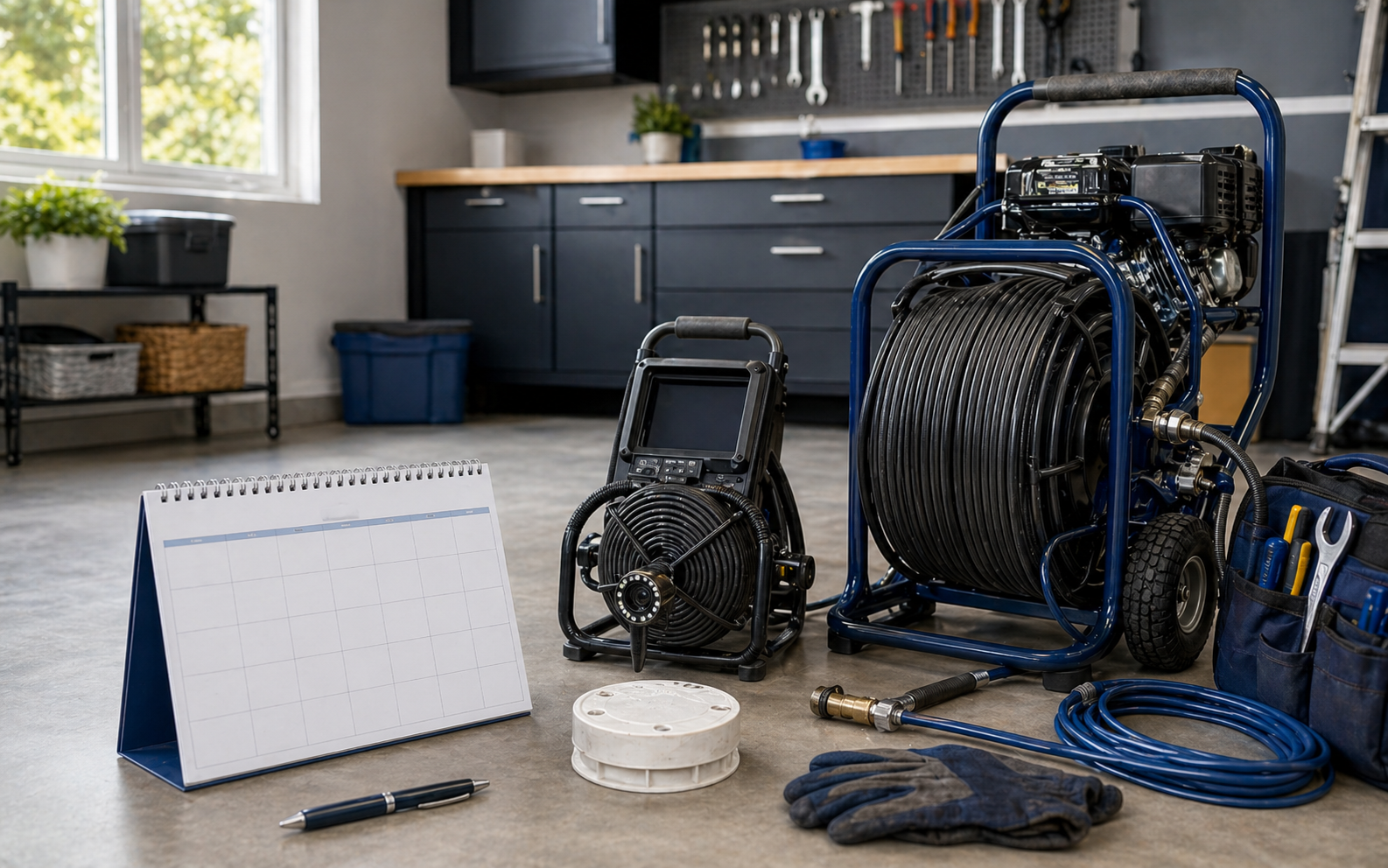
  1. Equipment. Sewer camera rated to scope up to 200 feet of pipe with live video review on screen. Cable machine with 100+ feet of reach. Hydro jetting unit at 3,850 PSI and 8 GPM with 300 feet of hose — lines 2 to 12 inches. All on every truck, every visit.
  2. The process. Access through the cleanout. Camera enters the line and advances through the full lateral — not just to the first problem. You watch the footage with us on screen. We narrate what we see and measure the location of every finding in feet from the cleanout.
  3. The explanation. We tell you what we found in plain language. We explain what the pipe material means for its remaining lifespan, whether the findings require cleaning, maintenance, or repair, and what the recommended next step is. If the line is clean and healthy, we say so — we do not recommend work the line does not need.
  4. On-the-spot capability. If the inspection reveals a blockage that should be cleared, we can cable or jet the line during the same visit. If a cleaning visit reveals structural damage, the inspection becomes the diagnostic foundation for a repair conversation. Either way, you do not need a second trip.
  5. Pricing. Quoted based on scope — standalone inspection, combined inspection and cleaning, line length, access, and timing. Emergency and after-hours calls carry a 15 to 35 percent premium. Call for a quote.

Talk Through The Price

These price questions connect the numbers back to scope. A useful quote should explain access, urgency, line condition, and what is included instead of treating cost like a single universal number.

For sewer camera inspection topics, the best follow-up questions usually separate a simple visit from a visit that may need inspection, deeper cleaning, or repair planning.

How much does a sewer camera inspection typically cost?

Mountain West does not publish fixed prices because scope varies by property. Industry-wide, standalone sewer camera inspections for residential properties generally range from $100 to $500 depending on line length, access, and market. Combined inspection-and-cleaning visits cost more because they include both the diagnostic and the clearing work. The most accurate way to get a price is to call, describe your situation, and get a quote based on your specific line.

Can I get just the camera inspection without any cleaning?

Yes. A standalone inspection is a defined service — the technician scopes the line, explains the findings, and provides a recommendation. No cleaning is required unless the line is blocked and the camera cannot see past the obstruction. If cleaning is needed for the camera to produce useful footage, the technician will explain why and quote the expanded scope before proceeding.

Is a sewer camera inspection worth it before buying a house?

Yes — it is one of the highest-value inspections a buyer can request. A standard home inspection does not include the sewer line. A sewer scope shows pipe material, condition, root intrusion, bellies, and structural damage that a general inspector cannot see. In Northern Utah, any home built before 1985 should have a sewer scope before closing. The inspection cost is a fraction of what a repair would cost if the line fails after purchase.

What is the difference between a sewer camera inspection and a sewer scope?

They are the same service described with different terms. "Sewer camera inspection" and "sewer scope inspection" both refer to inserting a camera into the sewer line to visually inspect the pipe interior. Some companies use "sewer scope" specifically for pre-purchase inspections during a home sale, but the equipment and process are identical.

Read This Next

These articles stay close to the same decision without repeating this one. Use them when the symptoms, timing, or service path points in a slightly different direction.

Source Log

These sources were used for background, claim checking, or local context. The article explains the topic in Mountain West's own words and does not copy outside article structure or long passages.

U.S. Environmental Protection Agencyparaphrased

Sanitary Sewer Overflows (SSOs)

Supports: Sanitary sewer overflows can back up into buildings, damage property, and create public-health concerns; sewer systems carry domestic and commercial wastewater to treatment facilities.

U.S. Environmental Protection Agencyparaphrased

Sanitary Sewer Overflow Frequent Questions

Supports: Common sewer blockage contributors include fats, oils and grease, wipes and other non-flushable products, roots entering defects, sediment, and other materials.

NASSCOparaphrased

Assessment

Supports: Internal television inspection is a major tool for assessing sewer-pipe condition and turning symptoms into documented findings.

Ogden Cityparaphrased

Sewer Utility Information

Supports: Local Utah utility guidance can make the private-lateral responsibility clear: property owners may be responsible for maintenance and repair from the home to the city main, including tap connection, depending on jurisdiction.

Manual review note: Local ownership rules vary by city and utility. Treat this as regional context, not legal advice for every property.

HomeGuidebackground

Average Sewer Camera Inspection Cost

Supports: National average for residential sewer camera inspections ranges from $100 to $500 for standalone service, varying by line length, access, and market. Used for general market context only; Mountain West does not publish fixed prices.

Utah Department of Environmental Qualitybackground

Wastewater Programs

Supports: Utah wastewater programs cover municipal wastewater planning, onsite wastewater systems, operating permits, and related design requirements, reinforcing that drain and sewer issues connect to regulated infrastructure.

Related Next Steps

Next StepSewer Camera InspectionUse this page if sewer camera inspection makes you want diagnostic footage before choosing the next path.Next StepDrain Camera InspectionUse this page if sewer camera inspection makes you want diagnostic footage before choosing the next path.Next StepGet A Free QuoteStart a free quote if you want service-fit or pricing guidance after this article.Next StepRead BlogCompare adjacent articles around sewer camera inspection before you choose the next path.

More for You

Follow-up blog articles chosen for this page so the next question stays close to the same decision path.

Sewer Camera Inspection: How Root Intrusion Is Found and What It Means article image for Sewer Camera Inspection.Blog ArticleSewer Camera Inspection: How Root Intrusion Is Found and What It MeansRead this next for another sewer camera inspection angle that builds on this article.Plumber Near Me for a Sewer Smell: What Service Do You Actually Need? article image for Sewer Camera Inspection.Blog ArticlePlumber Near Me for a Sewer Smell: What Service Do You Actually Need?Read this next for another sewer camera inspection angle that builds on this article.When a Plumbing Clog Is Really a Main Sewer Line Problem article image for Sewer Camera Inspection.Blog ArticleWhen a Plumbing Clog Is Really a Main Sewer Line ProblemRead this next for another sewer camera inspection angle that builds on this article.Sewer Backup Prevention: What Actually Helps? article image for Sewer Cleaning And Maintenance.Blog ArticleSewer Backup Prevention: What Actually Helps?Read this next to see how sewer camera inspection connects into sewer cleaning and maintenance planning.

Quick Answers About Sewer Camera Inspection Near Me: What It Shows, When You Need One, and What It Costs

These are the quick answers most people want before they call, book, or decide on the next step.

What is this article about?

A sewer camera inspection is the most underused and most valuable service in residential drain and sewer work. It is the only way to see what is actually happening inside your sewer line — pipe material, condition, blockage type, root entry points, grade problems, and structural damage. Every other decision — whether to clean, how often to maintain, whether to repair or replace — is a guess without it. This article covers what the inspection shows, when you need one, what the process looks like, and what affects the cost. It connects the topic back to sewer camera inspection when readers are trying to decide on the right next move.

Who is this article best for?

Most homeowners never see the inside of their sewer line. They find out it has a problem when a drain backs up, and they find out what kind of problem when a technician tells them — sometimes without any camera evidence at all. It is most useful for readers trying to understand the issue before they book, compare services, or decide whether the symptoms point to a bigger sewer or drain problem.

What should I do after reading this article?

If the issue sounds familiar, the usual next step is to review the sewer camera inspection page or compare it with drain camera inspection before deciding whether to request a quote, book service, or call for faster guidance.

How can I reach Mountain West?

Mountain West Hydro Jetting serves Northern Utah and the Salt Lake corridor. You can reach us at 801-317-8104 or [email protected].