Mountain West Jetting
Mountain West logoMountain West Hydro Jetting & Sewer Maintenance LLC

SEWER LINE MAINTENANCE: HOW OFTEN SHOULD YOUR SEWER LINE BE CLEANED?

Blog Article

Story by Mountain West Hydro JettingPublished June 18, 2026Sewer Cleaning FrequencyServing Northern Utah and the Salt Lake corridor

Sewer Line Maintenance: How Often Should Your Sewer Line Be Cleaned?

How often should a sewer line be cleaned? Every residential sewer line falls into one of three risk tiers based on five factors: pipe age, pipe material, root exposure, grease load, and backup history. Each tier has a recommended interval. This article gives you the framework to identify your tier, the warning signs that mean "now" regardless of what the calendar says, and a walkthrough of what a sewer line maintenance visit actually involves.

Start Here

The internet is full of advice saying every sewer line should be cleaned every 18 to 22 months. That number is not wrong for moderate-risk lines, but it is too aggressive for low-risk ones and not aggressive enough for high-risk ones.

What This Article Helps You Do

  • Place your sewer line into a low, moderate, or high risk tier with specific criteria
  • Match that tier to a recommended sewer line cleaning frequency interval
  • Recognize the warning signs that mean "call now" regardless of the schedule
  • Understand what happens during a sewer line cleaning service visit — equipment, process, and what you walk away with

Quick Takeaway

Sewer line cleaning frequency is a risk question, not a calendar question. Low-risk lines can go 3 to 5 years between baseline checks. Moderate-risk lines benefit from cleaning every 12 to 24 months. High-risk lines need service every 6 to 12 months — and should be evaluated for repair. A single camera inspection tells you which tier you are in.

Sewer Cleaning Frequency

The internet is full of advice saying every sewer line should be cleaned every 18 to 22 months. That number is not wrong for moderate-risk lines, but it is too aggressive for low-risk ones and not aggressive enough for high-risk ones.

The better question is not "how often" — it is "what kind of line do I have?"

For context: Ogden City cleans its own public sewer mains on a risk-based rotation — the entire system every two years, with problem segments on weekly, monthly, or quarterly cycles. The city uses jet-vacuum trucks and camera vans to decide which lines need more attention. Your private lateral deserves the same logic: clean based on what the line needs, not based on a calendar that ignores conditions.

When It Starts Becoming Relevant

What You Own and What the City Owns Before setting a maintenance schedule, know what you are responsible for. In Northern Utah municipalities — Ogden, Kaysville, Layton, Salt Lake City — the homeowner is responsible for the sewer lateral from the house to the city main, including the tap connection. The city maintains the main itself. If a blockage or failure is in your lateral, it is your problem and your cost. That is why a maintenance schedule matters: you are maintaining your own infrastructure, not waiting for the city to do it.

Start with the normal pattern: wastewater should move away from the fixture, through the branch line, into the larger building drain or sewer lateral, and out toward the public or private collection system. Most confusion starts when one symptom is judged without locating where that pattern is breaking down.

For sewer cleaning and maintenance questions, the useful first step is separating a local fixture issue from a deeper line condition, because those two situations can look similar at the surface but lead to different next steps.

  1. One additional factor in Ogden: a significant number of homes built between 1900 and 1950 share a sewer lateral with one or more neighboring houses. If your home is on a shared lateral, your neighbor's grease, roots, and usage patterns affect your line. Shared laterals are no longer allowed in new construction, and Ogden City recommends replacing them with individual laterals. If you are on one, your risk tier automatically moves up — you are maintaining a line you do not fully control.
  2. Tier 1: Low Risk — Symptom-Driven, With a Baseline Check Every 3 to 5 Years Your line is low risk if most of these apply:
  3. i Built after 1985 with PVC or ABS pipe. ii No mature trees within 15 feet of the sewer line path. iii No history of backups or slow mains. iv Single-family home with standard water usage on its own dedicated lateral. v No known grease, wipe, or foreign-object issues.
  4. Low-risk lines can often go years without cleaning. A baseline camera inspection every 3 to 5 years confirms nothing is developing inside the pipe. If the inspection is clean, you do not need preventive cleaning — respond to symptoms if they appear.
  5. Tier 2: Moderate Risk — Every 12 to 24 Months Your line is moderate risk if one or more of these apply:
  6. i Pipe material is cast iron or clay common in Northern Utah homes built before 1980. ii Trees within 10 feet of the sewer line, even without a backup yet — cottonwood, willow, poplar, and silver maple are aggressive root producers and common along the Wasatch Front. iii One or two backups in the last five years. iv Kitchen-heavy household or a property with grease buildup history. v Home on a shared sewer lateral common in Ogden for homes built 1900 to 1950.
  7. Moderate-risk lines benefit from scheduled sewer cleaning and maintenance on a 12- to 24-month cycle. The exact interval comes from watching how quickly buildup returns after each cleaning. If your line stays clear for 18 months after a hydro jet but starts slowing around month 20, an 18-month cycle is the right fit.
  8. Tier 3: High Risk — Every 6 to 12 Months Your line is high risk if one or more of these apply:

How To Think About The Timing

i Active root intrusion confirmed by camera inspection. ii Three or more backups in the last three years. iii Known partial collapse, belly low spot, or offset joint. iv Orangeburg pipe in any condition. v Line that re-clogs within 6 months of cleaning.

The goal is to move from guesswork to evidence. Good decisions usually come from the same sequence: define the symptom, locate the likely part of the system, check whether the issue is repeating, and decide whether cleaning, inspection, jetting, or repair planning fits.

That sequence keeps the article useful before any service conversation happens. It helps readers ask better questions and makes it harder for a vague diagnosis to sound more certain than it really is.

  1. High-risk lines need aggressive scheduling. But if you are in this tier, you should also be evaluating whether the line needs repair or replacement. Repeated cleaning at 6-month intervals is managing a symptom, not solving the underlying problem. A camera inspection after each cleaning shows whether the line is holding steady or deteriorating.
  2. How to Identify Your Risk Level If you do not know your pipe material, age, or root exposure, here is how to find out without guessing.
  3. Pipe age and material. Your home's build year is the starting point. Homes built before 1970 in Northern Utah usually have clay or cast iron. The 1970 to 1985 window is a transition period — could be clay, cast iron, or early PVC. After 1985, PVC is standard in most Utah residential construction. Utah's plumbing code approves ABS, cast iron, copper, PVC, and polypropylene for building sewers — but in practice, residential laterals installed in the last four decades are almost always PVC. If you are not sure what your line is made of, a camera inspection confirms the material in minutes.
  4. Root exposure. Walk your yard along the sewer line path. In most residential properties, the line runs in a roughly straight path from the cleanout to the street or alley. Mature trees within 15 feet are a risk factor. Cottonwood, willow, poplar, and silver maple are aggressive root producers — and cottonwood and willow are common along the Wasatch Front and near irrigation ditches throughout Weber, Davis, and Salt Lake counties.
  5. Shared lateral status. If your home is in an older Ogden neighborhood roughly 1900 to 1950 construction, check whether your lateral is shared with a neighboring property. The city can confirm this. A shared lateral is a risk multiplier because blockages from your neighbor's side affect your flow.
  6. Backup history. Count the number of times your main line has backed up or required emergency service in the last five years. Zero or one is low risk. Two puts you in moderate. Three or more is high risk.
  7. Grease and usage patterns. Households that regularly put cooking grease down the drain accumulate buildup faster. Grease coats pipe walls and catches other debris, accelerating blockage formation. If you run a home kitchen heavily or have a grease trap that has not been serviced, factor that in.

What Helps You Read The Situation

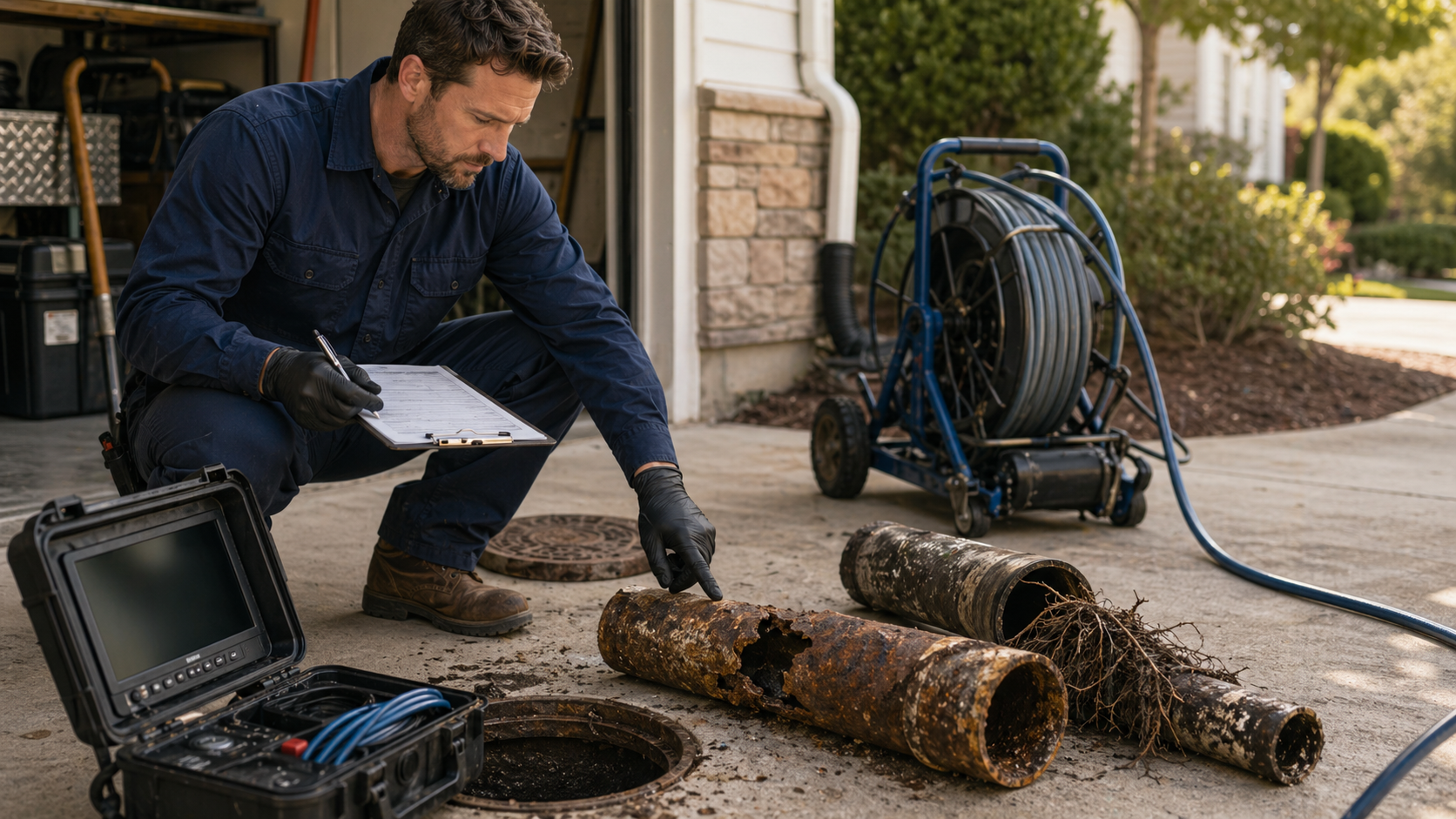
Prior inspection findings. If a technician has run a camera and reported buildup, root intrusion, a belly, an offset, or scaling, that finding defines your tier — even if the line has not backed up yet. What the camera shows matters more than what the line has done so far.

Small details often change the interpretation. Which fixture backed up first, whether more than one drain is affected, whether the problem returned after clearing, and whether there is odor or standing water all matter.

Use these notes to describe the issue clearly. A good description is often the difference between booking a narrow cleaning visit and starting with inspection or a broader sewer conversation.

  1. Five Warning Signs That Override the Schedule These symptoms mean the line needs attention now, regardless of when the last cleaning was.
  2. 1. Multiple drains slowing at once. When the kitchen sink, bathroom drain, and laundry all slow down around the same time, the blockage is usually in the main line — not in individual fixture traps. Single-drain slowdowns are fixture problems. Multi-drain slowdowns are main line problems.
  3. 2. Sewage backing up through the lowest drain. Floor drains, basement drains, and ground-floor showers are the first places a main line backup surfaces. If water or sewage is coming up through these openings, the main is blocked and the wastewater has nowhere else to go.
  4. 3. Gurgling sounds when other fixtures run. Toilets gurgling when the washing machine drains, or drains bubbling when another faucet is running — this means air is being displaced in the main line because water cannot flow past a partial blockage.
  5. 4. Sewage smell near the cleanout or in the yard. Persistent odor outside, especially near the sewer line path or cleanout cap, can indicate a crack, a failed joint, or a blockage causing pressure buildup in the pipe.
  6. 5. Wet spots or unusually green patches above the sewer line. A strip of grass that is greener or wetter than the rest of the yard, directly above where the sewer line runs, suggests a leak or break releasing wastewater into the soil.
  7. Any one of these is worth a call. Two or more together usually mean same-day service.

How We Sort The Timing Out

When you call Mountain West at 801-317-8104 or email [email protected] for sewer line cleaning service, here is what happens.

This is where the article connects back to real service work. The point is not to turn every concern into the biggest possible job; it is to match the symptom pattern to the least confusing next step that can actually answer the question.

Tying the topic back to sewer cleaning and maintenance keeps the advice grounded. The work should explain what was found, what is still uncertain, and why the recommended next step fits the evidence.

  1. Before we arrive. We ask what you are seeing, how long it has been happening, and whether you know where your cleanout is located. That tells us which equipment to prioritize and how to set expectations on timing.
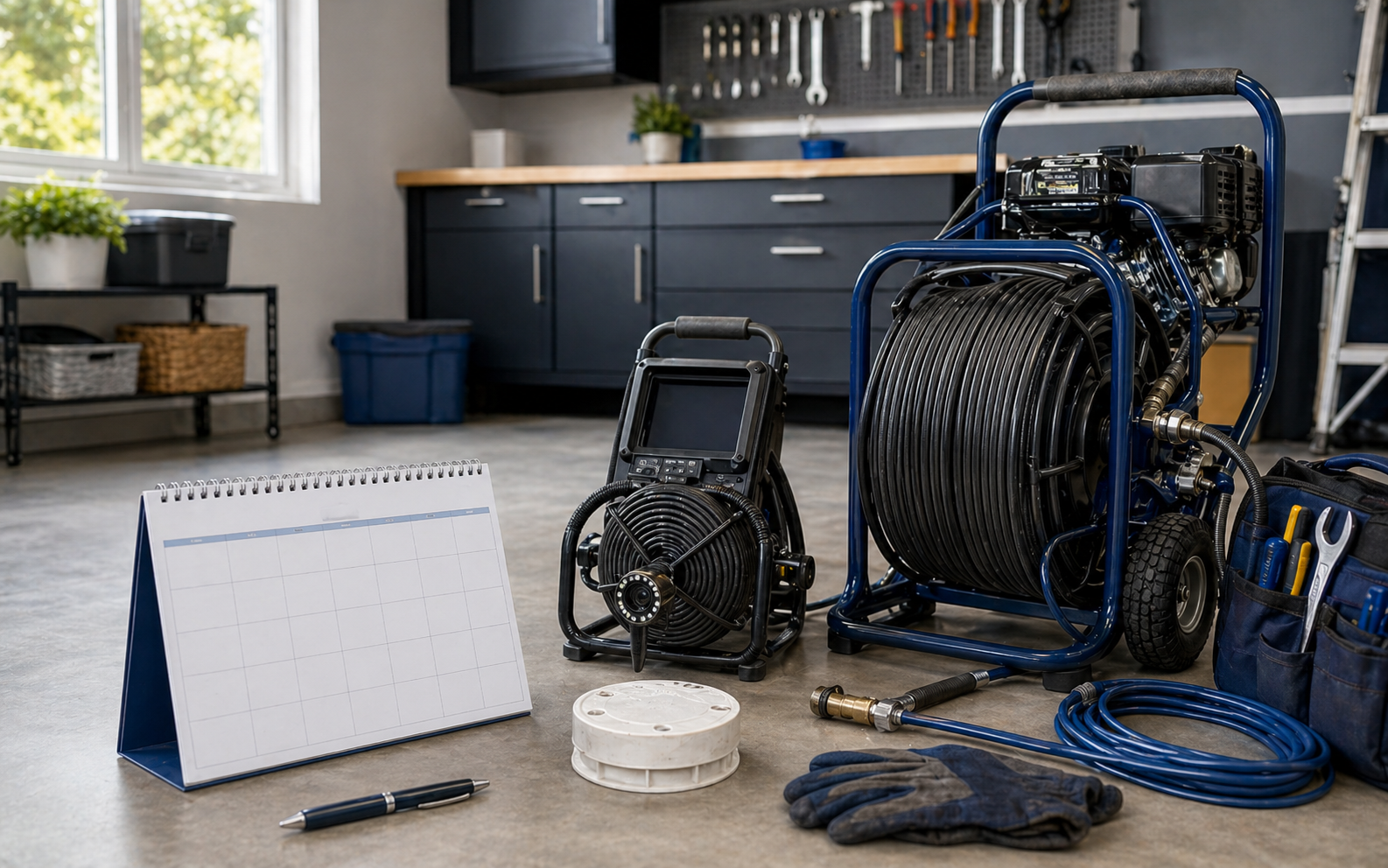
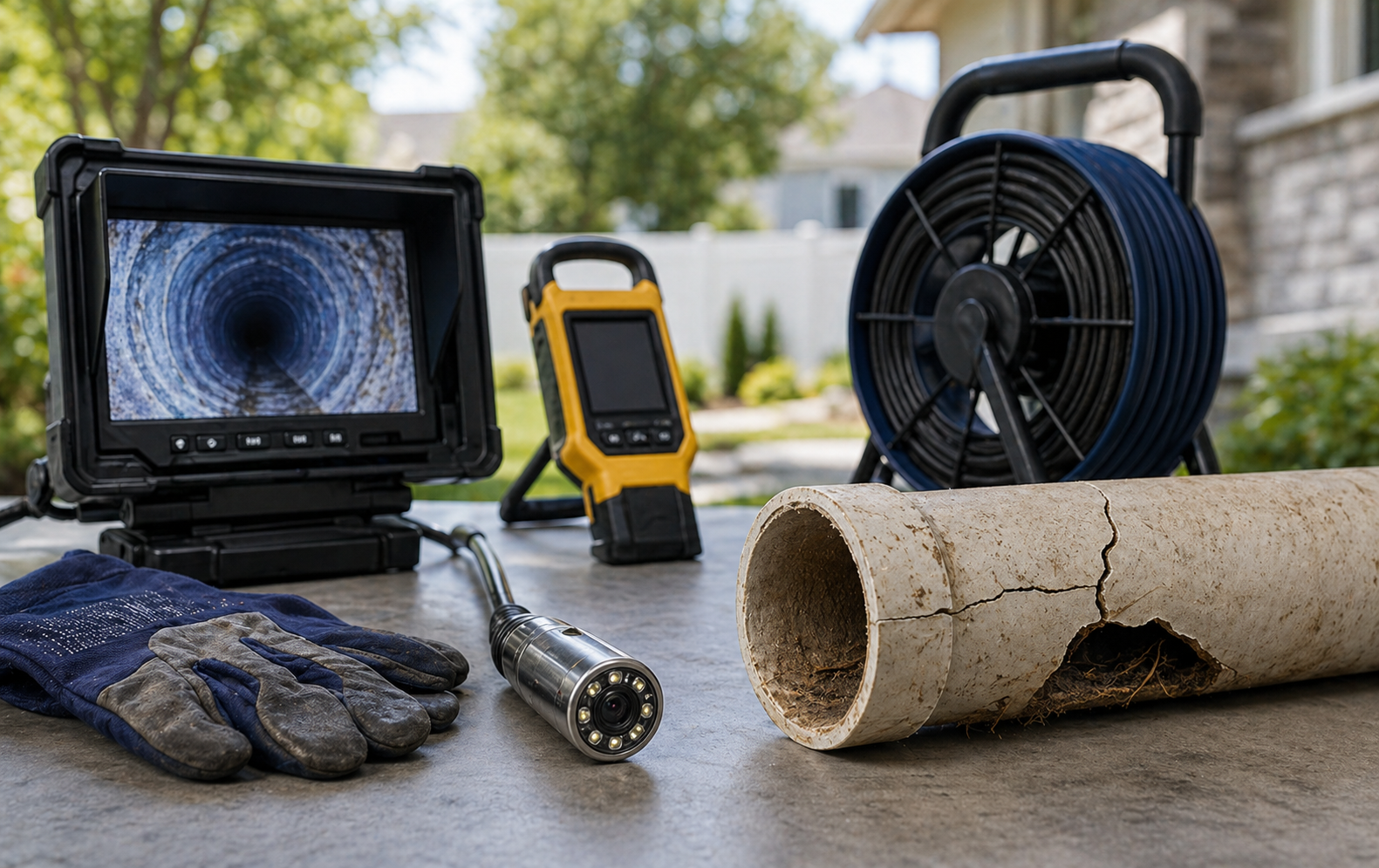
  2. What shows up. A hydro jetting unit rated at 3,850 PSI and 8 GPM with 300 feet of hose — enough to clear lines from 2 to 12 inches in diameter. A sewer camera rated to scope up to 200 feet of pipe with live video review on screen. A cable machine with 100+ feet of reach for jobs where mechanical clearing comes before the jet.
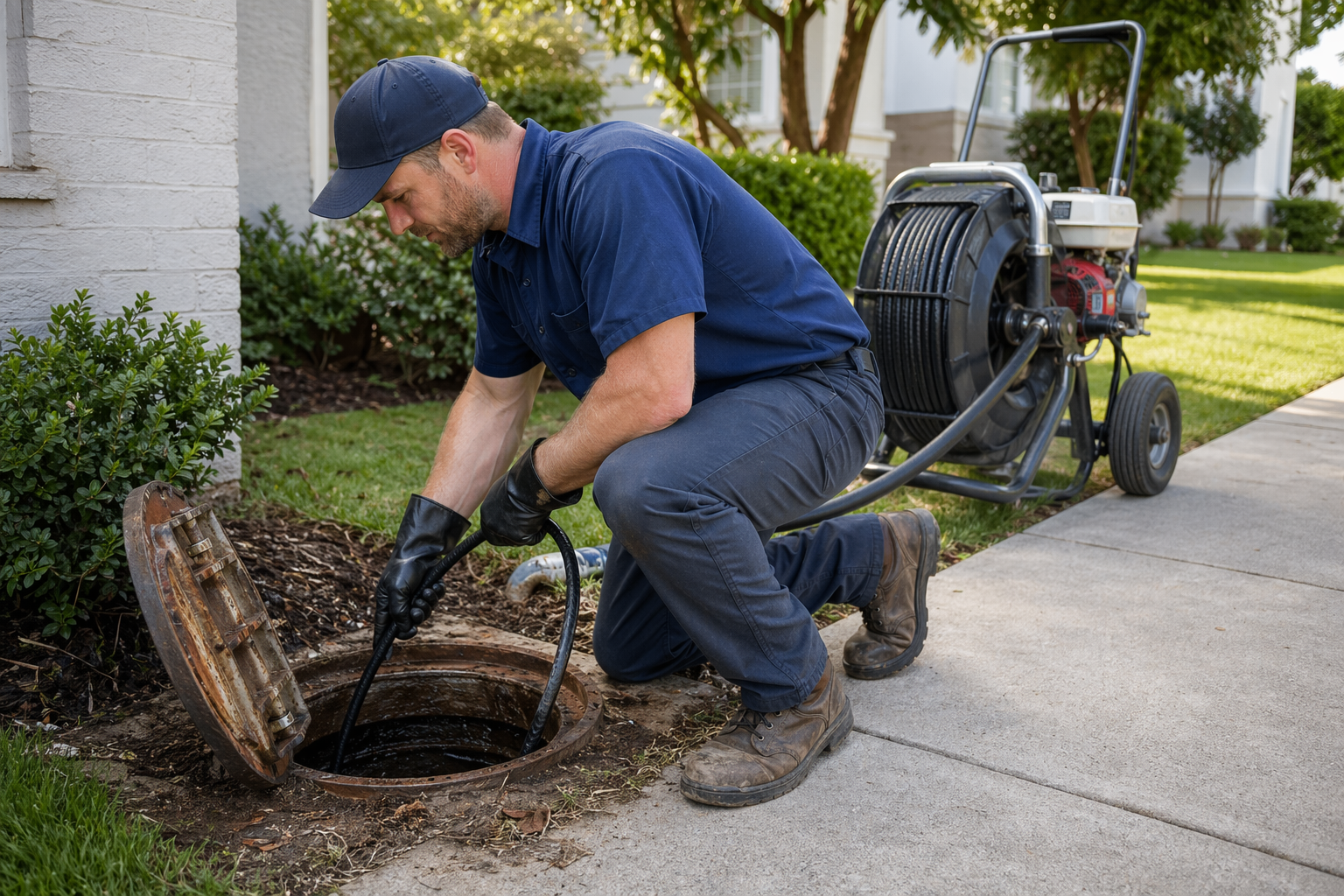
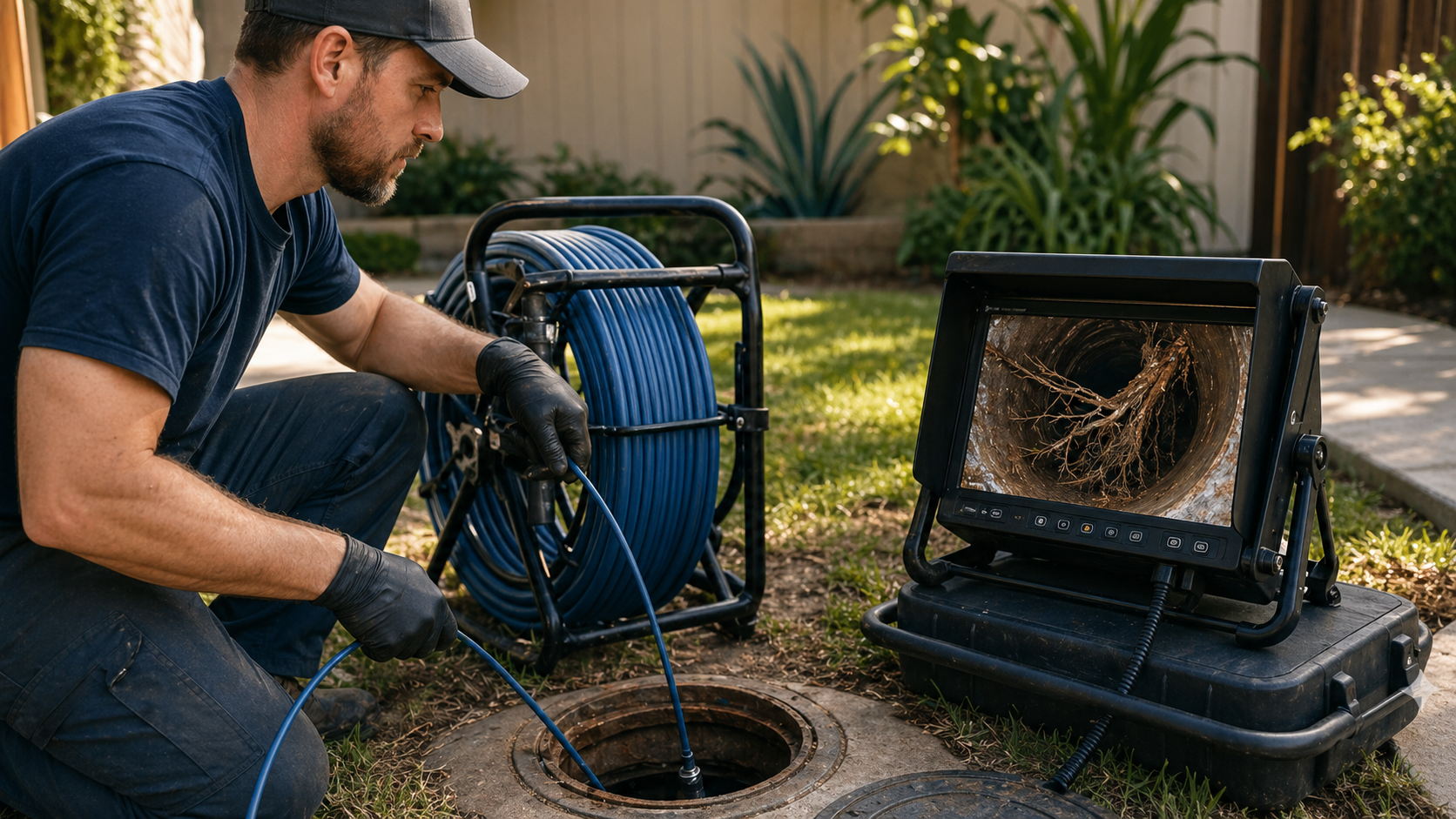
  3. The process. We access the line through your cleanout. On most residential jobs, we start with the camera to see what we are working with — root mass, grease cap, debris, or a structural issue. Then we clear the line, usually with hydro jetting for main lines. After clearing, we run the camera again so you can see the result on screen. You watch the same footage we do.
  4. What you walk away with. A clear line, a plain-language explanation of what we found, and a recommendation. That recommendation is one of three things: i your line looks clean and low risk — no maintenance plan needed, call if symptoms return; ii your line has moderate buildup or early root activity — schedule a follow-up in a specific timeframe; iii the line has a structural issue that cleaning will not fix — here is what repair looks like and what it would involve.
  5. If the line does not need a maintenance schedule, we say so. We do not sell recurring service to lines that do not need it.
  6. Pricing. Every job is quoted based on line length, access point condition, severity of the blockage, and whether the visit is standard or emergency. Emergency and after-hours calls carry a 15 to 35 percent premium. We do not publish fixed prices because the same symptom in two different houses can involve two different jobs. Call for a quote.

Questions About The Timing

These timing questions sort the issue into three buckets: monitor it, schedule it, or act on it now. The right bucket depends on symptoms, spread, and whether wastewater is actively backing up.

When the topic is sewer cleaning frequency, the useful follow-ups are about urgency, service fit, and what details change the next step from routine to same-day.

How often should a sewer line be cleaned if there have never been any problems?

If your line has never backed up, your home was built after 1985 with PVC pipe, and there are no large trees near the line path, you are in the low-risk tier. A baseline camera inspection every 3 to 5 years is reasonable to confirm nothing is developing. You do not need to schedule preventive cleaning unless that inspection shows buildup forming.

Does hydro jetting last longer than snaking?

Generally, yes. A cable snake punches a hole through the blockage to restore flow but leaves material coating the pipe walls. Hydro jetting at 3,850 PSI scours the full interior of the pipe, stripping grease, scale, and root fragments more thoroughly. In moderate-risk lines, hydro jetting typically extends the interval between cleanings compared to cable clearing alone.

Can I set a maintenance schedule without a camera inspection?

You can, but you are guessing at the interval. A camera inspection takes 15 to 30 minutes and shows pipe material, root intrusion, grease buildup, bellies, offsets, and cracks. That information is what turns a generic schedule into one that actually fits your line. Without it, you are either paying for cleaning you do not need or waiting too long between visits.

What does it mean if my line keeps clogging within a few months of cleaning?

Re-clogging within 6 months is a high-risk signal that cleaning alone is not solving the problem. The usual causes are active root intrusion through a cracked joint, a belly where debris collects, or a partial collapse restricting flow. At that point, the next step is a camera inspection to determine whether the line needs repair or replacement — not another round of cleaning on a shorter cycle.

Is sewer line cleaning the same thing as drain cleaning?

Different scope and different equipment. Drain cleaning typically means clearing individual fixture drains — a kitchen sink, a shower, a floor drain. Sewer line cleaning means clearing the main line that carries all wastewater from your house to the municipal sewer. The main line is larger usually 4 to 6 inches in residential properties, longer, and requires heavier equipment. When multiple drains slow down at the same time, the problem is usually in the sewer line, not in the individual drains.

Read This Next

These articles stay close to the same decision without repeating this one. Use them when the symptoms, timing, or service path points in a slightly different direction.

Source Log

These sources were used for background, claim checking, or local context. The article explains the topic in Mountain West's own words and does not copy outside article structure or long passages.

U.S. Environmental Protection Agencyparaphrased

Sanitary Sewer Overflows (SSOs)

Supports: Sanitary sewer overflows can back up into buildings, damage property, and create public-health concerns; sewer systems carry domestic and commercial wastewater to treatment facilities.

U.S. Environmental Protection Agencyparaphrased

Sanitary Sewer Overflow Frequent Questions

Supports: Common sewer blockage contributors include fats, oils and grease, wipes and other non-flushable products, roots entering defects, sediment, and other materials.

Ogden City, Utahparaphrased

Sewer Services

Supports: Ogden City cleans the entire sewage collection system every two years, with routine cleaning schedules on weekly, monthly, three-month, and six-month rotations for problem areas. The city operates three jet-vacuum sewer line cleaning trucks and a camera van for root intrusion and damage inspection.

Ogden Cityparaphrased

Sewer Utility Information

Supports: Local Utah utility guidance can make the private-lateral responsibility clear: property owners may be responsible for maintenance and repair from the home to the city main, including tap connection, depending on jurisdiction.

Manual review note: Local ownership rules vary by city and utility. Treat this as regional context, not legal advice for every property.

Clinton City, Utahparaphrased

Sewer

Supports: Local sewer maintenance programs may remove roots, grease, and debris from public lines; bubbling, gurgling, or odors can also relate to venting and sewer-maintenance conditions.

Manual review note: Use as regional public-utility context only; it does not prove the cause of a private-property problem.

Kaysville City, Utahbackground

Sewer

Supports: Central Davis Sewer District serves Kaysville, Farmington, and Fruit Heights. Homeowners should contact the Kaysville City Building Department for questions about repairing a sewer line.

Utah Plumbing Code 2018 International Plumbing Code as adopted by Utahparaphrased

Sanitary Drainage Chapter 7

Supports: Building sewers must conform to approved standards for ABS, cast-iron, copper, PVC, or polypropylene pipe. Every building with plumbing fixtures must connect to a public sewer or approved private sewage disposal system.

Utah Department of Environmental Qualitybackground

Wastewater Programs

Supports: Utah wastewater programs cover municipal wastewater planning, onsite wastewater systems, operating permits, and related design requirements, reinforcing that drain and sewer issues connect to regulated infrastructure.

Related Next Steps

Next StepSewer Cleaning And MaintenanceUse this page if the next step after sewer cleaning frequency is sewer cleaning or maintenance planning.Next StepSewer Line Cleaning ServiceUse this page if the next step after sewer cleaning frequency is sewer cleaning or maintenance planning.Next StepGet A Free QuoteStart a free quote if you want service-fit or pricing guidance after this article.Next StepRead BlogCompare adjacent articles around sewer cleaning frequency before you choose the next path.

More for You

Follow-up blog articles chosen for this page so the next question stays close to the same decision path.

Sewer Line Cleaning Near Me: What the Service Involves and What to Expect article image for Sewer Cleaning And Maintenance.Blog ArticleSewer Line Cleaning Near Me: What the Service Involves and What to ExpectRead this next for another sewer cleaning and maintenance angle that builds on this article.Sewer Backup Prevention: What Actually Helps? article image for Sewer Cleaning And Maintenance.Blog ArticleSewer Backup Prevention: What Actually Helps?Read this next for another sewer cleaning and maintenance angle that builds on this article.Sewer and Drain Cleaning Services Near Me: How to Compare and What to Look For article image for Sewer Cleaning And Maintenance.Blog ArticleSewer and Drain Cleaning Services Near Me: How to Compare and What to Look ForRead this next for another sewer cleaning and maintenance angle that builds on this article.Plumber Near Me for a Sewer Smell: What Service Do You Actually Need? article image for Sewer Camera Inspection.Blog ArticlePlumber Near Me for a Sewer Smell: What Service Do You Actually Need?Read this next to see how sewer cleaning and maintenance connects into sewer camera inspection planning.

Quick Answers About Sewer Line Maintenance: How Often Should Your Sewer Line Be Cleaned?

These are the quick answers most people want before they call, book, or decide on the next step.

What is this article about?

How often should a sewer line be cleaned? Every residential sewer line falls into one of three risk tiers based on five factors: pipe age, pipe material, root exposure, grease load, and backup history. Each tier has a recommended interval. This article gives you the framework to identify your tier, the warning signs that mean "now" regardless of what the calendar says, and a walkthrough of what a sewer line maintenance visit actually involves. It connects the topic back to sewer cleaning and maintenance when readers are trying to decide on the right next move.

Who is this article best for?

The internet is full of advice saying every sewer line should be cleaned every 18 to 22 months. That number is not wrong for moderate-risk lines, but it is too aggressive for low-risk ones and not aggressive enough for high-risk ones. It is most useful for readers trying to understand the issue before they book, compare services, or decide whether the symptoms point to a bigger sewer or drain problem.

What should I do after reading this article?

If the issue sounds familiar, the usual next step is to review the sewer cleaning and maintenance page or compare it with sewer line cleaning service before deciding whether to request a quote, book service, or call for faster guidance.

How can I reach Mountain West?

Mountain West Hydro Jetting serves Northern Utah and the Salt Lake corridor. You can reach us at 801-317-8104 or [email protected].