Mountain West Jetting
Mountain West logoMountain West Hydro Jetting & Sewer Maintenance LLC

SEWER LINE REPAIR: WHAT THE JOB INVOLVES AND WHAT DRIVES THE COST

Blog Article

Story by Mountain West Hydro JettingPublished June 18, 2026Sewer Line Repair CostServing Northern Utah and the Salt Lake corridor

Sewer Line Repair: What the Job Involves and What Drives the Cost

What sewer line repair actually involves — the four repair methods, what each one looks like, when each one applies, what changes the scope, and how to evaluate a repair quote.

Start Here

A sewer camera found damage. The technician said the line needs repair. Now you are looking at a quote that may be anywhere from a few hundred dollars to five figures, and you have no frame of reference for whether that number is reasonable or what the work actually involves.

What This Article Helps You Do

  • Understand the four sewer line repair methods and when each one applies
  • Know what site conditions change the scope and the cost
  • Evaluate a repair quote by understanding what the price includes and what it does not
  • Ask the right questions before approving work on your sewer lateral

Quick Takeaway

Sewer line repair cost is driven by five things: what is wrong with the pipe the defect, how much pipe is affected the length, how deep it is the depth, what is on top of it the surface, and which repair method fits spot, section, trenchless, or excavation. A useful quote explains all five. A vague quote that skips any of them is not ready to approve.

Sewer Line Repair Cost

A sewer camera found damage. The technician said the line needs repair. Now you are looking at a quote that may be anywhere from a few hundred dollars to five figures, and you have no frame of reference for whether that number is reasonable or what the work actually involves.

That is the gap this article fills. It walks through the four sewer line repair methods — spot repair, section replacement, trenchless, and full excavation — explains what each one looks like, when each one is the right fit, and what site conditions drive the cost up or down. By the end, you will understand what you are being quoted, why the price is what it is, and what questions to ask before you approve the work.

What Changes The Number

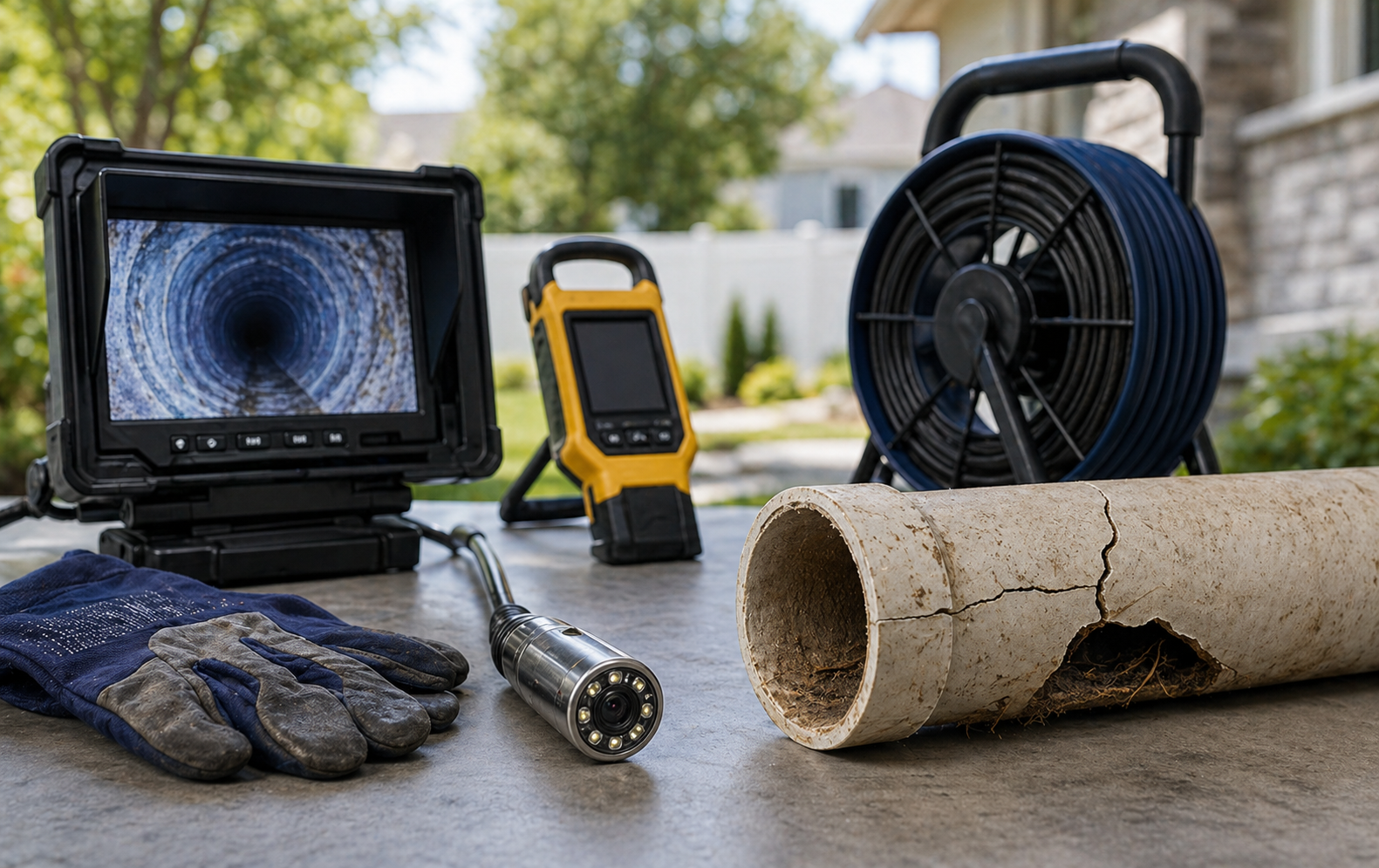
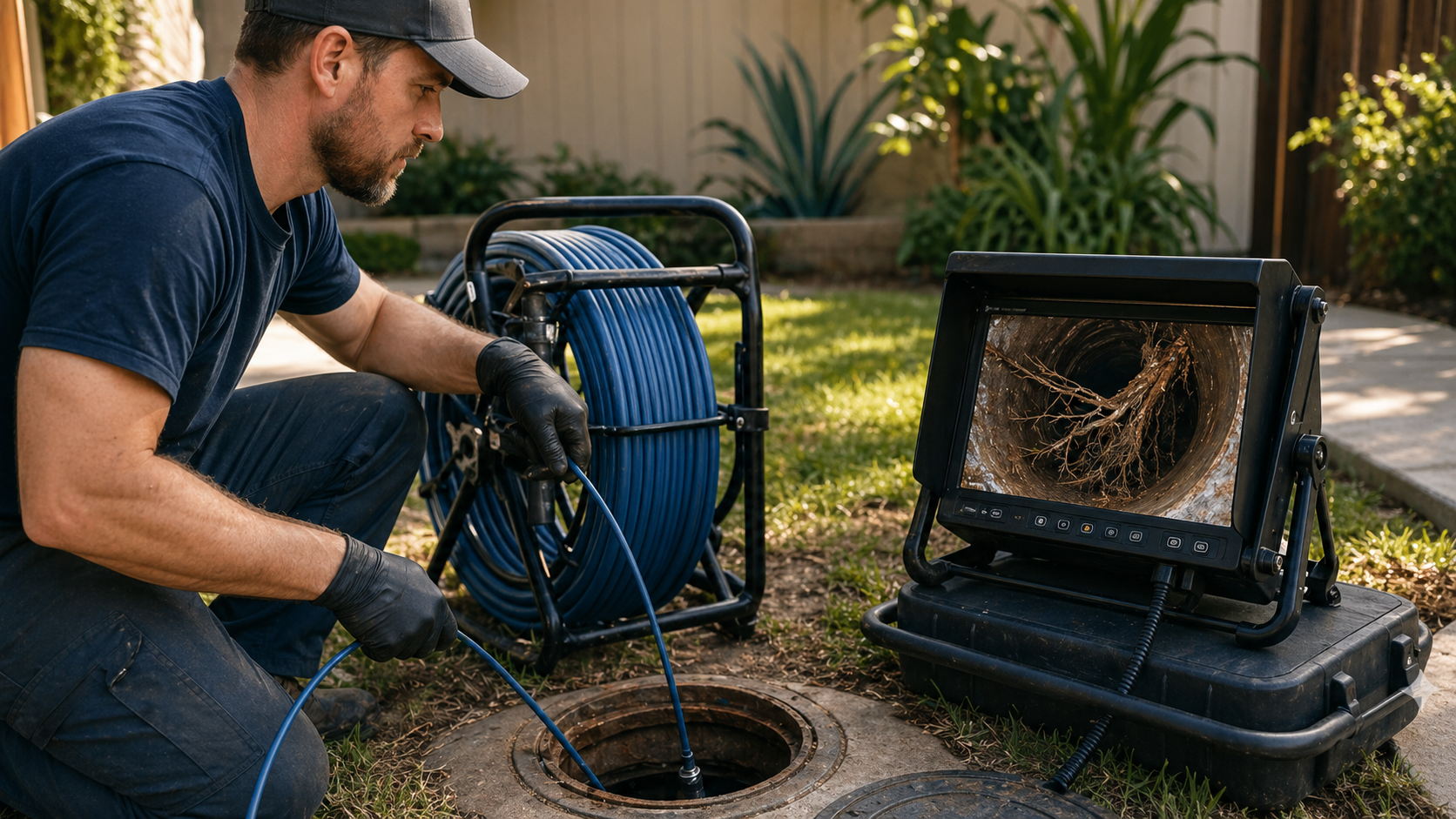
How You Get Here: From Camera Finding to Repair Recommendation Sewer line repair does not start with a quote. It starts with a camera finding. A sewer camera inspection showed something in the pipe that cleaning cannot fix — a crack, a collapse, root intrusion through a broken section, a severe belly, offset joints, or deteriorating pipe material.

Start with the normal pattern: wastewater should move away from the fixture, through the branch line, into the larger building drain or sewer lateral, and out toward the public or private collection system. Most confusion starts when one symptom is judged without locating where that pattern is breaking down.

For sewer line repair and replacement questions, the useful first step is separating a local fixture issue from a deeper line condition, because those two situations can look similar at the surface but lead to different next steps.

  1. What is wrong — the type of defect crack, collapse, offset, belly, root damage, material failure Where it is — the location in the lateral near the house, mid-yard, near the city main How much pipe is affected — a single defect point vs. damage across 25, 50, or 75+ feet What the pipe is made of — PVC, cast iron, clay, Orangeburg each responds differently to repair methods
  2. A repair recommendation without a camera finding is a guess. If anyone quotes you sewer line repair without showing you footage of the defect, get a second opinion.
  3. The Four Repair Methods 1. Spot Repair What it is: A localized repair at one specific point in the line — a single crack, one separated joint, one root entry point, or a short section of damage. The technician exposes that section of pipe, removes the damaged portion, and replaces it with new pipe, then reconnects to the existing line on either side.
  4. When it fits: The damage is isolated to one point. The rest of the pipe is structurally sound. The camera showed a single defect with healthy pipe on both sides of it.
  5. What the site looks like: A small to moderate excavation at the defect location. If the defect is in the yard with no hardscape above it, the dig is straightforward. If it is under a driveway, sidewalk, or landscaping, the surface disruption is larger.
  6. Typical scope: Smallest repair footprint. Shortest timeline — usually completed in one day. Least restoration needed. Lowest cost tier for sewer line repair.
  7. When it does not fit: The camera shows damage at multiple points along the line, or the pipe material is deteriorating generally not just at one spot. Spot-repairing one defect in a pipe that is failing throughout just moves the next failure to the next weak point.
  8. 2. Section Replacement What it is: Replacing a section of the lateral — typically 15 to 50 feet — where the damage extends beyond a single point but does not affect the entire line. The damaged section is excavated, removed, and replaced with new pipe.
  9. When it fits: The camera shows damage across a continuous section — multiple cracks, repeated offsets, root intrusion through several joints, or a belly that spans a significant length — but the pipe on either side of the damaged section is sound.
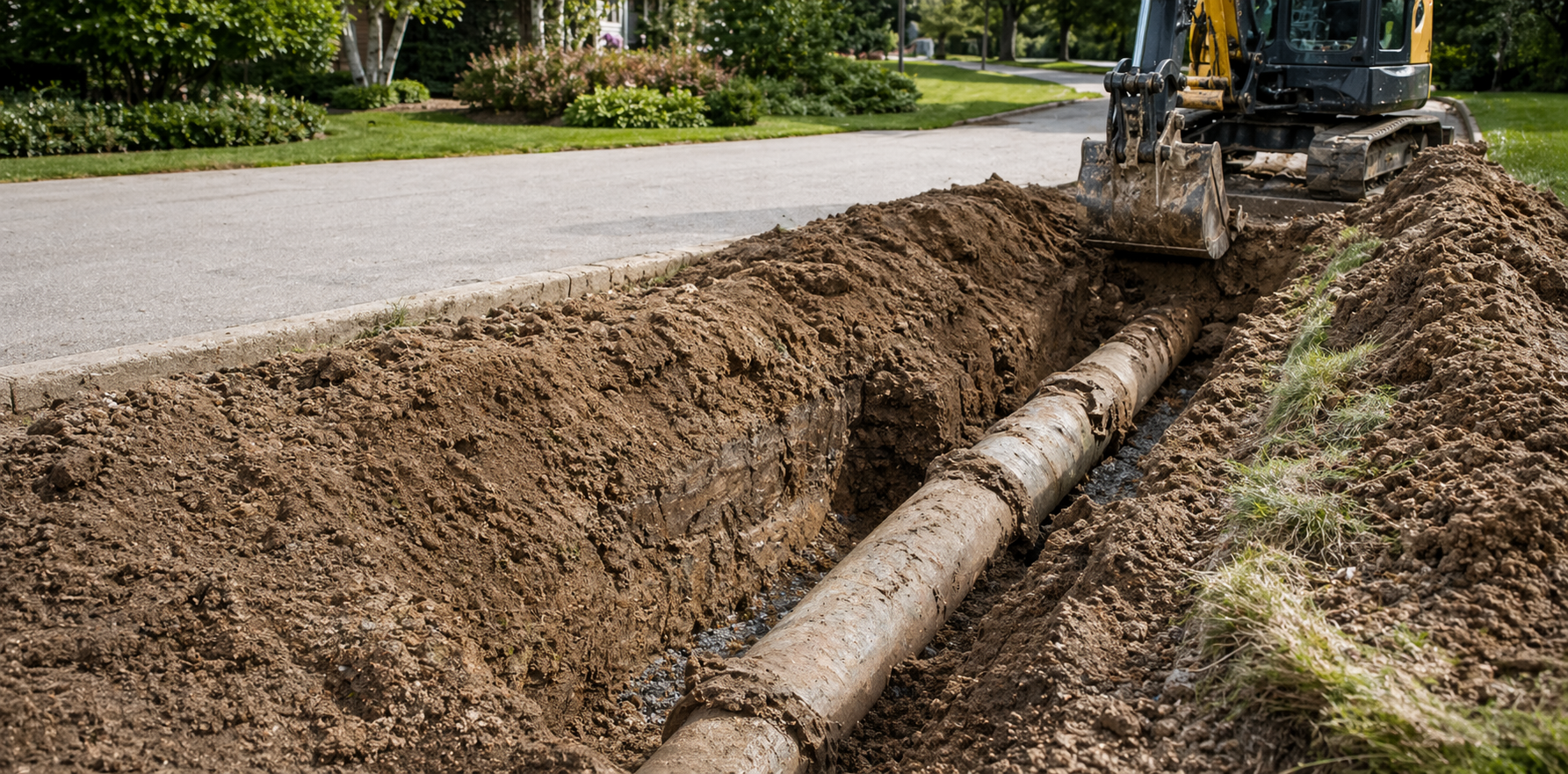
  10. What the site looks like: A trench along the length of the damaged section. The excavation may run across part of the yard, under landscaping, or in some cases under or alongside a driveway or walkway. The trench width and depth depend on the pipe depth and the soil conditions.
  11. Typical scope: Mid-range repair. One to three days for the repair itself, plus restoration time. The excavation creates surface disruption that needs to be restored — backfill, grading, and depending on what was above it, sod, concrete, or landscaping repair.
  12. When it does not fit: The damage extends across the full lateral, or the pipe material is failing throughout. Replacing one section of a fully deteriorating line delays rather than solves the problem.
  13. 3. Trenchless Repair Pipe Lining or Pipe Bursting What it is: Repairing or replacing the pipe from the inside, without digging a full trench. The two most common trenchless methods are:
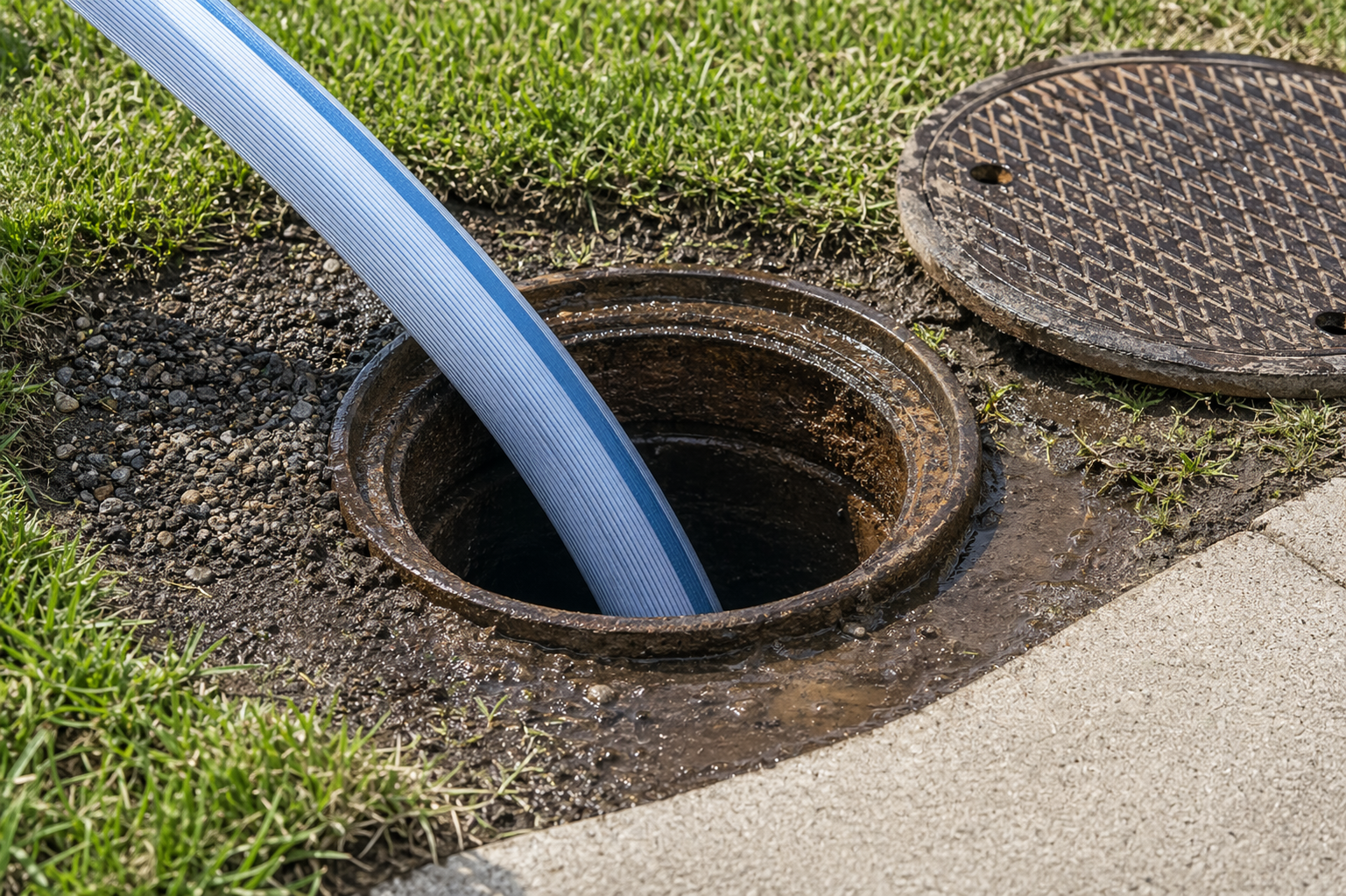
  14. Cured-in-place pipe lining CIPP: A flexible liner coated with resin is pulled or inverted into the existing pipe, inflated against the pipe wall, and cured in place. The result is essentially a new pipe inside the old one.

What Makes The Cost Easier To Judge

Pipe bursting: A bursting head is pulled through the existing pipe, breaking it apart while simultaneously pulling a new pipe in behind it. The old pipe is displaced into the surrounding soil and a new pipe takes its place.

The goal is to move from guesswork to evidence. Good decisions usually come from the same sequence: define the symptom, locate the likely part of the system, check whether the issue is repeating, and decide whether cleaning, inspection, jetting, or repair planning fits.

That sequence keeps the article useful before any service conversation happens. It helps readers ask better questions and makes it harder for a vague diagnosis to sound more certain than it really is.

  1. When it fits: The existing pipe is still mostly round not severely collapsed, the line has adequate access points for entry and exit, and the defects are spread across enough of the line that spot repair would require too many individual digs. Trenchless is particularly valuable when the line runs under a driveway, patio, mature landscaping, or other surface that would be expensive or disruptive to excavate.
  2. What the site looks like: Minimal surface disruption compared to open excavation. Access pits may be needed at the entry and exit points of the repair, but the full length of the line is repaired from below without trenching. The yard, driveway, or landscaping above the pipe is largely undisturbed.
  3. Typical scope: Mid to upper cost range, but often less expensive than full excavation when surface restoration costs are factored in. One to four days depending on the length and complexity. Requires a qualification camera inspection to confirm the pipe is a trenchless candidate.
  4. When it does not fit: The pipe is severely collapsed, crushed, or deformed to the point that a liner cannot be pulled through or a bursting head cannot pass. In that case, the method converts to excavation. Bellies severe enough that the liner would sit in standing water may also disqualify trenchless. The qualification camera inspection determines whether the method is viable before work begins.
  5. 4. Full Excavation and Replacement What it is: Digging a trench the full length of the damaged section or the entire lateral, removing the old pipe, and installing new pipe. This is the most involved repair method and the one with the largest site footprint.
  6. When it fits: The pipe is too damaged for trenchless — severely collapsed, crushed, or deteriorated beyond what lining or bursting can address. The camera shows widespread failure across the full lateral. Or the pipe has multiple severe defects collapse plus belly plus root damage that make trenchless impractical.
  7. What the site looks like: An open trench from the house to the city main connection or from the damaged section's start to its end. The trench width depends on the pipe depth and OSHA safety requirements — deeper pipe requires wider trenching or protective shoring to prevent cave-in. Everything above the trench — sod, soil, landscaping, concrete, driveway, irrigation lines — is disrupted and needs to be restored after the pipe is installed.
  8. Typical scope: Highest cost tier. Three to seven or more days for the repair itself. Restoration — backfill, grading, sod, concrete, driveway patching, landscaping — can add significant time and cost on top of the pipe work. Site conditions depth, soil type, groundwater, utility conflicts, hardscape all drive the scope.
  9. When it is the only option: When the pipe is too far gone for anything less. Full excavation is the method of last resort, not the first recommendation — but when the camera shows a line that has fully failed, it is the only path to a permanent fix.
  10. What Drives the Cost: The Seven Factors 1. The Defect A single crack at one joint is a different repair than a 50-foot section of collapsing cast iron. The type, severity, and extent of the damage determine which repair method applies and how much work the job requires.
  11. 2. The Length A 5-foot spot repair and a 75-foot lateral replacement are not the same job. Every additional foot of affected pipe adds excavation, pipe material, labor, and time.
  12. 3. The Depth A pipe at 3 feet is accessible with basic excavation. A pipe at 8 to 10 feet requires deeper trenching, shoring or safety systems OSHA requires protective measures in trenches over 5 feet deep, more equipment, and more time. Depth is one of the biggest cost multipliers in sewer repair.
  13. 4. The Surface What is on top of the pipe determines the restoration cost — which can rival the repair cost itself. A pipe under open yard with grass is the simplest restoration: backfill, grade, and sod. A pipe under a concrete driveway, paver patio, mature trees, irrigation systems, or a hardscaped walkway adds demolition, removal, and restoration costs that have nothing to do with the pipe itself but everything to do with the final bill.
  14. 5. The Method Spot repair costs less than section replacement. Section replacement may cost less than trenchless. Trenchless may cost less than full excavation — or more, depending on the length and whether surface restoration tips the balance. The method is not a preference; it is determined by the camera findings and the site conditions.

What Helps The Quote Feel Clearer

6. Access and Site Conditions Can the equipment reach the repair area? Is there room for an excavator? Are there other utilities gas, water, electric, cable running near the sewer lateral that need to be located and protected? Is the soil stable or sandy? Is there groundwater that needs to be managed during the excavation? Each of these conditions can add cost.

Small details often change the interpretation. Which fixture backed up first, whether more than one drain is affected, whether the problem returned after clearing, and whether there is odor or standing water all matter.

Use these notes to describe the issue clearly. A good description is often the difference between booking a narrow cleaning visit and starting with inspection or a broader sewer conversation.

  1. 7. Permits, Inspections, and Restoration Many Utah jurisdictions require permits for sewer line repair, particularly when excavation is involved. Permit costs, inspection scheduling, and the possibility of a failed inspection that requires a correction visit are all part of the scope. Restoration — concrete, driveway, landscaping, irrigation, sod — is often quoted separately from the pipe work itself. Make sure you know whether restoration is included in the number or an additional cost.
  2. Common Add-Ons That Change the Final Price These are the line items that appear alongside sewer line repair quotes and can significantly affect the total:
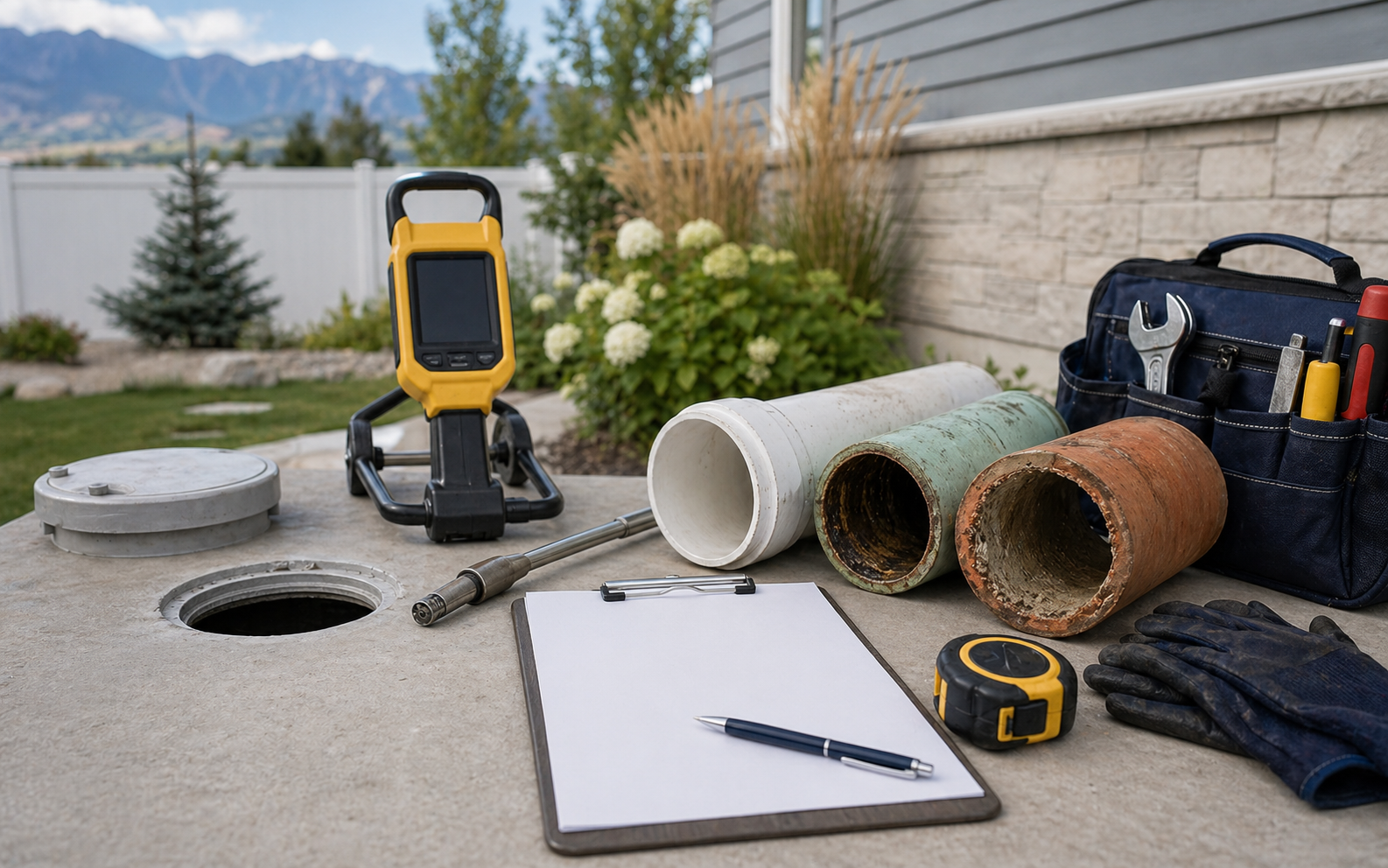
  3. Pre-Repair Diagnostics and Locating Camera inspection, line locating, and documentation to confirm the defect location and plan the repair approach. If you already have camera footage, bringing it to the conversation can reduce this cost.
  4. Permits and Inspection Coordination Filing for the permit, scheduling the inspection, and coordinating with the jurisdiction. If the inspection fails and a correction visit is needed, that adds a separate cost and a schedule delay.
  5. Private Utility Locating Identifying other underground utilities near the sewer lateral before excavation. Gas, water, electric, cable, and irrigation lines may run close to the sewer path. Potholing — vacuum-excavating small test holes to verify utility locations — adds cost but prevents accidentally hitting a gas or water line during the repair.
  6. Concrete, Driveway, or Hardscape Removal and Patching If the pipe runs under concrete, a driveway, or a paved surface, that surface has to be removed to access the pipe and replaced after the repair. Concrete removal and patching can add substantially to the total, especially on larger driveways or decorative hardscape.
  7. Landscaping, Irrigation, and Sod Restoration Restoring what was disrupted above the trench — grading, sod, irrigation lines, plants, trees, retaining walls, or other landscaping features. Quoted separately from the pipe work and highly variable depending on what was there before.
  8. Access Pits for Trenchless Work Trenchless repair avoids a full trench but may require access pits at the entry and exit points. The pits are smaller than a full excavation but still involve digging and restoration.
  9. How to Evaluate a Sewer Line Repair Quote Does it start with camera footage? Any repair recommendation should be based on documented camera findings showing the specific defect — type, location, length, and pipe condition. If the quote was generated without camera inspection, it is a guess. Ask to see the footage.
  10. Does it explain the method and why? The quote should tell you which method is being proposed spot repair, section replacement, trenchless, or excavation and why that method fits your specific situation. "We recommend replacement" without explaining why trenchless was or was not considered is an incomplete recommendation.
  11. Does it account for access and surface? A quote that prices the pipe work but does not mention what happens to the driveway, the landscaping, or the concrete above it is not a complete quote. Ask whether restoration is included or separate.
  12. Does it address permits and inspections? If your jurisdiction requires a permit, that cost and the inspection scheduling should be in the scope. If it is not mentioned, ask.
  13. Does it explain what happens if conditions are different once work begins? Underground work can reveal surprises — utilities in unexpected locations, groundwater, soil conditions worse than expected, or damage that extends further than the camera showed. A good quote explains how scope changes are handled: do they stop and get your approval before proceeding with additional work, or do they add charges after the fact?
  14. Get a second opinion on large quotes Sewer line repair can be a significant investment. If you have received a quote that feels high, get a second camera inspection and recommendation. The cost of a second inspection is small relative to the cost of approving the wrong repair scope. Bring the first company's footage and recommendation to the second company — a good company will tell you whether the proposed scope makes sense.

How We Talk Through The Cost

We do not quote sewer line repair without camera evidence. Every repair recommendation starts with a sewer camera inspection — we run the camera, show you the footage, and walk you through what we found. You see the defect on screen before anyone talks about repair methods or cost.

This is where the article connects back to real service work. The point is not to turn every concern into the biggest possible job; it is to match the symptom pattern to the least confusing next step that can actually answer the question.

Tying the topic back to sewer line repair and replacement keeps the advice grounded. The work should explain what was found, what is still uncertain, and why the recommended next step fits the evidence.

  1. Based on the findings, we explain which method fits — spot repair, section replacement, trenchless, or excavation — and why. We explain the site conditions that affect the scope. We tell you what the quote includes and what is separate. And if the camera shows the pipe is actually still sound and the problem is cleaning-based, we tell you that too. We do not recommend repair when the line does not need it.
  2. If you have already received a repair quote from another company and want a second opinion, call us. We will inspect the line independently, show you our footage, and give you our recommendation. If the first company was right, we will tell you. If the scope does not match what we see, we will explain why.
  3. 801-317-8104 | [email protected]

Talk Through The Price

These price questions connect the numbers back to scope. A useful quote should explain access, urgency, line condition, and what is included instead of treating cost like a single universal number.

For sewer line repair and replacement topics, the best follow-up questions usually separate a simple visit from a visit that may need inspection, deeper cleaning, or repair planning.

Why is sewer line repair so much more expensive than sewer cleaning?

Because the job involves physically replacing or relining damaged pipe underground. Cleaning removes blockages from inside a functional pipe. Repair involves excavation or trenchless technology, new pipe material, connections, backfill, and surface restoration. The equipment, labor, materials, and time are all an order of magnitude larger.

Can sewer line repair cost less if the issue is caught early?

Often yes. A single crack caught early may be a spot repair — smallest scope, shortest timeline, lowest cost. That same crack left untreated for years can grow into a collapsed section that requires full excavation. Camera inspection is the tool that catches defects early, and its cost is small relative to the difference between a spot repair and a full replacement.

Should I compare trenchless and excavation quotes?

Yes, if the camera findings suggest the line might qualify for trenchless. But the comparison only works after a qualification camera inspection determines whether the pipe is a trenchless candidate. A trenchless quote on a pipe that is too collapsed for lining is not a real quote — it is a number that will convert to excavation pricing once work begins.

What if two companies recommend different repair methods?

That is common and it is not necessarily a sign that one is wrong. Different companies may have different equipment capabilities, different comfort levels with trenchless methods, or different assessments of how much of the line is damaged. The camera footage is the tiebreaker — compare what each company's inspection showed and whether their recommendation matches what the footage reveals.

Do I need to be home during the repair?

For most sewer line repairs, yes — at least at the start and at key decision points. You should be present when the technician reviews the plan on site, when any scope changes are discussed, and when the final result is confirmed. The actual repair work — especially multi-day excavation — does not require you to stand in the yard the entire time, but availability for decisions matters. Quick Answers

Who is this article best for?

Homeowners in Northern Utah who have been told their sewer line needs repair, have received a sewer line repair quote and want to understand whether the scope and method make sense, or who want to understand what the job involves before they get a camera inspection.

What should I do after reading this article?

If you have camera footage showing damage, call 801-317-8104 and describe what was found. We will tell you which repair method likely fits and what the scope looks like. If you do not have camera footage yet, the first step is a sewer camera inspection to document the defect before any repair conversation.

How can I reach Mountain West?

Mountain West Hydro Jetting serves Northern Utah and the Salt Lake corridor. Call 801-317-8104 or email [email protected].

Read This Next

These articles stay close to the same decision without repeating this one. Use them when the symptoms, timing, or service path points in a slightly different direction.

Source Log

These sources were used for background, claim checking, or local context. The article explains the topic in Mountain West's own words and does not copy outside article structure or long passages.

U.S. Environmental Protection Agencyparaphrased

Sanitary Sewer Overflows (SSOs)

Supports: Sanitary sewer overflows can back up into buildings, damage property, and create public-health concerns; sewer systems carry domestic and commercial wastewater to treatment facilities.

U.S. Environmental Protection Agencyparaphrased

Sanitary Sewer Overflow Frequent Questions

Supports: Common sewer blockage contributors include fats, oils and grease, wipes and other non-flushable products, roots entering defects, sediment, and other materials.

Ogden Cityparaphrased

Sewer Utility Information

Supports: Local Utah utility guidance can make the private-lateral responsibility clear: property owners may be responsible for maintenance and repair from the home to the city main, including tap connection, depending on jurisdiction.

Manual review note: Local ownership rules vary by city and utility. Treat this as regional context, not legal advice for every property.

Occupational Safety and Health Administrationparaphrased

Trenching and Excavation

Supports: Excavation decisions are also safety decisions; trench cave-ins are a serious hazard and protective systems such as sloping, shoring, or shielding may be required.

NASSCOparaphrased

Assessment

Supports: Internal television inspection is a major tool for assessing sewer-pipe condition and turning symptoms into documented findings.

Utah Department of Environmental Qualitybackground

Wastewater Programs

Supports: Utah wastewater programs cover municipal wastewater planning, onsite wastewater systems, operating permits, and related design requirements, reinforcing that drain and sewer issues connect to regulated infrastructure.

Related Next Steps

Next StepSewer Line Repair And ReplacementGo here if sewer line repair cost points toward structural sewer repair instead of another cleaning-only visit.Next StepTrenchless Sewer RepairCompare no-dig repair options if sewer line repair cost is moving past cleaning and into lower-disruption repair planning.Next StepGet A Free QuoteStart a free quote if you want service-fit or pricing guidance after this article.Next StepRead BlogCompare adjacent articles around sewer line repair cost before you choose the next path.

More for You

Follow-up blog articles chosen for this page so the next question stays close to the same decision path.

Sewer Line Repair vs. Sewer Line Replacement: How to Decide Based on What the Camera Shows article image for Sewer Line Repair And Replacement.Blog ArticleSewer Line Repair vs. Sewer Line Replacement: How to Decide Based on What the Camera ShowsRead this next for another sewer line repair and replacement angle that builds on this article.Sewer Line Repair: Warning Signs Your Pipe Needs More Than Cleaning article image for Sewer Line Repair And Replacement.Blog ArticleSewer Line Repair: Warning Signs Your Pipe Needs More Than CleaningRead this next for another sewer line repair and replacement angle that builds on this article.When Drain Cleaning Stops Working: Signs You Need Sewer Line Repair article image for Sewer Line Repair And Replacement.Blog ArticleWhen Drain Cleaning Stops Working: Signs You Need Sewer Line RepairRead this next for another sewer line repair and replacement angle that builds on this article.Sewer Line Repair Near Me: What to Expect From Start to Finish article image for Sewer Line Repair And Replacement.Blog ArticleSewer Line Repair Near Me: What to Expect From Start to FinishRead this next for another sewer line repair and replacement angle that builds on this article.

Quick Answers About Sewer Line Repair: What the Job Involves and What Drives the Cost

These are the quick answers most people want before they call, book, or decide on the next step.

What is this article about?

What sewer line repair actually involves — the four repair methods, what each one looks like, when each one applies, what changes the scope, and how to evaluate a repair quote. It connects the topic back to sewer line repair and replacement when readers are trying to decide on the right next move.

Who is this article best for?

A sewer camera found damage. The technician said the line needs repair. Now you are looking at a quote that may be anywhere from a few hundred dollars to five figures, and you have no frame of reference for whether that number is reasonable or what the work actually involves. It is most useful for readers trying to understand the issue before they book, compare services, or decide whether the symptoms point to a bigger sewer or drain problem.

What should I do after reading this article?

If the issue sounds familiar, the usual next step is to review the sewer line repair and replacement page or compare it with trenchless sewer repair before deciding whether to request a quote, book service, or call for faster guidance.

How can I reach Mountain West?

Mountain West Hydro Jetting serves Northern Utah and the Salt Lake corridor. You can reach us at 801-317-8104 or [email protected].