Mountain West Jetting
Mountain West logoMountain West Hydro Jetting & Sewer Maintenance LLC

DRAIN CLEANING IN UTAH: WHAT AFFECTS THE PRICE AND HOW TO COMPARE QUOTES

Blog Article

Story by Mountain West Hydro JettingPublished June 18, 2026Drain CleaningServing Northern Utah and the Salt Lake corridor

Drain Cleaning in Utah: What Affects the Price and How to Compare Quotes

What actually changes a drain cleaning quote in Utah — fixture type, line access, urgency, equipment, and add-ons. How to compare quotes and know whether the scope matches the price.

Start Here

If you have searched "how much does drain cleaning cost in Utah," you have probably noticed that nobody gives you a straight answer. There is a reason for that — but it is not the reason most companies give you.

What This Article Helps You Do

  • Understand the specific factors that make a drain cleaning quote go up or down
  • Recognize the difference between a simple, moderate, and complex drain job
  • Know what to ask before booking so you are not surprised by add-ons, scope changes, or emergency premiums
  • Compare quotes from different companies by scope, not just price

Quick Takeaway

Drain cleaning cost in Utah is not random. It is driven by five things: what is clogged fixture vs. main line, how hard it is to reach access, how urgent it is scheduled vs. emergency, what equipment the job needs cable vs. hydro jetting vs. camera, and whether the problem has happened before one-time vs. recurring. Once you understand those five factors, you can evaluate any quote.

Drain Cleaning

If you have searched "how much does drain cleaning cost in Utah," you have probably noticed that nobody gives you a straight answer. There is a reason for that — but it is not the reason most companies give you.

The real reason is that drain cleaning is not one job. A slow kitchen sink, a backed-up basement floor drain, and a main sewer line full of roots are three completely different problems that happen to start with the same sentence: "the drain is not working." They require different equipment, different time, different access, and different levels of diagnosis. Quoting them all at one price would mean either overcharging the simple jobs or losing money on the complex ones.

This article does not publish our prices. Instead, it does something more useful: it breaks down every factor that changes a drain cleaning quote so you can evaluate any quote you receive — ours or anyone else's — and know whether the price matches the work.

What Changes The Number

The Five Factors That Change the Price 1. What Is Clogged — Fixture, Branch Line, or Main Sewer Line This is the single biggest price driver. A kitchen sink clog and a main sewer line blockage are not the same job, even though both show up as "the drain is not working."

Start with the normal pattern: wastewater should move away from the fixture, through the branch line, into the larger building drain or sewer lateral, and out toward the public or private collection system. Most confusion starts when one symptom is judged without locating where that pattern is breaking down.

For drain cleaning questions, the useful first step is separating a local fixture issue from a deeper line condition, because those two situations can look similar at the surface but lead to different next steps.

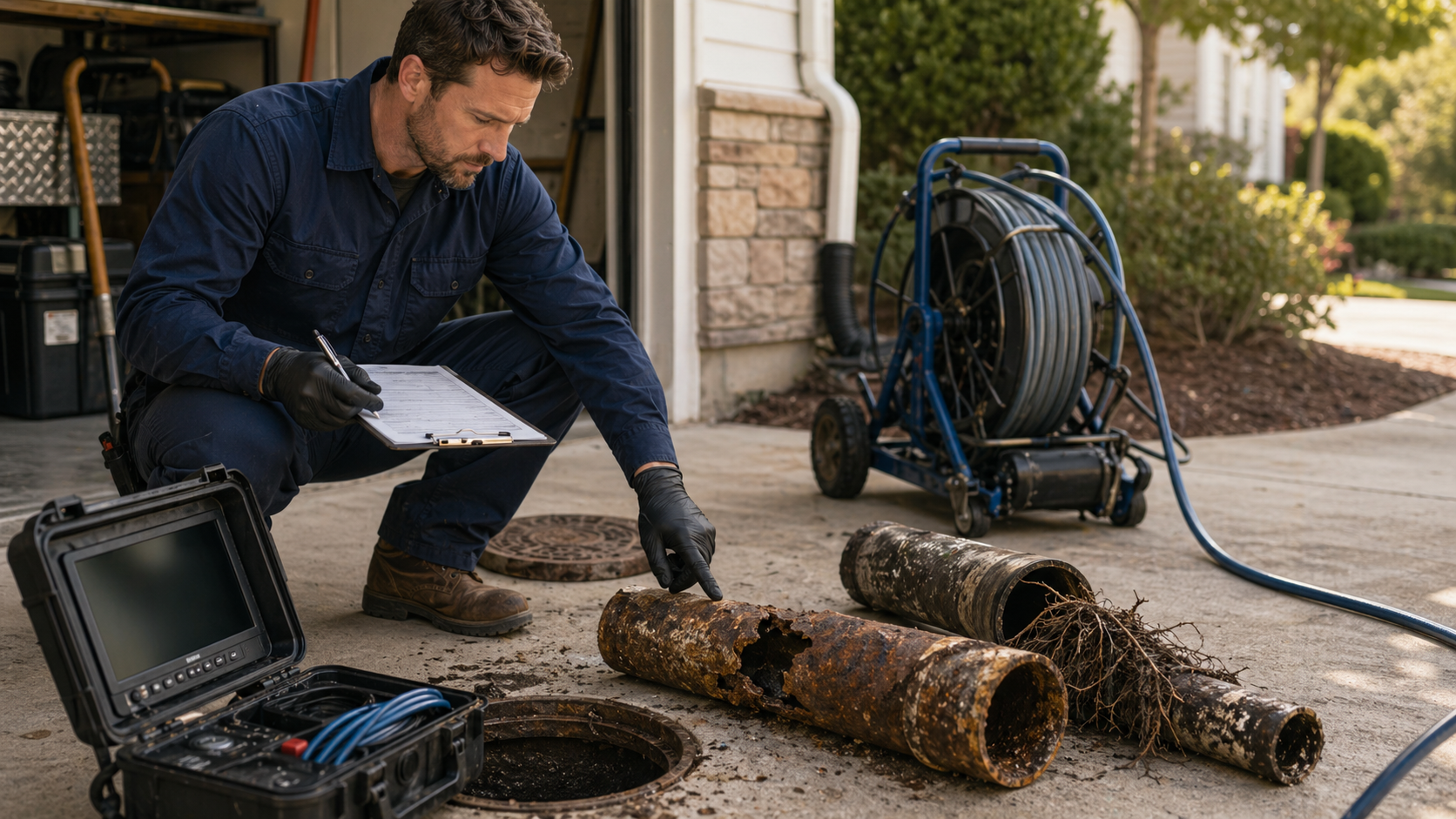
  1. Fixture-level clog. One sink, one shower, one tub, one floor drain. The blockage is in the short pipe between the fixture and the branch line. Usually the fastest and simplest type of drain cleaning. The problem is localized, the access is usually straightforward, and the equipment needed is basic.
  2. Branch-line clog. The blockage is past the fixture, deeper in the branch line that connects a group of fixtures to the main drain. Harder to reach, may affect more than one fixture, and may take longer to clear. This is the middle tier — not a simple fixture pop, but not a main line failure either.
  3. Main sewer line blockage. The blockage is in the main lateral — the shared pipe that carries waste from the entire house to the city sewer. Multiple fixtures are slow or backing up at the same time. This is the biggest scope for drain cleaning because the line is longer, deeper, and often requires heavier equipment to clear. If the main line is involved, the job may move from standard drain cleaning into sewer cleaning, hydro jetting, or camera inspection territory.
  4. What this means for your quote: A company quoting a main line job at the same price as a simple fixture clearing is either underpricing the main line work and will add charges on site or overpricing simple work and you are paying for scope you do not need. The first question to ask any company is: based on what I described, does this sound like a fixture, branch line, or main line problem?
  5. 2. Access — How Easy Is It to Reach the Line Access is the factor most homeowners do not think about until the technician is on site.
  6. Good access. A clean, accessible cleanout in the yard or at the foundation. A fixture with straightforward drain access. No obstacles between the equipment and the line. Good access keeps the price at the base tier because the technician can get to work without removing anything, digging anything, or working around anything.
  7. Restricted access. The cleanout is buried under landscaping, covered by a deck, or located inside a finished basement wall. The only access to the clog is through a toilet that has to be pulled and reset. The drain is behind cabinetry or under heavy equipment. Restricted access adds time, labor, and sometimes materials — and it adds cost.
  8. No access. There is no cleanout at all, or the existing cleanout is broken, collapsed, or inaccessible. The technician has to create access — install a cleanout, cut into a line, or find an alternative entry point. This is the most significant access add-on and it can change the scope of the visit substantially.
  9. What this means for your quote: If a company quotes without asking about cleanout location or access conditions, the quote may not survive first contact with the actual job. A lower quote that does not account for access can become a higher quote on site.
  10. 3. Urgency — Scheduled vs. Emergency Every drain and sewer company charges more for emergency service. This is standard across the industry in Utah and everywhere else. The premium covers priority scheduling, dispatch disruption, and after-hours response — not inflated service rates.
  11. Scheduled service. The problem exists but it is not actively getting worse. You can wait a day or a few days for an appointment. This is the base price tier.
  12. Emergency service. The problem is active — sewage backing up, multiple fixtures failing, property damage in progress, or the home is unusable. The appointment jumps the queue and may happen after hours, on weekends, or on holidays. Emergency pricing applies.

What Makes The Cost Easier To Judge

What this means for your quote: Ask whether the quote you received includes or excludes the emergency premium. A number that sounds reasonable may not include the premium, and you will see it added at dispatch or on the invoice. We confirm emergency pricing on the phone before sending the truck.

The goal is to move from guesswork to evidence. Good decisions usually come from the same sequence: define the symptom, locate the likely part of the system, check whether the issue is repeating, and decide whether cleaning, inspection, jetting, or repair planning fits.

That sequence keeps the article useful before any service conversation happens. It helps readers ask better questions and makes it harder for a vague diagnosis to sound more certain than it really is.

  1. 4. Equipment — Cable, Hydro Jetting, or Camera Different equipment solves different problems, and the equipment involved changes the cost.
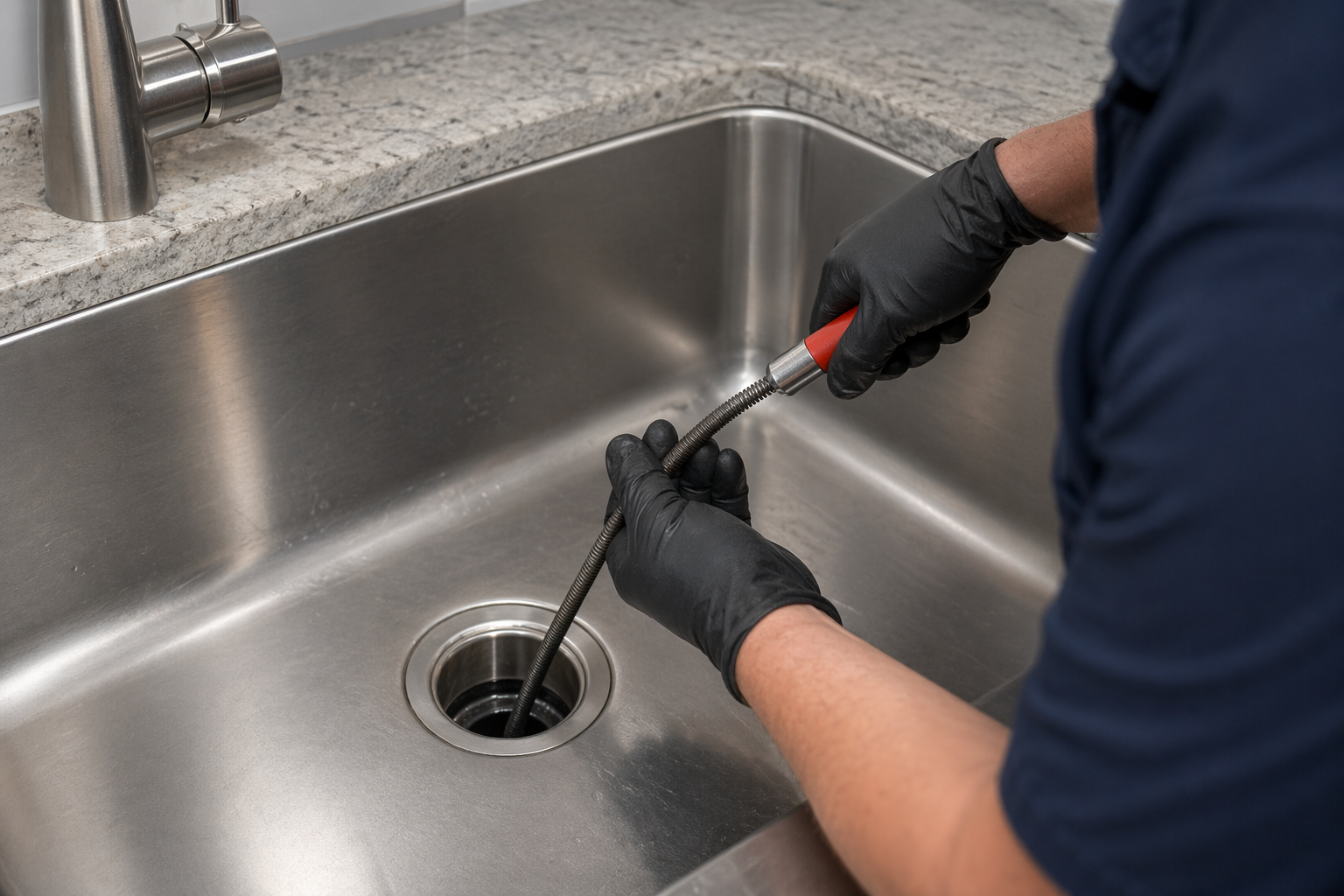
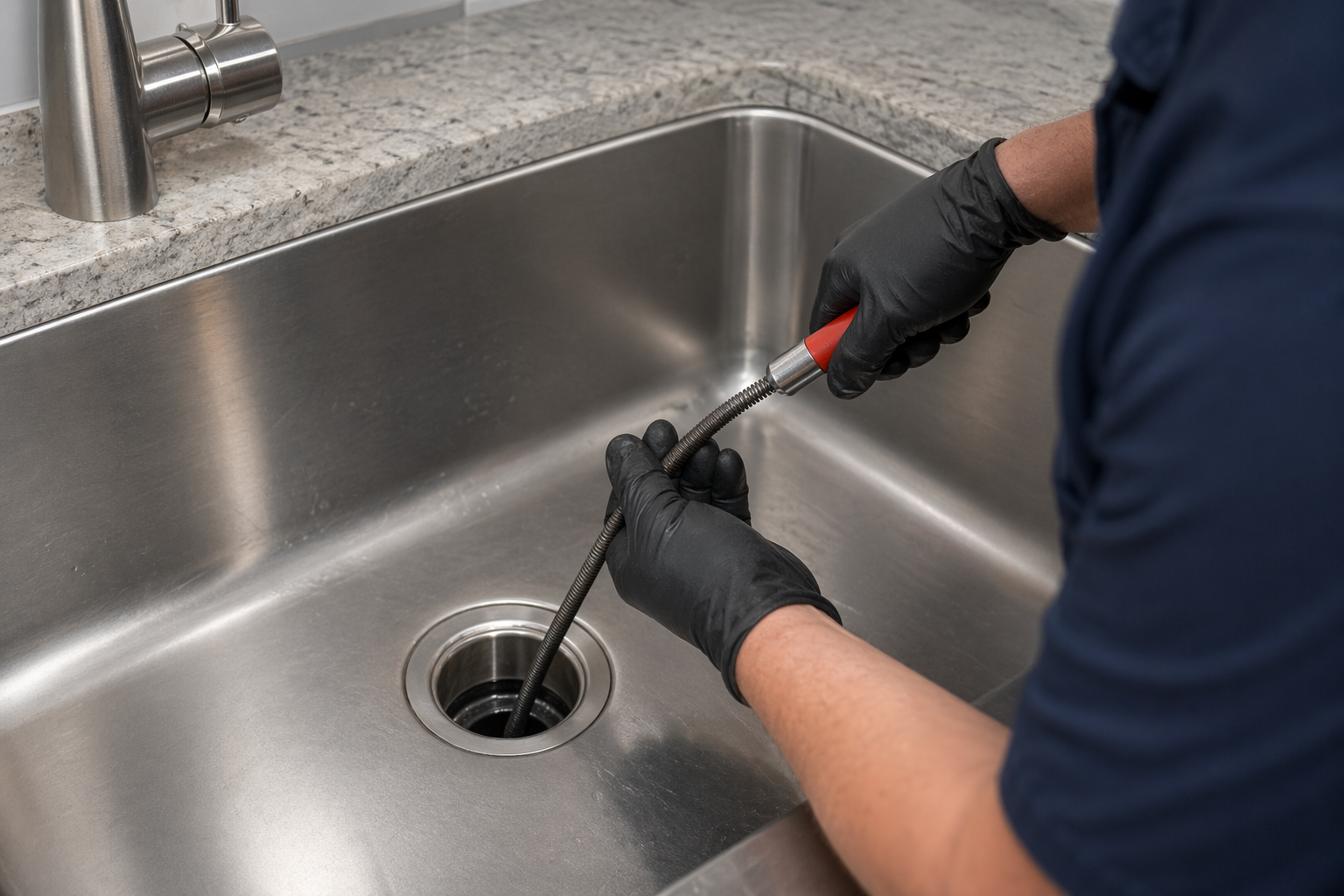
  2. Cable or snake. A rotating cable is fed into the line to break through or pull out the blockage. This is the most common tool for simple fixture clogs and lighter branch-line work. Least expensive equipment tier.
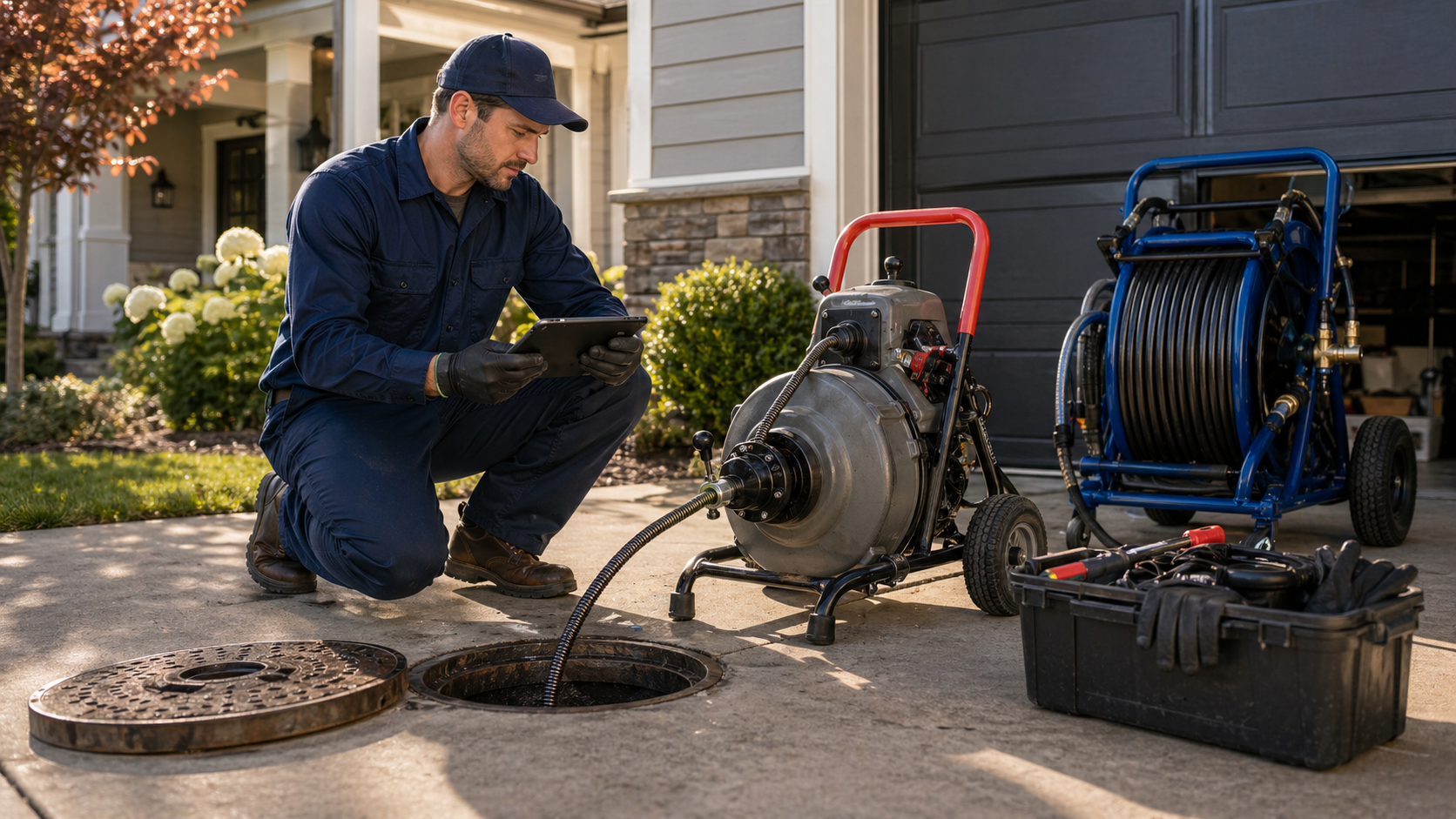
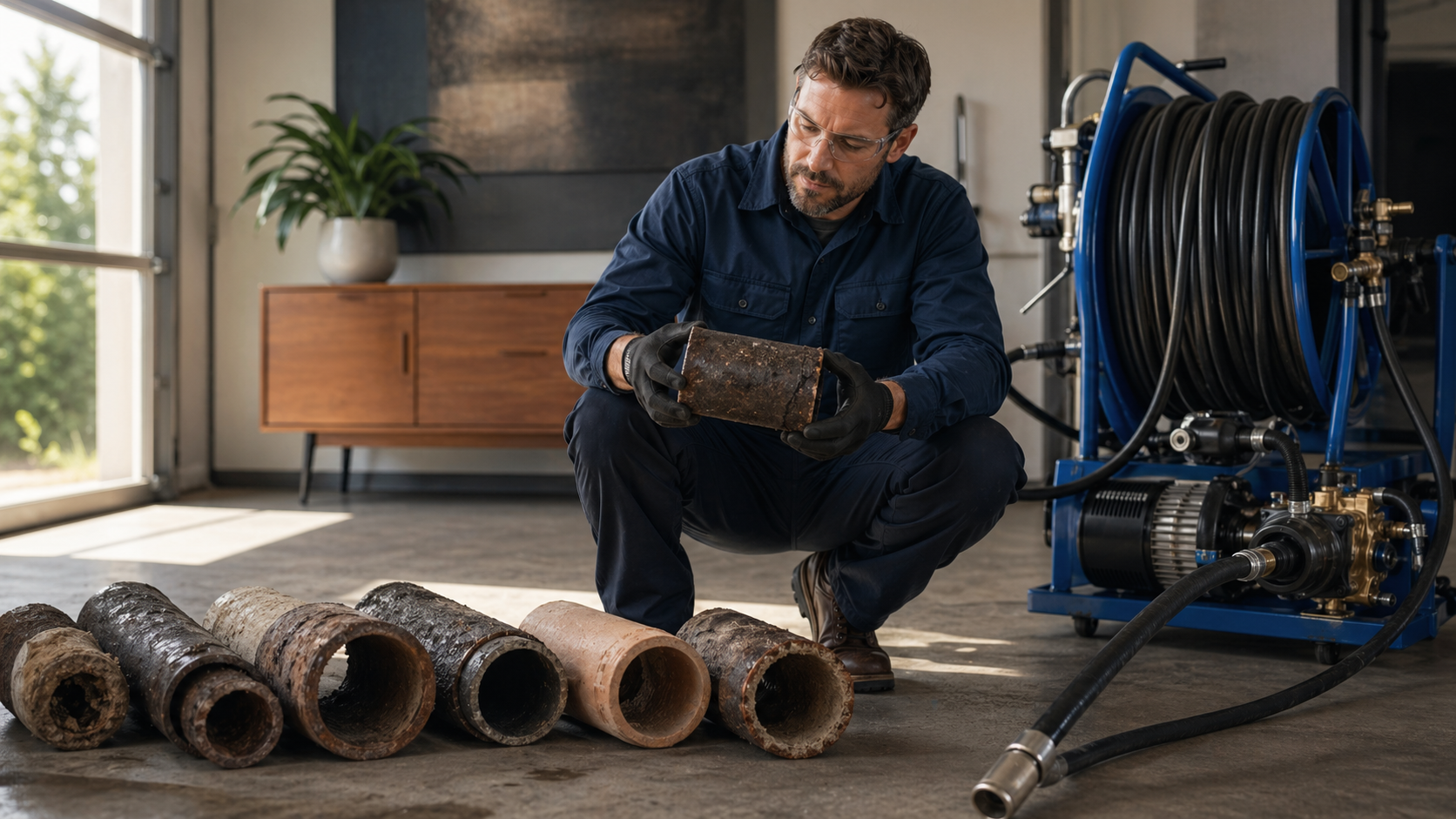
  3. Hydro jetting. A high-pressure water system — our equipment runs at 3,850 PSI and 8 GPM with 300 feet of reach — that clears grease, roots, scale, and heavy buildup from the entire pipe wall. More thorough than cable, handles tougher problems, and takes more time and setup. Higher equipment tier.
  4. If you have been quoted $1,500 to $4,000 for a residential hydro jetting job, that range exists in the Utah market. Some of that range is justified — longer lines, severe buildup, difficult access, and complex jobs cost more. But some of it is overhead markup from large companies with big fleets and big advertising budgets. Before you approve a hydro jetting quote in that range, ask what the line length is, what the access situation looks like, and what specifically makes the job complex. If the answer is vague, get a second quote.
  5. Sewer camera inspection. A camera is fed into the line to show the interior condition — cracks, offsets, root intrusion, bellies, collapse, or pipe deterioration. Camera inspection can be a standalone diagnostic, a pre-purchase sewer scope, or an add-on after cleaning to document the pipe condition. It costs more than a basic cleaning because it is a separate piece of equipment with its own time and setup.
  6. What this means for your quote: Ask what equipment the company is bringing and whether the quoted price includes everything or only the initial clearing. A company that shows up with only a hand snake and then tells you the job needs jetting — which they do not carry — will charge you for the first visit and refer you to someone else for the second. We bring hydro jetting, sewer camera, and cable equipment on every truck.
  7. 5. History — First-Time Clog vs. Recurring Problem A clog that has never happened before is a different job than a clog that has been cleared three times in the past year.
  8. First-time clog. Clear the line, confirm flow, done. The simplest scope with the least diagnostic need.
  9. Recurring clog. The line has been cleaned before and the problem returned. The cleaning itself may be the same work, but the job now includes a diagnostic question: why does this keep happening? That question usually leads to camera inspection, which adds scope and cost. It may also reveal that the problem is structural — a cracked pipe, root intrusion, a belly — and the conversation shifts from cleaning to repair.
  10. What this means for your quote: If you are calling for a repeat clog, say so. A company quoting a first-time cleaning price for a recurring problem is quoting too narrow a scope — or they are going to recommend add-ons on site once they see the pattern.
  11. Common Add-Ons That Change the Final Price These are the line items that turn a base quote into the final invoice. They are legitimate — they represent real additional work — but you should know they exist before you book so you can ask whether they apply to your job.
  12. Toilet Pull and Reset If the only access to the clog is through the toilet drain, the toilet has to be removed, the line cleared, and the toilet reinstalled with a new wax ring or gasket. This is a common add-on for main-line access and for clogs in the toilet branch line that a plunger or closet auger cannot reach.

What Helps The Quote Feel Clearer

Buried or Inaccessible Cleanout The cleanout exists but it is buried under dirt, landscaping, concrete, or a deck. The technician has to locate it and expose it before any cleaning can begin. The difficulty of access determines how much this adds.

Small details often change the interpretation. Which fixture backed up first, whether more than one drain is affected, whether the problem returned after clearing, and whether there is odor or standing water all matter.

Use these notes to describe the issue clearly. A good description is often the difference between booking a narrow cleaning visit and starting with inspection or a broader sewer conversation.

  1. Cleanout Installation or Access Correction There is no usable cleanout, or the existing cleanout is broken, collapsed, or in the wrong location. A new cleanout has to be installed to give the equipment a way into the line. This is a more significant add-on and adds both materials and time.
  2. Roof or Vent-Stack Access Some clogs can only be reached by running the cable or jetter through the vent stack on the roof. Roof access adds setup time, safety considerations, and in some cases equipment that is different from ground-level work.
  3. Additional Fixture Groups The quote covered one fixture or one section of the drain system, but the problem turns out to involve additional fixtures or a second branch line. Each additional group adds clearing time and scope.
  4. Root Chemical Treatment After roots are cleared from the line, a chemical root treatment can be applied to slow regrowth at the entry points. This is a maintenance add-on, not a permanent fix — the roots will eventually return if the pipe defect is not repaired.
  5. Camera Inspection After Cleaning Running the camera after the line is cleared to document the pipe condition and check for structural issues. This is an add-on to the cleaning visit, not a separate standalone appointment. Often recommended after a recurring clog or a particularly difficult clearing.
  6. Restaurant, Multifamily, or Tenant Coordination Jobs that require coordination with tenants, business operations, or property management add time and complexity. These typically move the quote from residential to commercial tier pricing.
  7. How to Compare Quotes Ask what the quote covers "$200 for drain cleaning" means nothing without scope. Is it one fixture or the main line? Does it include camera inspection? Does it account for cleanout access? A lower number with a narrower scope is not a better quote — it is a different job.
  8. Ask what equipment they bring A company that shows up with a hand snake and nothing else can handle simple fixture clogs. If the problem is in the main line, involves roots, or needs diagnosis, you need jetting and camera capability on the truck. If the company does not carry that equipment, they will clear what they can and refer you out — and you will pay for two visits instead of one.
  9. Ask about the emergency premium Every company charges more for emergency work. The question is how much more and whether they tell you before dispatch. Ask whether the quoted number includes or excludes the premium.
  10. Ask about add-ons Ask specifically: will you need to pull the toilet? Is the cleanout accessible or will you need to locate it? Is camera inspection included or separate? The answers to these questions are where the base quote becomes the real price.
  11. Be skeptical of extremely low advertised prices A $99 drain cleaning special exists to get a truck to your house. The actual price after add-ons, scope adjustments, and on-site discoveries is rarely $99. If a quote sounds too low for the problem you described, it probably does not include the work the problem actually needs.

How We Talk Through The Cost

We do not publish a fixed price list because the work is not fixed. A kitchen sink clog and a main sewer line full of roots are different jobs with different scopes, and quoting them the same would mean either overcharging you on the simple work or cutting corners on the complex work.

This is where the article connects back to real service work. The point is not to turn every concern into the biggest possible job; it is to match the symptom pattern to the least confusing next step that can actually answer the question.

Tying the topic back to drain cleaning keeps the advice grounded. The work should explain what was found, what is still uncertain, and why the recommended next step fits the evidence.

  1. What we do instead: call us at 801-317-8104, describe what is happening, and we walk you through what the job likely involves — which fixture, what access looks like, whether it sounds like a main line issue, and what equipment the situation probably needs. You get a clear scope and a quote before we dispatch. If the job on site turns out to be genuinely different from what was described, we explain the change and get your approval before proceeding.
  2. If you have already received a quote from another company and want to understand whether the scope and price make sense for what you described, call us and we will tell you honestly. We would rather help you make a good decision than pressure you into a bad one.
  3. 801-317-8104 | [email protected]

Talk Through The Price

These price questions connect the numbers back to scope. A useful quote should explain access, urgency, line condition, and what is included instead of treating cost like a single universal number.

For drain cleaning topics, the best follow-up questions usually separate a simple visit from a visit that may need inspection, deeper cleaning, or repair planning.

Why is one drain cleaning quote so different from another?

Usually because the scope is different even though the problem sounds the same. A quote for a single fixture clearing with easy access and a quote for a main line backup with a buried cleanout are not the same job. The range between the two can be significant. Ask each company what their quote covers — not just the total, but the scope, equipment, and add-ons.

Does a higher quote always mean a bigger problem?

Not always. It can also mean the company is quoting a more complete scope — including camera inspection, cleanout access, or emergency premium — while a lower quote covers only the base clearing and will add line items on site. Compare the total expected cost, not the headline number.

How much more does emergency drain cleaning cost?

Every company handles this differently. The typical industry practice in Utah is a percentage premium on top of the base price for emergency, after-hours, weekend, and holiday calls. Ask what the premium is and whether the quoted price already includes it before you approve dispatch.

Why is hydro jetting more expensive than regular drain cleaning?

Different equipment, more setup, and more time. Regular drain cleaning uses a cable machine to break through the blockage. Hydro jetting uses a high-pressure water system that clears the entire pipe wall — grease, roots, scale, and buildup. The cleaning is more thorough and the results typically last longer. If you have been quoted $1,500 to $4,000 for a residential hydro jetting job, ask what makes the job complex enough to justify that range — line length, access difficulty, severity of the buildup. If the answer is vague, get a second opinion. Quick Answers

Who is this article best for?

Homeowners and businesses in Utah who want to understand why drain cleaning quotes vary so much, or who have received a quote and want to evaluate whether the scope and price make sense for their situation.

What should I do after reading this article?

Call 801-317-8104 and describe what is happening. We will walk you through the likely scope and give you a quote before dispatching. Or if you have already received a quote from another company, call us and we will help you evaluate it honestly.

How can I reach Mountain West?

Mountain West Hydro Jetting serves Northern Utah and the Salt Lake corridor. Call 801-317-8104 or email [email protected].

Read This Next

These articles stay close to the same decision without repeating this one. Use them when the symptoms, timing, or service path points in a slightly different direction.

Source Log

These sources were used for background, claim checking, or local context. The article explains the topic in Mountain West's own words and does not copy outside article structure or long passages.

U.S. Environmental Protection Agencyparaphrased

Sanitary Sewer Overflows (SSOs)

Supports: Sanitary sewer overflows can back up into buildings, damage property, and create public-health concerns; sewer systems carry domestic and commercial wastewater to treatment facilities.

U.S. Environmental Protection Agencyparaphrased

Sanitary Sewer Overflow Frequent Questions

Supports: Common sewer blockage contributors include fats, oils and grease, wipes and other non-flushable products, roots entering defects, sediment, and other materials.

Clinton City, Utahparaphrased

Sewer

Supports: Local sewer maintenance programs may remove roots, grease, and debris from public lines; bubbling, gurgling, or odors can also relate to venting and sewer-maintenance conditions.

Manual review note: Use as regional public-utility context only; it does not prove the cause of a private-property problem.

Utah Department of Environmental Qualitybackground

Wastewater Programs

Supports: Utah wastewater programs cover municipal wastewater planning, onsite wastewater systems, operating permits, and related design requirements, reinforcing that drain and sewer issues connect to regulated infrastructure.

Related Next Steps

Next StepDrain CleaningExplore drain-cleaning resolution if drain cleaning may still fit a more direct clearing visit.Next StepMain Line Drain CleaningCompare whether a simpler clearing path still fits after reading about drain cleaning.Next StepGet A Free QuoteStart a free quote if you want service-fit or pricing guidance after this article.Next StepRead BlogCompare adjacent articles around drain cleaning before you choose the next path.

More for You

Follow-up blog articles chosen for this page so the next question stays close to the same decision path.

Main Line Drain Cleaning: How to Tell When a Clog Is More Than a Fixture Problem article image for Main Line Drain Cleaning.Blog ArticleMain Line Drain Cleaning: How to Tell When a Clog Is More Than a Fixture ProblemOpen this if you want the main line drain cleaning side of the decision next.Main Line Drain Cleaning: What the Job Involves and Why It Costs More article image for Main Line Drain Cleaning.Blog ArticleMain Line Drain Cleaning: What the Job Involves and Why It Costs MoreOpen this if you want the main line drain cleaning side of the decision next.When Drain Cleaning Stops Working: Signs You Need Sewer Line Repair article image for Sewer Line Repair And Replacement.Blog ArticleWhen Drain Cleaning Stops Working: Signs You Need Sewer Line RepairRead this next to see how drain cleaning connects into sewer line repair and replacement planning.Sewer and Drain Cleaning Services Near Me: How to Compare and What to Look For article image for Sewer Cleaning And Maintenance.Blog ArticleSewer and Drain Cleaning Services Near Me: How to Compare and What to Look ForRead this next to see how drain cleaning connects into sewer cleaning and maintenance planning.

Quick Answers About Drain Cleaning in Utah: What Affects the Price and How to Compare Quotes

These are the quick answers most people want before they call, book, or decide on the next step.

What is this article about?

What actually changes a drain cleaning quote in Utah — fixture type, line access, urgency, equipment, and add-ons. How to compare quotes and know whether the scope matches the price. It connects the topic back to drain cleaning when readers are trying to decide on the right next move.

Who is this article best for?

If you have searched "how much does drain cleaning cost in Utah," you have probably noticed that nobody gives you a straight answer. There is a reason for that — but it is not the reason most companies give you. It is most useful for readers trying to understand the issue before they book, compare services, or decide whether the symptoms point to a bigger sewer or drain problem.

What should I do after reading this article?

If the issue sounds familiar, the usual next step is to review the drain cleaning page or compare it with main line drain cleaning before deciding whether to request a quote, book service, or call for faster guidance.

How can I reach Mountain West?

Mountain West Hydro Jetting serves Northern Utah and the Salt Lake corridor. You can reach us at 801-317-8104 or [email protected].