Mountain West Jetting
Mountain West logoMountain West Hydro Jetting & Sewer Maintenance LLC

TRENCHLESS SEWER REPAIR VS. SEWER EXCAVATION: WHICH METHOD FITS YOUR LINE?

Blog Article

Story by Mountain West Hydro JettingPublished June 18, 2026Excavation Vs TrenchlessServing Northern Utah and the Salt Lake corridor

Trenchless Sewer Repair vs. Sewer Excavation: Which Method Fits Your Line?

Trenchless sewer repair gets most of the attention because it sounds less invasive. In many cases, it is. But trenchless is a method, not a universal fix. When the pipe is fully collapsed, severely offset, improperly graded, or inaccessible to trenchless equipment, sewer excavation is not the fallback — it is the right answer. This article gives you the decision framework: what each method does, what pipe conditions disqualify trenchless, and what factors specific to Northern Utah affect the choice.

Start Here

Most homeowners hear "trenchless" and think it is automatically the better option. Less digging, less disruption, faster timeline. All of that can be true — when the pipe is a candidate for trenchless work.

What This Article Helps You Do

  • Understand what CIPP lining and pipe bursting actually do — and what they cannot do
  • Identify the pipe conditions where sewer excavation is the stronger method
  • Compare disruption, timeline, restoration, and long-term reliability between methods
  • Factor in Northern Utah soil and frost line conditions that affect excavation scope
  • Know what to expect during a Mountain West inspection and method recommendation

Quick Takeaway

Trenchless sewer repair works when the pipe is structurally intact enough to accept a liner or allow a bursting head to pass through. Sewer excavation works when it does not — collapsed sections, severe offsets, grade problems, or access limitations that trenchless equipment cannot navigate. The camera inspection determines which method fits. Choose the method that fixes the defect reliably, not the one that sounds easier on paper.

Excavation Vs Trenchless

Most homeowners hear "trenchless" and think it is automatically the better option. Less digging, less disruption, faster timeline. All of that can be true — when the pipe is a candidate for trenchless work.

The problem is that not every pipe is. A fully collapsed line cannot accept a liner. A severely offset joint cannot be burst through safely. A belly caused by soil settlement does not get fixed by relining — the grade is still wrong after the liner cures.

When a contractor recommends excavation, the instinct is to push back. But the right question is not "can we avoid digging?" The right question is "which method actually fixes the defect?" Sometimes the answer is trenchless. Sometimes it is excavation. And sometimes it is a hybrid — trenchless on most of the run, with a spot excavation where the damage is worst.

What It Means In Practice

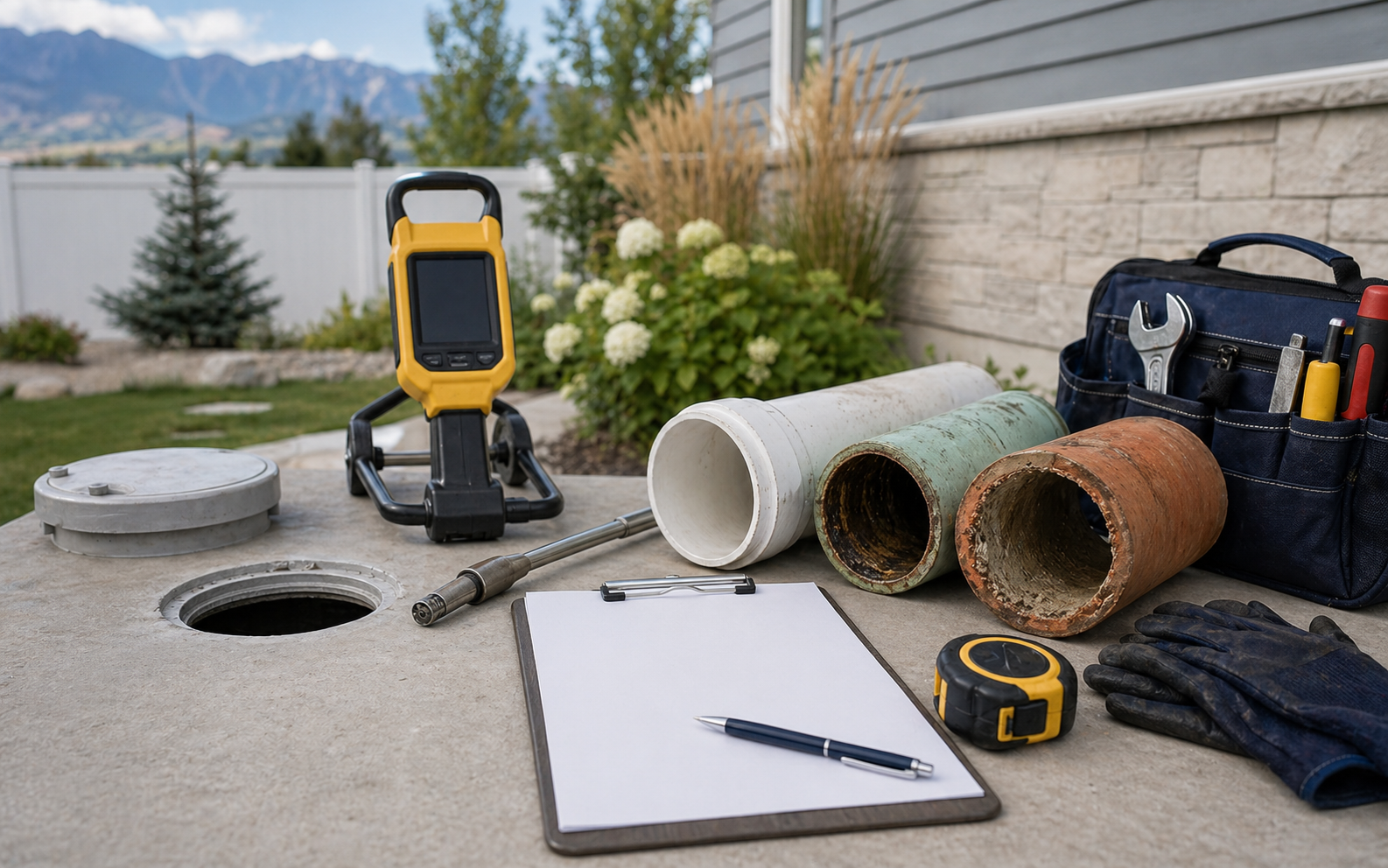
Two Trenchless Methods: What They Actually Do Before comparing trenchless to excavation, you need to understand what "trenchless" actually means. It is not one method — it is two, and they solve different problems.

Start with the normal pattern: wastewater should move away from the fixture, through the branch line, into the larger building drain or sewer lateral, and out toward the public or private collection system. Most confusion starts when one symptom is judged without locating where that pattern is breaking down.

For trenchless sewer repair questions, the useful first step is separating a local fixture issue from a deeper line condition, because those two situations can look similar at the surface but lead to different next steps.

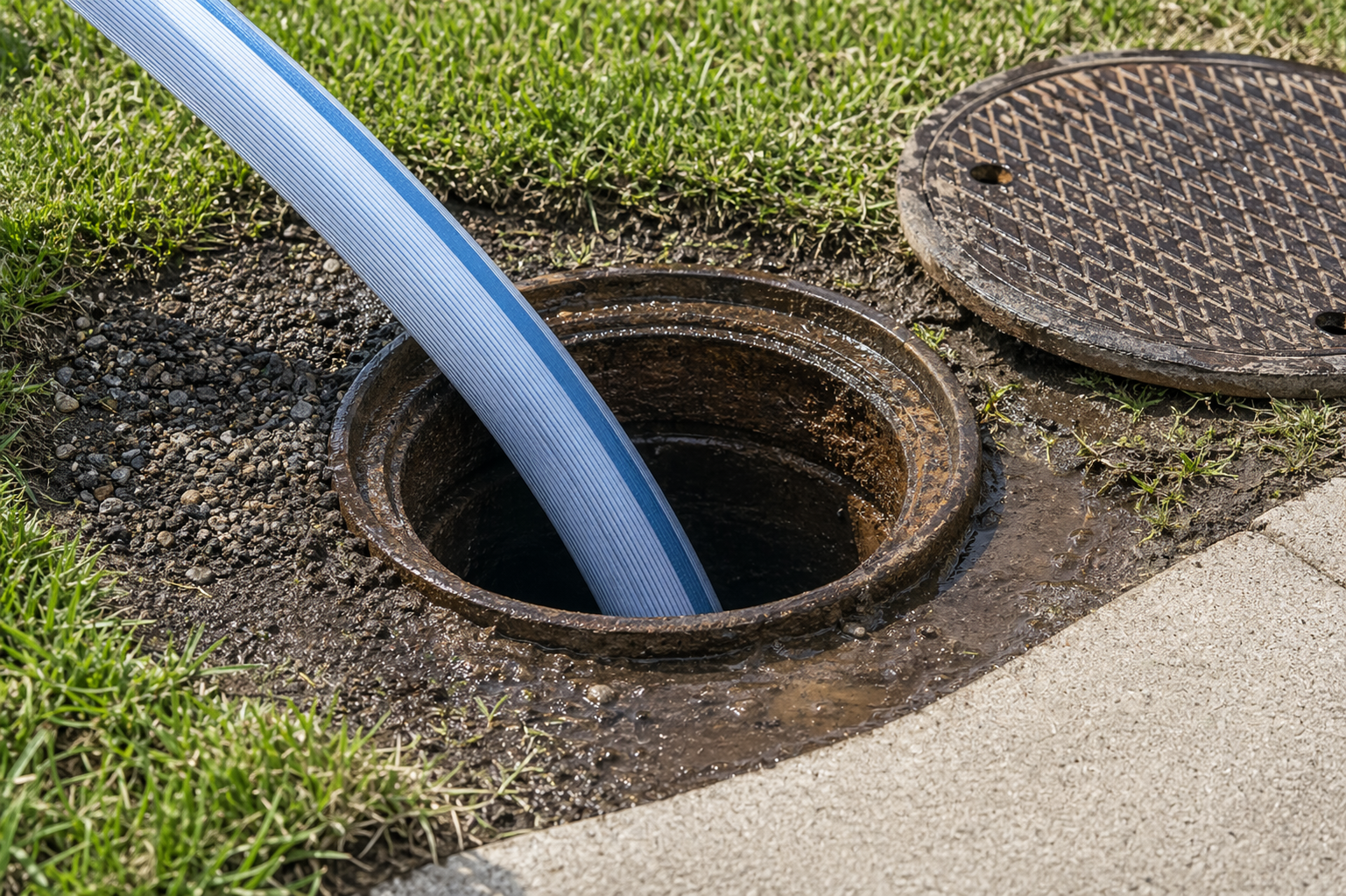
  1. CIPP Lining Cured-in-Place Pipe A resin-saturated flexible liner is inserted into the existing pipe through an access point — usually a cleanout. The liner is inflated against the pipe walls and cured with heat, UV light, or ambient temperature, creating a new pipe inside the old one. The result is a smooth, jointless interior that seals cracks, stops root entry, and restores flow.
  2. What it fixes: Cracked joints, root intrusion points, minor offsets, internal deterioration, and small leaks — in pipes that are still structurally intact enough to hold their shape.
  3. What it does not fix: Full collapses, major offsets where the pipe sections are no longer aligned, bellies caused by soil settlement the liner follows the existing grade — if the grade is wrong, the belly remains, and pipes too deteriorated to support a liner.
  4. Lifespan: CIPP liners are rated for 50+ years when properly installed.
  5. Pipe Bursting A bursting head is pulled through the existing pipe, fracturing it outward while simultaneously pulling a new HDPE high-density polyethylene pipe into place behind it. The old pipe is destroyed and replaced in a single pass. Only two small access pits are required — one at each end of the run.
  6. What it fixes: Pipes too damaged for lining — severe cracking, partial collapse, or pipe material too deteriorated to support a liner late-stage Orangeburg, badly corroded cast iron. It is a full replacement, not a repair.
  7. What it does not fix: Fully collapsed pipes where the bursting head has no path to follow. Pipes with major directional changes that the bursting head cannot navigate. Lines where the existing pipe runs too close to other utilities for safe outward fracturing.
  8. Lifespan: HDPE pipe is seamless and rated for 50+ years.
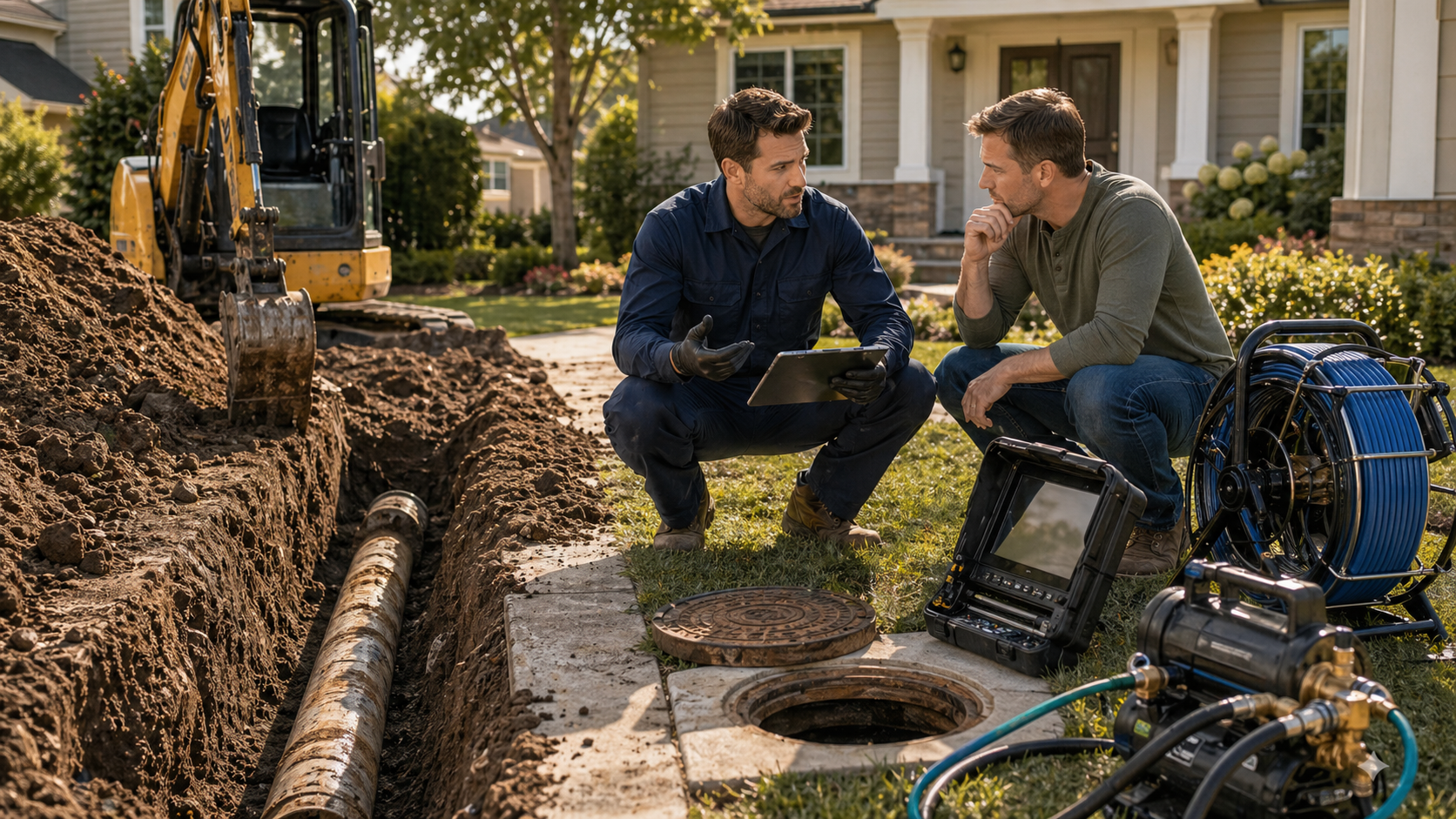
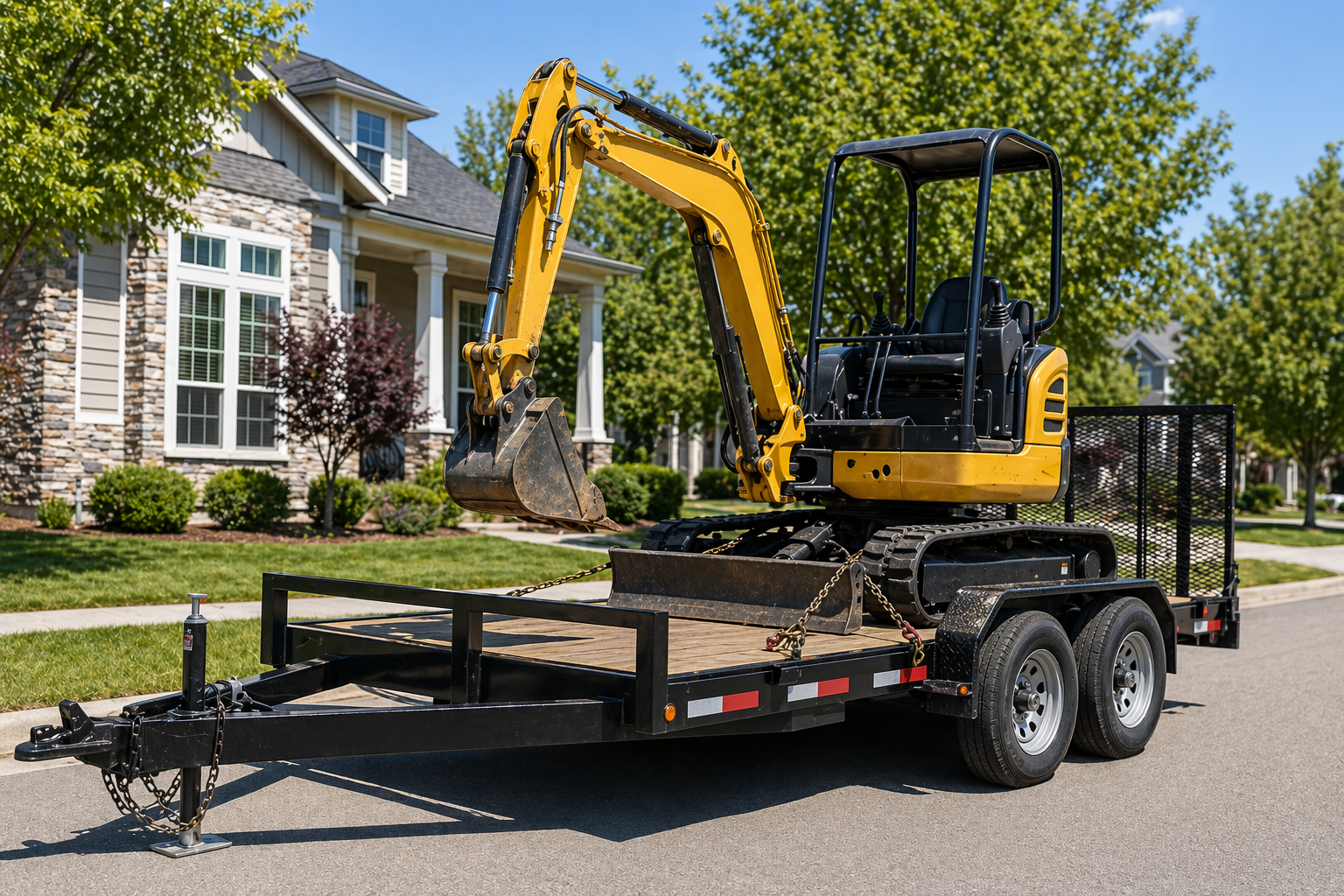
  9. What Sewer Excavation Actually Involves Excavation means opening the ground above the sewer line, exposing the damaged section, removing it, and replacing it with new pipe. It is the original repair method and the one with the fewest technical limitations — if the crew can reach the pipe, they can fix it.
  10. In Northern Utah, that means digging through soil conditions specific to the Wasatch Front. The frost line along the Wasatch Front averages 30 inches, with Salt Lake County and Utah County averaging 36 inches. Sewer lines are buried below the frost line — typically 3 to 5 feet deep for residential laterals, sometimes deeper on sloped lots or where the main sits lower than the house. That is real digging, not a shallow trench.

How To Tell When It Fits

Soil matters too. Clay soil is common across the Wasatch Front valleys. Clay holds water, swells when wet, and shrinks when dry — that expansion-contraction cycle is one of the reasons sewer lines shift, settle, and develop bellies over time. It is also what makes excavation more labor-intensive than it would be in sandy or loam soil: clay is heavier to move, harder to compact during backfill, and requires more careful shoring to keep trench walls stable.

The goal is to move from guesswork to evidence. Good decisions usually come from the same sequence: define the symptom, locate the likely part of the system, check whether the issue is repeating, and decide whether cleaning, inspection, jetting, or repair planning fits.

That sequence keeps the article useful before any service conversation happens. It helps readers ask better questions and makes it harder for a vague diagnosis to sound more certain than it really is.

  1. i Locating the damaged section using camera inspection footage. ii Marking the dig area and identifying any other buried utilities gas, water, electric, telecom using a locate service. iii Excavating to pipe depth — typically 3 to 5 feet in Northern Utah residential properties. iv Shoring or sloping the trench walls per OSHA requirements for worker safety. v Removing the damaged pipe section and replacing it with new pipe PVC for most residential laterals. vi Backfilling and compacting in layers to prevent future settlement. vii Restoring the surface — grass, concrete, asphalt, or landscaping depending on what was above the dig.
  2. The restoration step is where excavation costs diverge from trenchless. A dig through a grass yard has a different restoration cost than a dig through a concrete driveway, a paver patio, or a public sidewalk with a permit requirement.
  3. Six Conditions Where Sewer Excavation Is the Better Method These are not edge cases. They are specific pipe conditions where trenchless methods either cannot work or produce a less reliable result than excavation.
  4. 1. Full Collapse If the pipe has completely collapsed — the walls have caved in and there is no continuous channel — there is nothing for a CIPP liner to adhere to and no path for a bursting head to follow. Excavation is the only option. The collapsed section must be removed and replaced with new pipe.
  5. 2. Severe Offset at a Joint When two sections of pipe have shifted so far out of alignment that one is blocking the other — sometimes by an inch or more — a liner cannot bridge the gap cleanly, and a bursting head risks following the offset path rather than creating a straight one. Excavation allows the crew to expose the joint, realign or replace the affected sections, and restore proper flow.
  6. 3. Belly or Sag From Soil Settlement A belly is a low spot in the line where the pipe has settled below grade, creating a pool where water sits, debris collects, and blockages recur. CIPP lining follows the existing pipe path — if the pipe sags, the liner sags with it. The belly remains after lining. Pipe bursting follows the same path. Excavation allows the crew to correct the grade by re-bedding the pipe at the proper slope.
  7. 4. Multiple Failure Points Across the Run When the camera shows damage at three, four, or five locations along the same lateral, trenchless spot repairs at each point can add up to more than a single excavation that replaces the entire run. At some point, it is more cost-effective and more reliable to replace the whole line than to patch it in five places.
  8. 5. Utility Conflicts or Access Limitations If the sewer line runs close to gas lines, water mains, or electrical conduit, pipe bursting carries a risk of disturbing those adjacent utilities when the old pipe fractures outward. Excavation allows the crew to see and work around other utilities under direct visual control rather than fracturing pipe near them blind.
  9. 6. Orangeburg Pipe in Advanced Deterioration Orangeburg — a bituminized fiber pipe used from the 1940s through the 1970s — softens and deforms as it ages. In advanced stages, the pipe has lost its round shape entirely. A CIPP liner installed in a deformed Orangeburg pipe produces a deformed liner. Pipe bursting can work on Orangeburg in some conditions, but if the pipe has collapsed or deformed beyond the bursting head's tolerance, excavation and full replacement is the cleaner path.

What Makes It Easier To Use

Side-by-Side: Trenchless Sewer Repair vs. Sewer Excavation

Small details often change the interpretation. Which fixture backed up first, whether more than one drain is affected, whether the problem returned after clearing, and whether there is odor or standing water all matter.

Use these notes to describe the issue clearly. A good description is often the difference between booking a narrow cleaning visit and starting with inspection or a broader sewer conversation.

  1. Pipe candidacy. CIPP lining: Pipe must be structurally intact enough to hold its shape. No full collapses, major offsets, or bellies. Pipe bursting: Pipe must have a continuous path for the bursting head. No full collapses. Requires two access pits. Excavation: No pipe condition limitations. If you can reach it, you can replace it.
  2. Surface disruption. CIPP lining: Minimal — enters through existing cleanout or small access point. Pipe bursting: Low — two small pits at each end of the run, no full-length trench. Excavation: Full trench along the length of the damaged section. Width and depth depend on pipe depth and soil conditions.
  3. Typical timeline. CIPP lining: Most residential jobs complete in one day. Pipe bursting: Most residential jobs complete in one day. Excavation: One to three days depending on length, depth, soil, and restoration scope.
  4. Restoration scope. CIPP lining: Little to none — surface is not disturbed. Pipe bursting: Two access pits to restore sod, concrete, or pavement. Excavation: Full surface restoration of the trench path — sod, concrete, asphalt, pavers, or landscaping. This is the cost that makes excavation more expensive on surface-heavy properties.
  5. Long-term reliability. CIPP lining: 50+ year rated liner. Excellent for the conditions it is designed for. Does not fix grade problems. Pipe bursting: 50+ year rated HDPE pipe. Full replacement. Does not correct grade — follows existing path. Excavation: New pipe at corrected grade. The only method that fixes the pipe and the grade simultaneously.
  6. Northern Utah Factors That Affect the Decision Frost Line and Pipe Depth Sewer lines in Northern Utah sit below the frost line — typically 30 to 36 inches deep in Weber, Davis, and Salt Lake counties, with laterals commonly buried at 3 to 5 feet. Deeper pipes mean more excavation time and cost when digging is required, which makes trenchless more attractive on deep runs where the pipe condition allows it.
  7. Clay Soil The Wasatch Front valleys have significant clay content in the soil. Clay is a factor on both sides of the decision. It makes excavation more labor-intensive heavier soil, more careful backfill and compaction, but it is also what causes bellies in the first place — clay's expansion and contraction cycle shifts pipe over time. If the belly is the problem, excavation is the fix regardless of how difficult the soil is to work with.
  8. Excavation Permits In Weber County, excavation in the public right-of-way requires a permit, with an additional $150 fee for cutting new asphalt. If the damaged section of your lateral extends under a public sidewalk, street, or right-of-way, permit requirements and restoration obligations add cost and timeline to the excavation option. Trenchless methods that can reach the damaged section from a private-property access point avoid this cost entirely.
  9. Utility Density Older Northern Utah neighborhoods — particularly in Ogden, North Ogden, and parts of Layton — have denser utility corridors near the street. Gas, water, telecom, and electrical lines running parallel to or crossing over sewer laterals create conflict zones where pipe bursting carries higher risk. A utility locate is required before any excavation, but the advantage of excavation in dense-utility areas is visual access to everything in the trench.

How We Apply It

When you call Mountain West at 801-317-8104 or email [email protected] because you have been told your sewer line needs repair, here is what happens.

This is where the article connects back to real service work. The point is not to turn every concern into the biggest possible job; it is to match the symptom pattern to the least confusing next step that can actually answer the question.

Tying the topic back to trenchless sewer repair keeps the advice grounded. The work should explain what was found, what is still uncertain, and why the recommended next step fits the evidence.

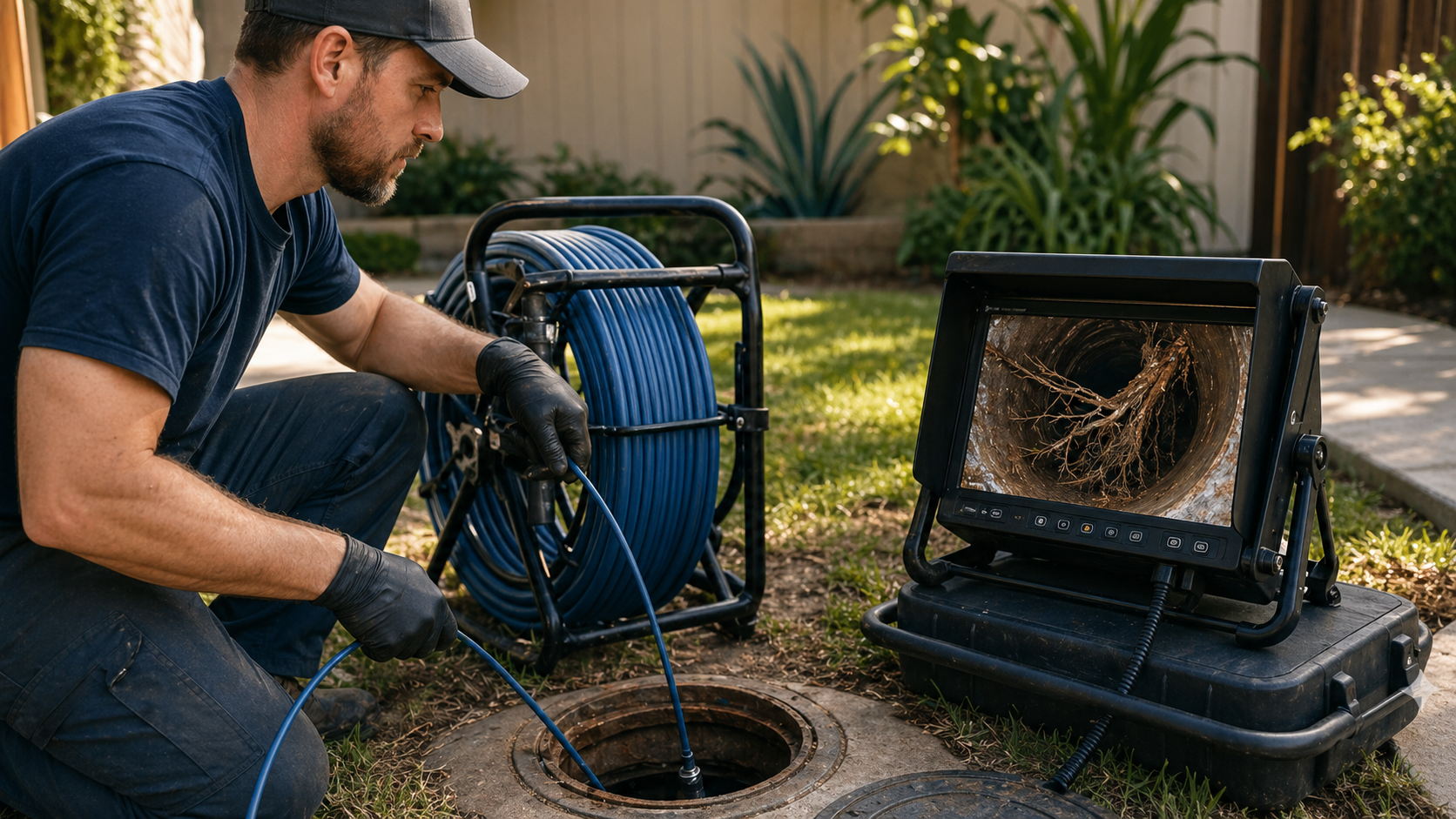
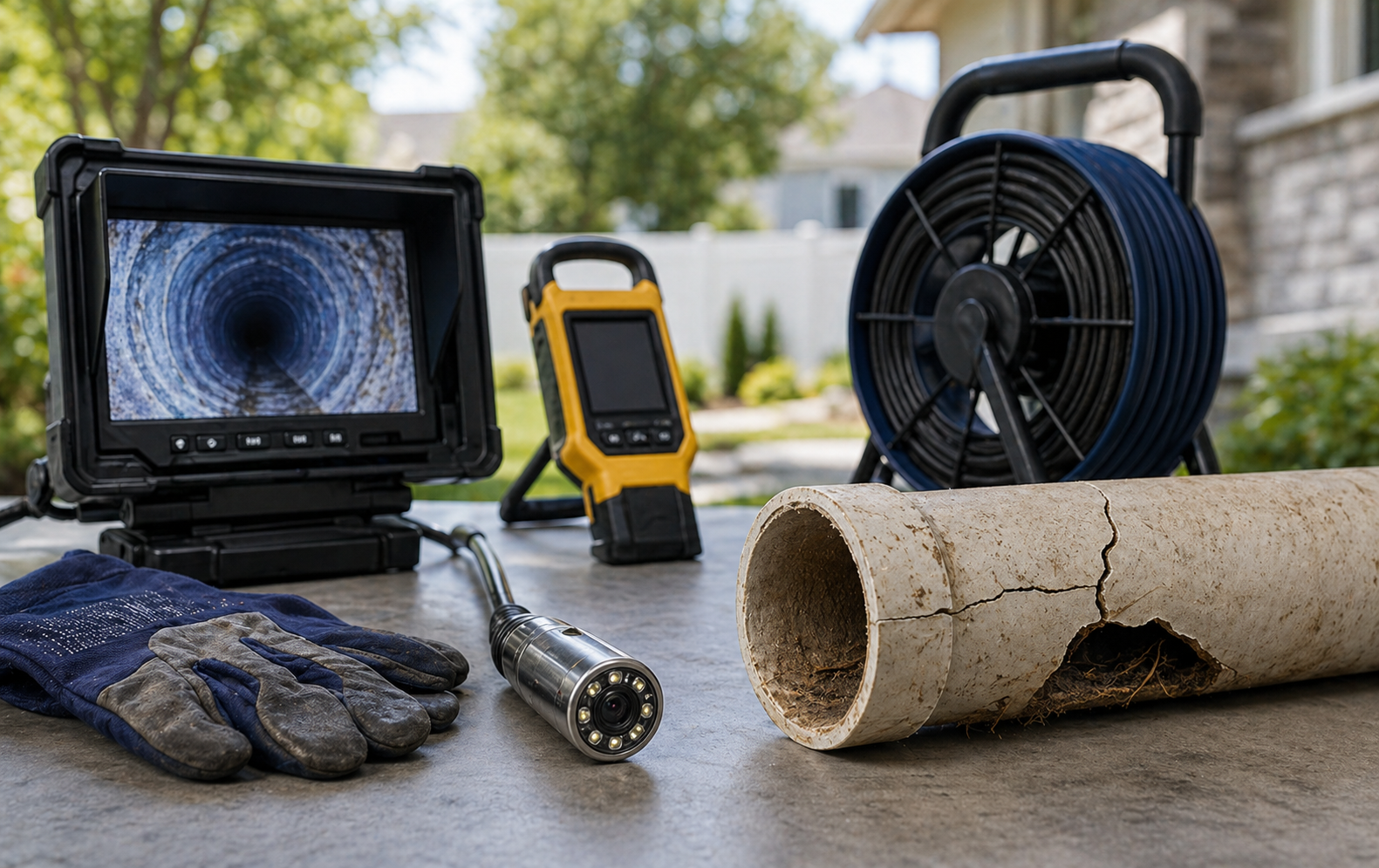
  1. The inspection. We run a sewer camera rated to scope up to 200 feet of pipe with live video review. You watch the footage with us. We identify the type of damage, the location, the pipe material, and whether the defect is isolated or spread across the run.
  2. The recommendation. Based on what the camera shows, we tell you which method fits and why. If the pipe is structurally sound with cracks or root entry at joints, trenchless is likely the right call. If the pipe is collapsed, severely offset, or sitting in a belly, excavation is the better path. If the line has one bad section in an otherwise sound run, a spot excavation may be all that is needed.
  3. We do not default to one method. We do not push trenchless because it sounds better and we do not push excavation because it is a bigger job. The camera footage drives the recommendation. You see what we see, and the recommendation follows from the condition.
  4. Mountain West's role. We perform camera inspection, hydro jetting 3,850 PSI, 8 GPM, 300 feet of reach, and cable clearing 100+ feet. For excavation and trenchless repair work, we identify the problem, document it with camera footage, and connect you with the right contractor for the repair method that fits. You go into that conversation knowing exactly what the line needs and why — not guessing.
  5. Pricing note. Inspection and cleaning visits are quoted based on line length, access, and severity. Emergency and after-hours calls carry a 15 to 35 percent premium 25 percent standard, 30 percent for excavation-related access. Call for a quote.

Common Questions

These follow-up questions turn the explanation into a practical decision tool. Definitions help, but the real value is knowing when the topic matters at a property.

For trenchless sewer repair topics, the best next questions connect the concept to symptoms, access, inspection, and the next service decision.

Frequently Asked Questions

Source Log

These sources were used for background, claim checking, or local context. The article explains the topic in Mountain West's own words and does not copy outside article structure or long passages.

U.S. Environmental Protection Agencyparaphrased

Sanitary Sewer Overflows (SSOs)

Supports: Sanitary sewer overflows can back up into buildings, damage property, and create public-health concerns; sewer systems carry domestic and commercial wastewater to treatment facilities.

U.S. Environmental Protection Agencyparaphrased

Sanitary Sewer Overflow Frequent Questions

Supports: Common sewer blockage contributors include fats, oils and grease, wipes and other non-flushable products, roots entering defects, sediment, and other materials.

Occupational Safety and Health Administrationparaphrased

Trenching and Excavation

Supports: Excavation decisions are also safety decisions; trench cave-ins are a serious hazard and protective systems such as sloping, shoring, or shielding may be required.

Ogden Cityparaphrased

Sewer Utility Information

Supports: Local Utah utility guidance can make the private-lateral responsibility clear: property owners may be responsible for maintenance and repair from the home to the city main, including tap connection, depending on jurisdiction.

Manual review note: Local ownership rules vary by city and utility. Treat this as regional context, not legal advice for every property.

Weber County Engineeringparaphrased

Excavation Permits

Supports: Excavation in the public right-of-way requires a permit through Weber County Engineering. An extra $150 fee is assessed for cutting new asphalt, reducing by $50 per year for three years.

ProGrade Calculatorsparaphrased

Frost Line Depth by State

Supports: Utah frost line depth ranges from 24 to 36 inches; Salt Lake City metro averages 30 inches; mountain regions 36+ inches.

Valley Plumbing, Heating & Coolingparaphrased

Average Frost Line Depth — Salt Lake County and Utah County

Supports: Average frost line depth is approximately 36 inches in Salt Lake County and Utah County. Lines must be buried below this depth to avoid freeze damage.

Northern Steel Buildings & Construction, citing Utah Geological Surveyparaphrased

Expansive Clay Soils in Utah

Supports: Certain clay minerals in Utah soil can absorb water and swell significantly; the cycle of heaving and settling causes foundation and infrastructure movement.

Related Next Steps

Next StepTrenchless Sewer RepairCompare no-dig repair options if excavation vs trenchless is moving past cleaning and into lower-disruption repair planning.Next StepSewer ExcavationGo here if excavation vs trenchless may require direct access, trenching, or exposed-pipe repair planning next.Next StepGet A Free QuoteStart a free quote if you want service-fit or pricing guidance after this article.Next StepRead BlogCompare adjacent articles around excavation vs trenchless before you choose the next path.

Read This Next

These articles stay close to the same decision without repeating this one. Use them when the symptoms, timing, or service path points in a slightly different direction.

Sewer Line Repair: What the Job Involves and What Drives the Cost article image for Sewer Line Repair And Replacement.Blog ArticleSewer Line Repair: What the Job Involves and What Drives the CostRead this next to see how trenchless sewer repair connects into sewer line repair and replacement planning.Sewer Camera Inspection: How Root Intrusion Is Found and What It Means article image for Sewer Camera Inspection.Blog ArticleSewer Camera Inspection: How Root Intrusion Is Found and What It MeansUse this related article if you want the next question after this article explained in a little more depth.Sewer Line Repair: Warning Signs Your Pipe Needs More Than Cleaning article image for Sewer Line Repair And Replacement.Blog ArticleSewer Line Repair: Warning Signs Your Pipe Needs More Than CleaningUse this related article if you want the next question after this article explained in a little more depth.

Quick Answers About Trenchless Sewer Repair vs. Sewer Excavation: Which Method Fits Your Line?

These are the quick answers most people want before they call, book, or decide on the next step.

What is this article about?

Trenchless sewer repair gets most of the attention because it sounds less invasive. In many cases, it is. But trenchless is a method, not a universal fix. When the pipe is fully collapsed, severely offset, improperly graded, or inaccessible to trenchless equipment, sewer excavation is not the fallback — it is the right answer. This article gives you the decision framework: what each method does, what pipe conditions disqualify trenchless, and what factors specific to Northern Utah affect the choice. It connects the topic back to trenchless sewer repair when readers are trying to decide on the right next move.

Who is this article best for?

Most homeowners hear "trenchless" and think it is automatically the better option. Less digging, less disruption, faster timeline. All of that can be true — when the pipe is a candidate for trenchless work. It is most useful for readers trying to understand the issue before they book, compare services, or decide whether the symptoms point to a bigger sewer or drain problem.

What should I do after reading this article?

If the issue sounds familiar, the usual next step is to review the trenchless sewer repair page or compare it with sewer excavation before deciding whether to request a quote, book service, or call for faster guidance.

How can I reach Mountain West?

Mountain West Hydro Jetting serves Northern Utah and the Salt Lake corridor. You can reach us at 801-317-8104 or [email protected].