Mountain West Jetting
Mountain West logoMountain West Hydro Jetting & Sewer Maintenance LLC

DRAIN SERVICE NEAR ME: WHAT'S INCLUDED AND HOW TO KNOW WHAT YOU NEED

Blog Article

Story by Mountain West Hydro JettingPublished June 18, 2026Same-Day Drain ServiceServing Northern Utah and the Salt Lake corridor

Drain Service Near Me: What's Included and How to Know What You Need

When homeowners search for drain service near me, they usually have one problem and no idea which service fixes it. A slow kitchen sink, a gurgling toilet, a floor drain backing up — these are different problems that need different services, different equipment, and different levels of expertise. This article maps every common drain symptom to the service level it actually needs, walks you through what each service involves, and tells you what to expect from the visit.

Start Here

"Drain service" is not one service. It is a category that covers at least four distinct levels of work, each with different equipment, different scope, and different price points. The reason quotes vary so much when you call around is that two companies can hear the same symptom and recommend two different service levels.

What This Article Helps You Do

  • Know the four service levels that fall under "drain service near me" and what each one involves
  • Match your symptoms to the right level before you call
  • Understand what equipment shows up and what the technician does at each level
  • Know when the problem is urgent and when it can wait for a scheduled visit
  • Compare providers and quotes with enough context to tell whether you are being recommended the right service

Quick Takeaway

Drain service near me is not one job — it is four, ranging from a 15-minute fixture clearing to a full main line hydro jetting with camera inspection. The right service depends on where the blockage is fixture, branch line, or main line, how severe it is slow vs. stopped vs. backing up, and whether it has happened before. Matching your symptoms to the right level before you call saves time, avoids overpaying for more service than you need, and prevents underpaying for a fix that does not hold.

What Is Included

"Drain service" is not one service. It is a category that covers at least four distinct levels of work, each with different equipment, different scope, and different price points. The reason quotes vary so much when you call around is that two companies can hear the same symptom and recommend two different service levels.

That is not always dishonesty — it is often a difference in how they diagnose. But it means you need to understand what the service levels are so you can evaluate what is being recommended and why.

What Shapes The Context

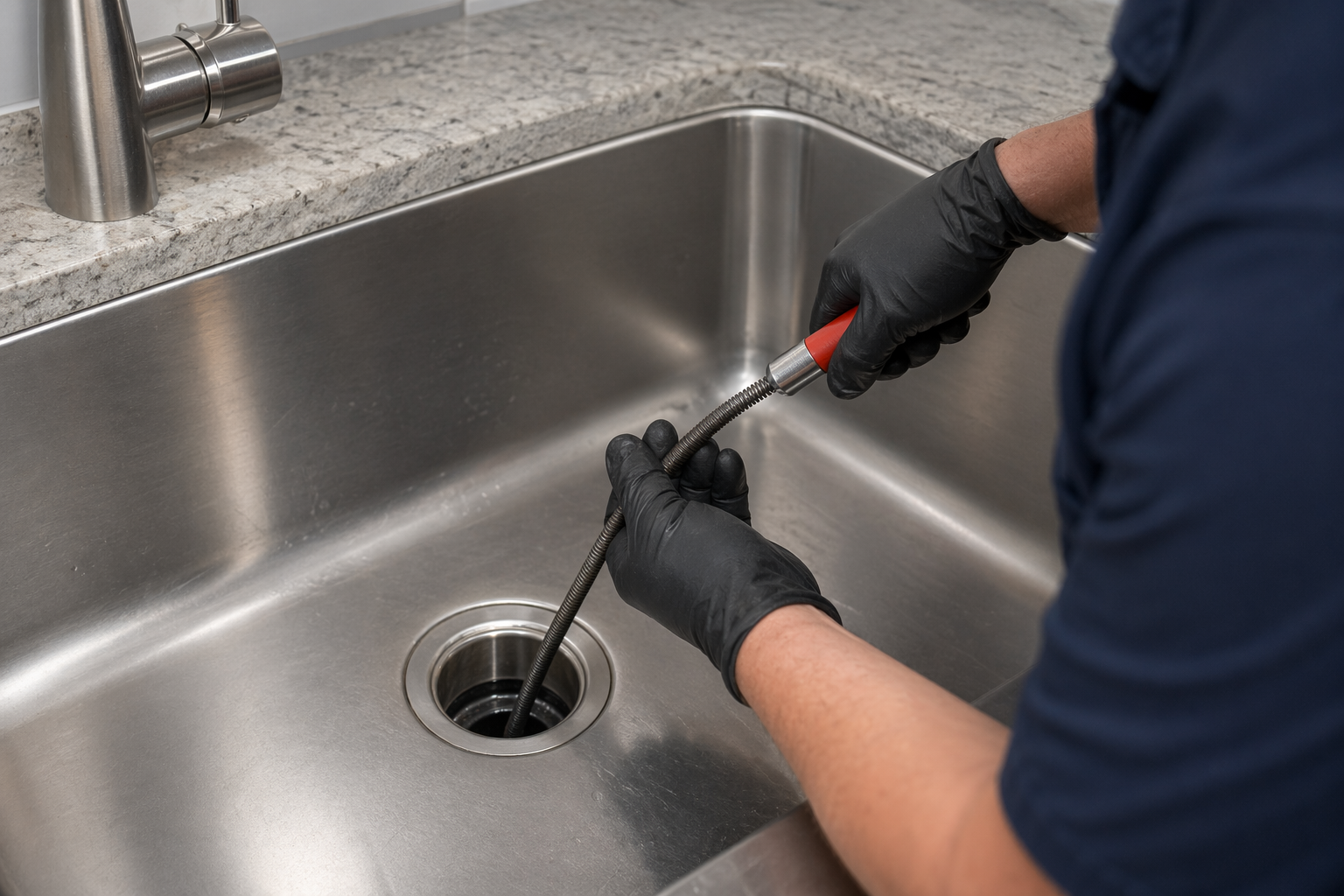
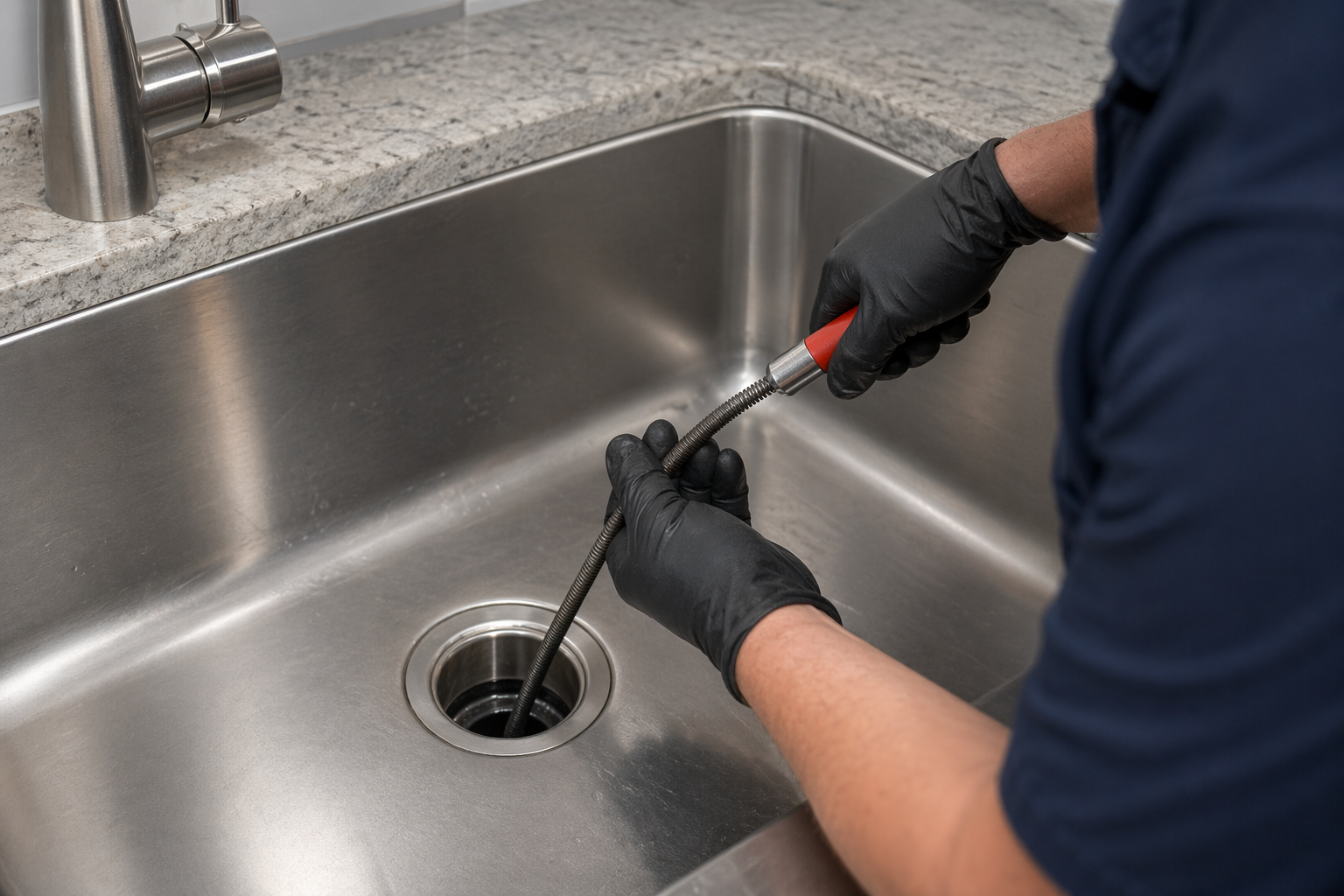
Level 1: Fixture Clearing What it is. Clearing a single clogged fixture — a kitchen sink, bathroom sink, tub, shower, or floor drain. The blockage is in the fixture trap or the short section of pipe immediately downstream of the fixture.

Start with the normal pattern: wastewater should move away from the fixture, through the branch line, into the larger building drain or sewer lateral, and out toward the public or private collection system. Most confusion starts when one symptom is judged without locating where that pattern is breaking down.

For emergency drain cleaning questions, the useful first step is separating a local fixture issue from a deeper line condition, because those two situations can look similar at the surface but lead to different next steps.

  1. Equipment. Hand snake or small cable machine. Sometimes a plunger or drain auger is enough.
  2. What the technician does. Feeds a cable into the fixture drain, breaks up or pulls out the blockage hair, soap buildup, food scraps, small foreign objects, and confirms flow is restored.
  3. Typical symptoms that point here: i One drain is slow or stopped. ii Every other fixture in the house drains normally. iii No gurgling, no cross-fixture reactions, no odors beyond the one drain.
  4. What it does not solve. If the clog keeps returning after fixture-level clearing, the problem is likely deeper — in the branch line or main line.
  5. Level 2: Branch Line Cleaning What it is. Clearing a blockage in the branch line that connects a group of fixtures to the main stack. A bathroom branch line typically serves the sink, tub, and toilet. A kitchen branch serves the sink and dishwasher.
  6. Equipment. Cable machine with longer reach than a hand snake — typically 50 to 75 feet. May include a small jetting head for grease-heavy kitchen branches.
  7. What the technician does. Accesses the branch line through a cleanout if available or by pulling a fixture. Cables through the blockage in the branch pipe, clears it, and confirms flow to all fixtures on that branch.
  8. Typical symptoms that point here: i Two or three fixtures in the same area slow down or fail together — the bathroom sink and tub, or the kitchen sink and dishwasher. ii Other parts of the house drain normally. iii The problem is localized to one room or one group of connected fixtures.
  9. What it does not solve. If fixtures in different parts of the house are affected, or if the lowest drain in the house is backing up, the blockage is in the main line — not a branch.
  10. Level 3: Main Line Cleaning What it is. Clearing a blockage in the main sewer line — the horizontal pipe that carries all wastewater from the house to the city sewer main. This is the pipe everything flows into. When it is blocked, the whole house is affected.
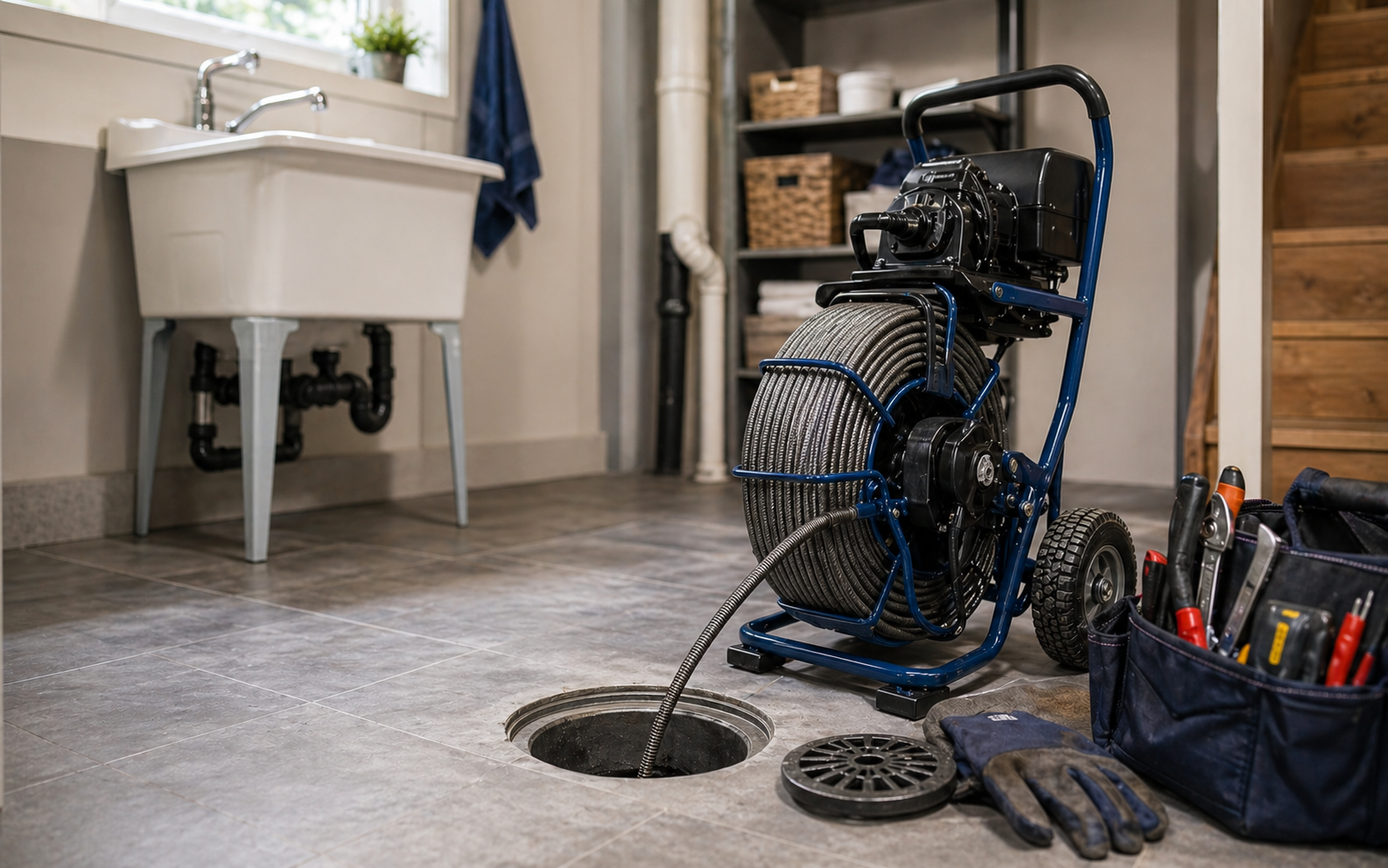
  11. Equipment. Commercial cable machine with 100+ feet of reach for mechanical clearing. Hydro jetting unit rated at 3,850 PSI and 8 GPM with 300 feet of hose for full-line scouring. The jetting unit clears and cleans lines from 2 to 12 inches in diameter.
  12. What the technician does. Accesses the main line through the cleanout a capped pipe usually located outside the house near the foundation. Runs a cable or hydro jet through the main line to break up and flush out the blockage — roots, grease, scale, debris, or foreign objects. On most main line jobs, hydro jetting is the primary clearing method because it scours the full pipe interior rather than just punching a hole through the clog.

What Helps The Process Feel Clear

Typical symptoms that point here: i Multiple drains in different parts of the house slow down or fail at the same time. ii Water or sewage backs up through the lowest drain floor drain, basement drain, ground-floor shower. iii Fixtures react to each other — flushing a toilet makes the tub gurgle, or running the washing machine causes the kitchen sink to bubble. iv Sewer smell near the cleanout, in the basement, or outside near the foundation.

The goal is to move from guesswork to evidence. Good decisions usually come from the same sequence: define the symptom, locate the likely part of the system, check whether the issue is repeating, and decide whether cleaning, inspection, jetting, or repair planning fits.

That sequence keeps the article useful before any service conversation happens. It helps readers ask better questions and makes it harder for a vague diagnosis to sound more certain than it really is.

  1. What it does not solve. If the main line clears but symptoms return within a few months, the pipe may have a structural issue — root entry points, a belly, a partial collapse — that cleaning alone cannot fix. The next step is camera inspection.
  2. Level 4: Camera Inspection + Targeted Service What it is. A diagnostic step that should precede or accompany main line cleaning on any line with repeat problems, unknown history, or suspected structural damage. The camera shows what is in the pipe, what condition the pipe is in, and whether cleaning is the right service or whether the line needs repair.
  3. Equipment. Sewer camera rated to scope up to 200 feet of pipe with live video review on screen. Paired with hydro jetting 3,850 PSI / 8 GPM / 300 feet and cable clearing 100+ feet for the cleaning step that follows the inspection.
  4. What the technician does. Feeds the camera through the cleanout and advances it through the main line. You watch the footage in real time. The camera identifies blockage type and location, pipe material, root intrusion points, grease coating, scale buildup, bellies low spots, offsets, cracks, and any structural failure. Based on the findings, the technician clears the line with the appropriate method, then runs the camera again after clearing so you can see the result.
  5. Typical symptoms that point here: i The same drain or main line has been cleared two or more times in the past 18 months. ii You have never had the line inspected and do not know the pipe material or condition. iii A previous technician mentioned roots, grease, or structural issues but no camera was run. iv You are buying or selling a home and want to know the line's condition before closing.
  6. What you walk away with. A clear line if cleaning was performed, a plain-language explanation of what the camera found, and a recommendation — either maintenance scheduling if the pipe is sound, or a repair conversation if the pipe has structural issues that cleaning will not fix.
  7. How to Match Your Symptoms to the Right Service Level
  8. One drain is slow or stopped, everything else works fine. Start with Level 1 — fixture clearing.
  9. Two or three fixtures in the same room are slow or failing together. Start with Level 2 — branch line cleaning.
  10. Multiple drains in different parts of the house are slow, backing up, or reacting to each other. Start with Level 3 — main line cleaning.
  11. Any of the above, plus one or more of these:
  12. The problem has happened before and been cleared before You do not know your pipe material, age, or condition A previous technician mentioned roots or structural issues You are buying or selling the home Start with Level 4 — camera inspection plus targeted cleaning.

What Makes The Visit Go More Smoothly

When in doubt: Describe your symptoms when you call. A good drain service provider will ask enough questions to recommend the right level before dispatching — not after they arrive and find out the job is bigger or smaller than expected.

Small details often change the interpretation. Which fixture backed up first, whether more than one drain is affected, whether the problem returned after clearing, and whether there is odor or standing water all matter.

Use these notes to describe the issue clearly. A good description is often the difference between booking a narrow cleaning visit and starting with inspection or a broader sewer conversation.

  1. When You Need Same-Day Service and When You Can Schedule Not every drain problem is an emergency. Here is a quick reference.
  2. Same-day — call now: i Sewage or wastewater actively backing up into the house through any drain. ii Only bathroom in the home is out of service. iii Multiple drains failing at once and getting worse with normal water use. iv Sewage smell inside the home or standing water near the foundation. v Commercial property where the drain issue prevents business operations.
  3. Emergency and after-hours calls carry a 15 to 35 percent premium 25 percent standard.
  4. Schedule within a few days: i One drain is slow but still usable. ii A fixture is draining slowly but nothing is backing up. iii Intermittent gurgling with no backup. iv Mild odor from a single drain that may be a dry trap.
  5. The in-between: If the problem is not backing up yet but is getting worse with each use — draining slower every day, gurgling more frequently, odor getting stronger — do not wait for it to become an emergency. Schedule service soon and reduce water use in the meantime. Overnight escalation is common with partial blockages: the line handles daytime use but cannot recover overnight, and the first morning flush pushes it into backup.
  6. For detailed emergency triage, see Drain Cleaning Near Me: What Counts as a Real Emergency? For what happens when you call for emergency service specifically, see Emergency Drain Cleaning Service: What to Expect When You Call for Same-Day Help.
  7. What Changes a Drain Service Near Me Quote Four factors move the price at any service level:
  8. 1. Service level. Fixture clearing is the lowest-cost service. Main line cleaning with hydro jetting is higher. Camera inspection adds diagnostic value but also adds scope. The more comprehensive the service, the more equipment, time, and expertise is involved.
  9. 2. Severity of the blockage. A soft grease cap in a kitchen branch clears faster than a dense root mass 60 feet down the main line. Heavier blockages require more time, different nozzle configurations, and sometimes multiple passes.
  10. 3. Access. A clean, accessible cleanout makes main line work straightforward. A missing, buried, or corroded cleanout cap adds time. Accessing the line through a toilet pull removing and reinstalling the toilet adds scope. Properties with no cleanout at all require fixture-based access, which is slower and more limited.
  11. 4. Timing. Emergency and after-hours calls carry a 15 to 35 percent premium over standard scheduling. If your situation allows it, scheduling during normal business hours gets you the standard rate.

How We Handle It

When you call Mountain West at 801-317-8104 or email [email protected] for drain service near me, here is what happens.

This is where the article connects back to real service work. The point is not to turn every concern into the biggest possible job; it is to match the symptom pattern to the least confusing next step that can actually answer the question.

Tying the topic back to emergency drain cleaning keeps the advice grounded. The work should explain what was found, what is still uncertain, and why the recommended next step fits the evidence.

  1. On the phone. We ask what you are seeing: which drains are affected, whether anything is backing up, how long it has been happening, and whether the problem has been cleared before. That conversation narrows the service level before we dispatch.
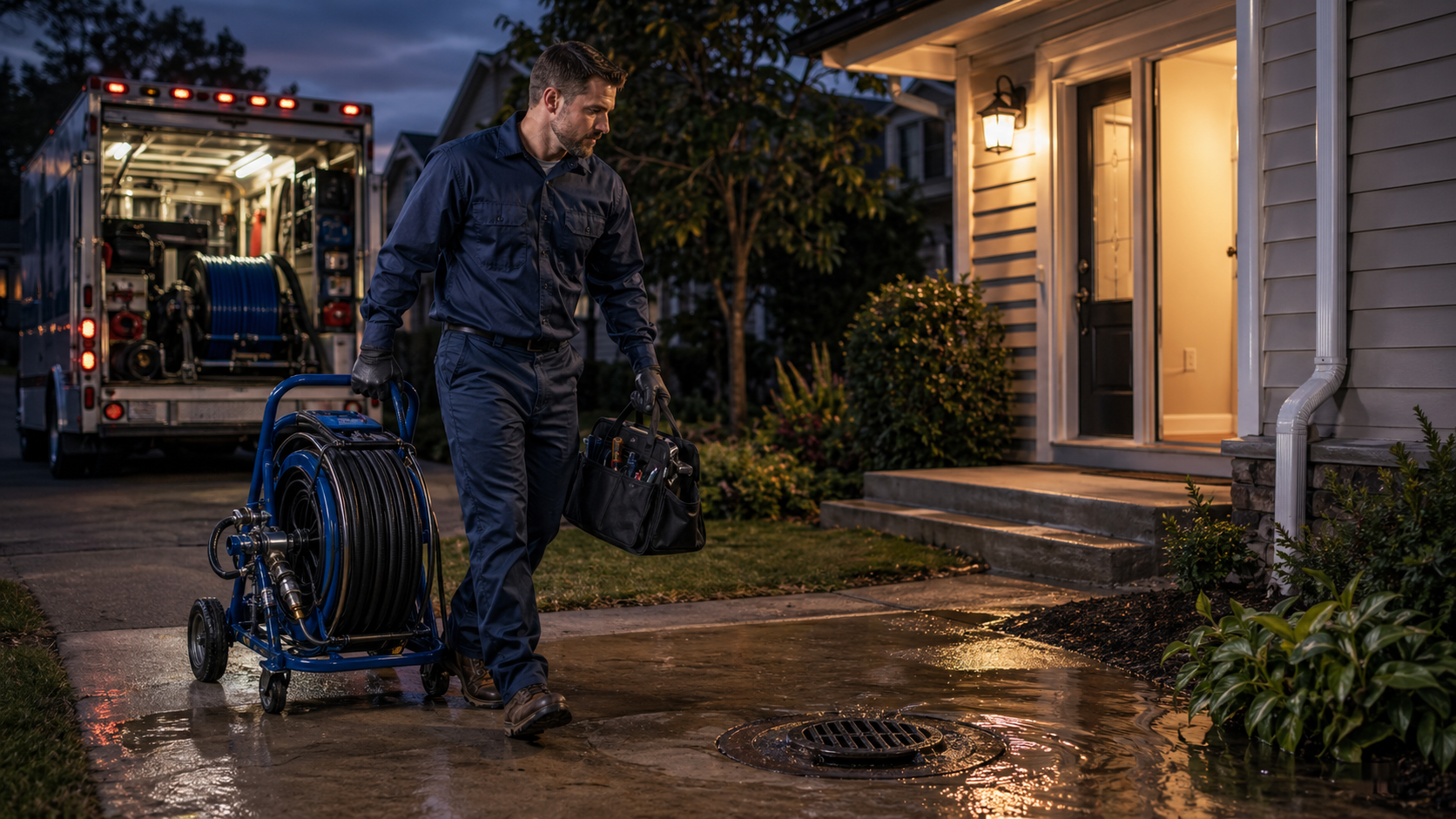
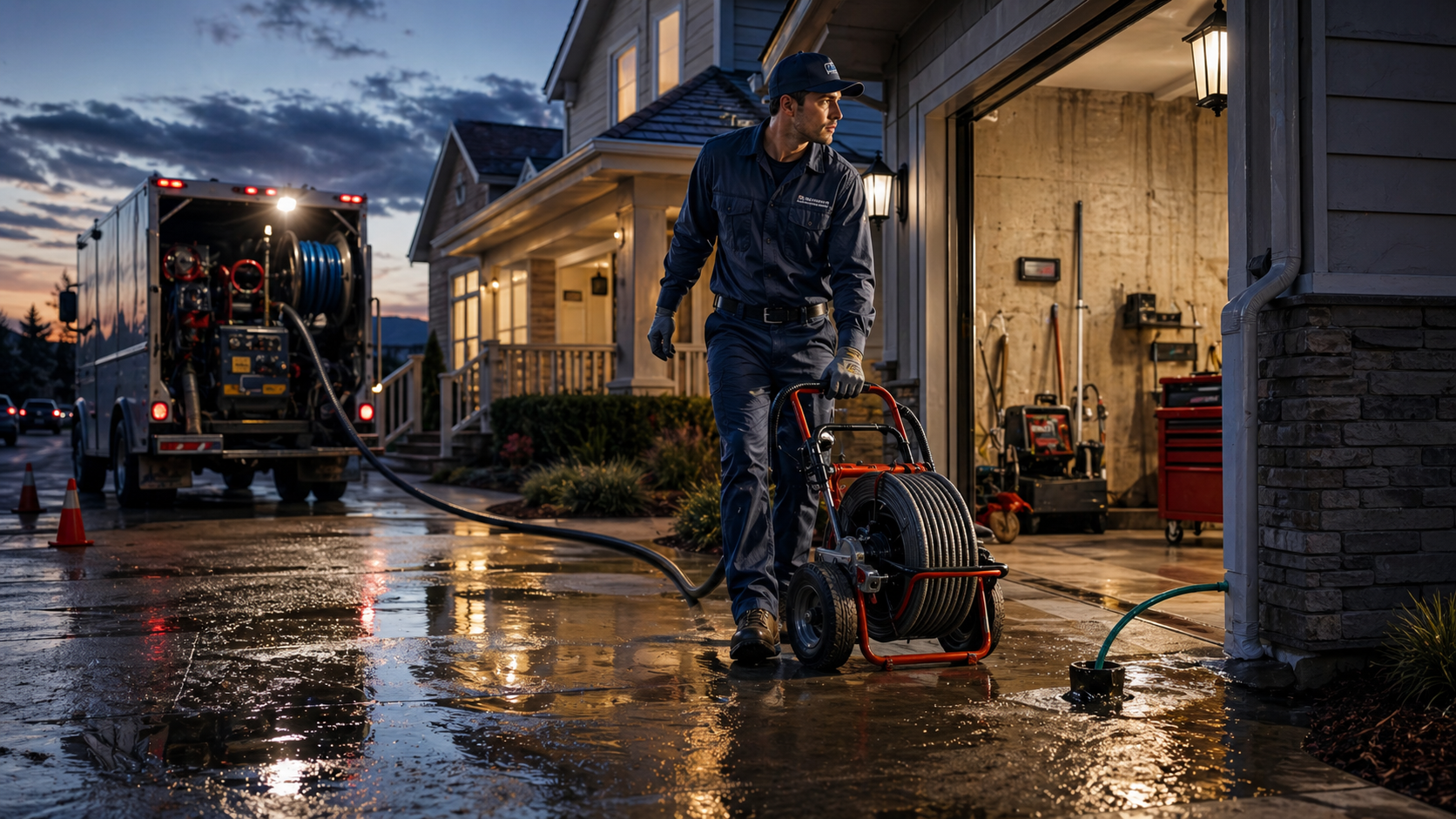
  2. What shows up. Every Mountain West service vehicle carries the equipment to handle all four service levels in a single visit: i Cable machine with 100+ feet of reach for fixture, branch, and mechanical main line clearing. ii Hydro jetting unit at 3,850 PSI and 8 GPM with 300 feet of hose for full main line cleaning — lines 2 to 12 inches. iii Sewer camera rated to 200 feet with live video review on screen.
  3. We do not show up, diagnose a bigger problem, and then leave to get different equipment. Everything is on the truck.
  4. The process. The technician confirms the symptom pattern, accesses the line at the appropriate point fixture, branch cleanout, or main cleanout, and clears the blockage with the right method. For main line work, the camera runs before and after clearing so you see what caused the blockage and what the pipe looks like clean.
  5. What you walk away with. A working drain system and a clear recommendation: i Problem was a one-time fixture or branch clog — no follow-up needed. ii Main line cleared but buildup pattern suggests a maintenance schedule — here is the recommended interval. iii Camera found a structural issue — here is what we saw and what the repair options look like.
  6. We do not recommend a higher service level than the problem requires. If a fixture clearing solves it, we do a fixture clearing and leave.

Questions Before The Visit

These practical questions make the process less abstract. A good visit should clarify what is being checked, what evidence matters, and what decision comes next.

For emergency drain cleaning topics, the strongest follow-ups are about preparation, access, inspection limits, and what information the technician should explain before work begins.

How do I know whether to call a drain service or a plumber?

A drain service specializes in clearing and cleaning drain and sewer lines — fixture drains, branch lines, and main lines. A plumber handles the full plumbing system including water supply, fixtures, water heaters, gas lines, and remodeling. If your problem is a clogged or slow drain, a backup, or a sewer line issue, a drain service has the specialized equipment jetting, camera, commercial cable for the job. If the problem involves a leaking pipe, a broken fixture, a water heater, or water supply — that is a plumber. For a detailed breakdown, see Plumber or Drain Cleaning Service? How to Know Who to Call for a Drain Backup.

What should I tell the company when I call for drain service?

Four things that help the most: i which drains are affected and whether the problem is in one fixture or multiple, ii whether anything is actively backing up or just slow, iii whether the problem has happened before and what was done last time, and iv whether you know where your cleanout is. That information lets the provider match the right service level before they arrive.

Can one visit solve the problem or will I need multiple trips?

In most cases, a single visit resolves the immediate problem. Mountain West carries cable, jetting, and camera equipment on every truck, so if the job turns out to be bigger than expected — a fixture call that turns into a main line problem — we can escalate on the spot without a second trip. The exception: if the camera reveals a structural issue collapse, belly, severe offset, the clearing visit solves the symptom but the structural repair is a separate scope of work.

What is the difference between snaking and hydro jetting?

A snake cable pushes a cutting head through the blockage to restore flow. It breaks up or pulls out the material directly in its path but does not clean the pipe walls. Hydro jetting fires high-pressure water 3,850 PSI in all directions — forward to break the blockage and rearward to scour grease, scale, and root fragments from the full pipe interior. Snaking is usually enough for one-time fixture and branch clogs. Jetting is the better method for main line clogs, repeat problems, and any situation where wall buildup is the issue.

Does Mountain West charge more for same-day or emergency calls?

Yes. Emergency and after-hours calls carry a 15 to 35 percent premium, with 25 percent standard for most emergency drain work. If your situation allows it, scheduling during normal business hours gets you the standard rate. When you call, we will tell you whether the problem sounds like it needs same-day attention or whether scheduling within a few days is safe.

Read This Next

These articles stay close to the same decision without repeating this one. Use them when the symptoms, timing, or service path points in a slightly different direction.

Source Log

These sources were used for background, claim checking, or local context. The article explains the topic in Mountain West's own words and does not copy outside article structure or long passages.

U.S. Environmental Protection Agencyparaphrased

Sanitary Sewer Overflows (SSOs)

Supports: Sanitary sewer overflows can back up into buildings, damage property, and create public-health concerns; sewer systems carry domestic and commercial wastewater to treatment facilities.

U.S. Environmental Protection Agencyparaphrased

Sanitary Sewer Overflow Frequent Questions

Supports: Common sewer blockage contributors include fats, oils and grease, wipes and other non-flushable products, roots entering defects, sediment, and other materials.

Centers for Disease Control and Preventionparaphrased

Safety Guidelines: Reentering Your Flooded Home

Supports: Flooded or contaminated homes can involve sewage and mold hazards, so cleanup and reentry should be treated as a health-and-safety issue rather than only a plumbing nuisance.

Clinton City, Utahparaphrased

Sewer

Supports: Local sewer maintenance programs may remove roots, grease, and debris from public lines; bubbling, gurgling, or odors can also relate to venting and sewer-maintenance conditions.

Manual review note: Use as regional public-utility context only; it does not prove the cause of a private-property problem.

Ogden Cityparaphrased

Sewer Utility Information

Supports: Local Utah utility guidance can make the private-lateral responsibility clear: property owners may be responsible for maintenance and repair from the home to the city main, including tap connection, depending on jurisdiction.

Manual review note: Local ownership rules vary by city and utility. Treat this as regional context, not legal advice for every property.

Utah Department of Environmental Qualitybackground

Wastewater Programs

Supports: Utah wastewater programs cover municipal wastewater planning, onsite wastewater systems, operating permits, and related design requirements, reinforcing that drain and sewer issues connect to regulated infrastructure.

Related Next Steps

Next StepEmergency Drain CleaningExplore drain-cleaning resolution if what is included may still fit a more direct clearing visit.Next StepDrain CleaningCompare whether a simpler clearing path still fits after reading about what is included.Next StepGet A Free QuoteStart a free quote if you want service-fit or pricing guidance after this article.Next StepRead BlogCompare adjacent articles around what is included before you choose the next path.

More for You

Follow-up blog articles chosen for this page so the next question stays close to the same decision path.

Plumber or Drain Cleaning Service? How to Know Who to Call article image for Emergency Drain Cleaning.Blog ArticlePlumber or Drain Cleaning Service? How to Know Who to CallRead this next for another emergency drain cleaning angle that builds on this article.Emergency Drain Cleaning Service: What to Expect Same Day article image for Emergency Drain Cleaning.Blog ArticleEmergency Drain Cleaning Service: What to Expect Same DayRead this next for another emergency drain cleaning angle that builds on this article.Drain Cleaning Near Me: What Counts as a Real Emergency? article image for Emergency Drain Cleaning.Blog ArticleDrain Cleaning Near Me: What Counts as a Real Emergency?Read this next for another emergency drain cleaning angle that builds on this article.Drain Cleaning in Utah: What Affects the Price and How to Compare Quotes article image for Drain Cleaning.Blog ArticleDrain Cleaning in Utah: What Affects the Price and How to Compare QuotesOpen this if you want the drain cleaning side of the decision next.

Quick Answers About Drain Service Near Me: What's Included and How to Know What You Need

These are the quick answers most people want before they call, book, or decide on the next step.

What is this article about?

When homeowners search for drain service near me, they usually have one problem and no idea which service fixes it. A slow kitchen sink, a gurgling toilet, a floor drain backing up — these are different problems that need different services, different equipment, and different levels of expertise. This article maps every common drain symptom to the service level it actually needs, walks you through what each service involves, and tells you what to expect from the visit. It connects the topic back to emergency drain cleaning when readers are trying to decide on the right next move.

Who is this article best for?

"Drain service" is not one service. It is a category that covers at least four distinct levels of work, each with different equipment, different scope, and different price points. The reason quotes vary so much when you call around is that two companies can hear the same symptom and recommend two different service levels. It is most useful for readers trying to understand the issue before they book, compare services, or decide whether the symptoms point to a bigger sewer or drain problem.

What should I do after reading this article?

If the issue sounds familiar, the usual next step is to review the emergency drain cleaning page or compare it with drain cleaning before deciding whether to request a quote, book service, or call for faster guidance.

How can I reach Mountain West?

Mountain West Hydro Jetting serves Northern Utah and the Salt Lake corridor. You can reach us at 801-317-8104 or [email protected].