Mountain West Jetting
Mountain West logoMountain West Hydro Jetting & Sewer Maintenance LLC

MAIN LINE DRAIN CLEANING: HOW TO TELL WHEN A CLOG IS MORE THAN A FIXTURE PROBLEM

Blog Article

Story by Mountain West Hydro JettingPublished June 18, 2026Main Line Drain CleaningServing Northern Utah and the Salt Lake corridor

Main Line Drain Cleaning: How to Tell When a Clog Is More Than a Fixture Problem

Most homeowners start by calling about one slow drain. Sometimes that is the whole problem — a fixture trap or branch line clog that clears in minutes. But when the real blockage is in the main line, clearing individual fixtures does not fix anything. The water drains from the fixture, hits the main line restriction, and backs up again. This article gives you the diagnostic framework to tell the difference, explains what causes main line clogs specifically, and walks you through what a main line drain cleaning visit involves.

Start Here

Here is the question most homeowners are really asking: "I have a slow drain or a backup. Do I need someone to clear one drain, or is this a bigger problem?"

What This Article Helps You Do

  • Understand where fixture drains, branch lines, and the main line sit in your home's plumbing
  • Use five diagnostic signs to determine whether the blockage is in a fixture or the main line
  • Know what causes main line clogs and why they behave differently from fixture clogs
  • Understand what happens during a main line drain cleaning visit — access, equipment, process, and results

Quick Takeaway

A fixture clog affects one drain. A main line clog affects the whole house. The difference shows up as connected behavior — multiple drains slowing together, backups through the lowest drain, gurgling when other fixtures run. If you see that pattern, the problem is in the main line, and clearing individual fixtures will not fix it. Main line drain cleaning accesses the shared pipe that carries all wastewater out of the house and removes the blockage where it actually sits.

Main Line Drain Cleaning

Here is the question most homeowners are really asking: "I have a slow drain or a backup. Do I need someone to clear one drain, or is this a bigger problem?"

The answer depends on where the blockage is. Your home's drain system has three levels, and the level that is blocked determines the service you need.

What It Means In Practice

How Your Home's Drain System Works Before diagnosing, you need to know what you are diagnosing. A residential drain system has three levels, and a clog at each level produces different symptoms.

Start with the normal pattern: wastewater should move away from the fixture, through the branch line, into the larger building drain or sewer lateral, and out toward the public or private collection system. Most confusion starts when one symptom is judged without locating where that pattern is breaking down.

For main line drain cleaning questions, the useful first step is separating a local fixture issue from a deeper line condition, because those two situations can look similar at the surface but lead to different next steps.

  1. Level 1: Fixture Traps Every fixture — sink, tub, shower, toilet — has a trap directly below it. The trap is the curved section of pipe that holds water to block sewer gas from entering the house. It is also where most fixture-level clogs happen. Hair, soap residue, food scraps, and small objects collect in the trap and restrict flow.
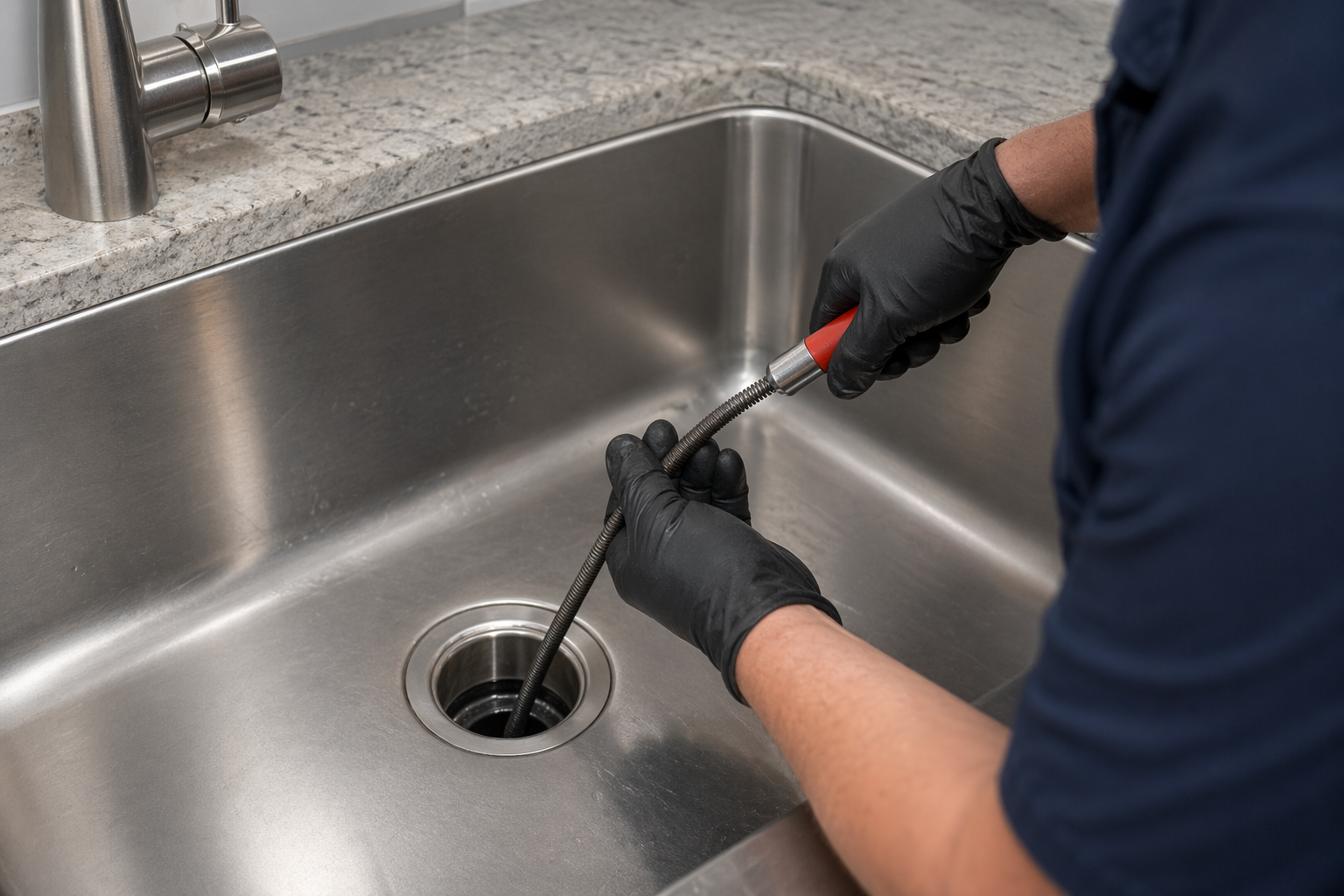
  2. When the clog is here: One fixture is slow or stopped. Every other drain in the house works normally. The problem is isolated and usually clears with a plunger, hand snake, or basic drain clearing.
  3. Level 2: Branch Lines Branch lines connect multiple fixtures to the main vertical stack. A bathroom branch line might carry the sink, tub, and toilet to the stack. A kitchen branch might carry the sink and dishwasher.
  4. When the clog is here: Two or three fixtures in the same area slow down together — the bathroom sink and tub, for example — but the kitchen, laundry, and other parts of the house drain normally. The blockage is downstream of the affected fixtures but upstream of the main line.
  5. Level 3: The Main Line The main line is the horizontal pipe that runs from the base of the vertical stack or from where all branch lines converge through your foundation wall or floor, under the yard, to the city sewer main. In most Northern Utah residential properties, the main line is 4 to 6 inches in diameter, runs 30 to 100 feet depending on lot depth, and sits 3 to 5 feet underground.
  6. When the clog is here: The whole house is affected. Every fixture drains into the main line, so a restriction in the main line backs up everything above it. The lowest fixtures show symptoms first — floor drains, basement drains, ground-floor tubs and showers — because they are closest to the blockage and have the least gravity working in their favor.
  7. This is where main line drain cleaning comes in. Clearing a fixture trap or branch line does nothing if the restriction is in the main line. The water will drain from the fixture, hit the main line blockage, and have nowhere to go.
  8. Five Diagnostic Signs That the Clog Is in the Main Line Use these to determine whether your problem is a fixture issue or a main line issue. Two or more together is a strong indicator that the blockage is in the main line.
  9. 1. Multiple Fixtures Slowing Down at the Same Time If the kitchen sink, the bathroom tub, and the laundry drain all slow down within the same few days, the odds of three separate fixture clogs developing simultaneously are low. What is far more likely: they all drain into the same main line, and that main line is restricted.
  10. Fixture clog version: One drain is slow. Everything else works fine. Main line version: Two or more drains in different parts of the house slow down together or within a short window.
  11. 2. Water Backing Up Through the Lowest Drain Floor drains, basement drains, and ground-floor showers are the first places a main line backup appears. When the main line is blocked and someone runs water upstairs — flushes a toilet, starts the washing machine, takes a shower — that water flows down, hits the blockage, and rises back up through the lowest available opening.
  12. What to watch for: Water or sewage appearing in a floor drain, basement drain, or ground-level shower that no one is using. This is the single most reliable main line indicator.

How To Tell When It Fits

3. Fixtures Reacting to Each Other Flush the toilet and the tub drain gurgles. Start the washing machine and the kitchen sink bubbles. Run the bathroom shower and the floor drain makes noise.

The goal is to move from guesswork to evidence. Good decisions usually come from the same sequence: define the symptom, locate the likely part of the system, check whether the issue is repeating, and decide whether cleaning, inspection, jetting, or repair planning fits.

That sequence keeps the article useful before any service conversation happens. It helps readers ask better questions and makes it harder for a vague diagnosis to sound more certain than it really is.

  1. This cross-fixture reaction happens because air is being displaced in the main line. When water hits a partial blockage, it pushes air backward through the system, and that air escapes through the nearest open trap. If fixtures in different parts of the house are reacting to each other, the restriction is in the shared pipe — the main line.
  2. 4. Sewage Smell Inside or Near the Cleanout A persistent sewer smell that is not coming from a single dry trap — especially one you notice outside near the cleanout, in the basement, or near the foundation — often indicates a main line issue. The smell can come from a partial blockage creating gas pressure in the line, a failed joint leaking waste near the foundation, or standing water in a belly low spot that is decomposing.
  3. 5. The Same Fixture Keeps Clogging After Clearing You had the kitchen drain cleared two months ago. It is clogged again. You had the bathroom drain snaked last fall. Same problem.
  4. If the same fixture keeps clogging despite being cleared, there are two likely explanations: i there is a chronic buildup issue in the branch line feeding that fixture, or ii the real blockage is in the main line, and clearing the fixture only temporarily restores flow until the main line restriction backs everything up again. If the fixture-level clearing never holds, the next step is a main line inspection.
  5. What Causes Main Line Clogs Main line blockages form differently from fixture clogs. A fixture trap catches hair and soap residue. The main line accumulates problems over months or years from sources that are harder to see and harder to prevent.
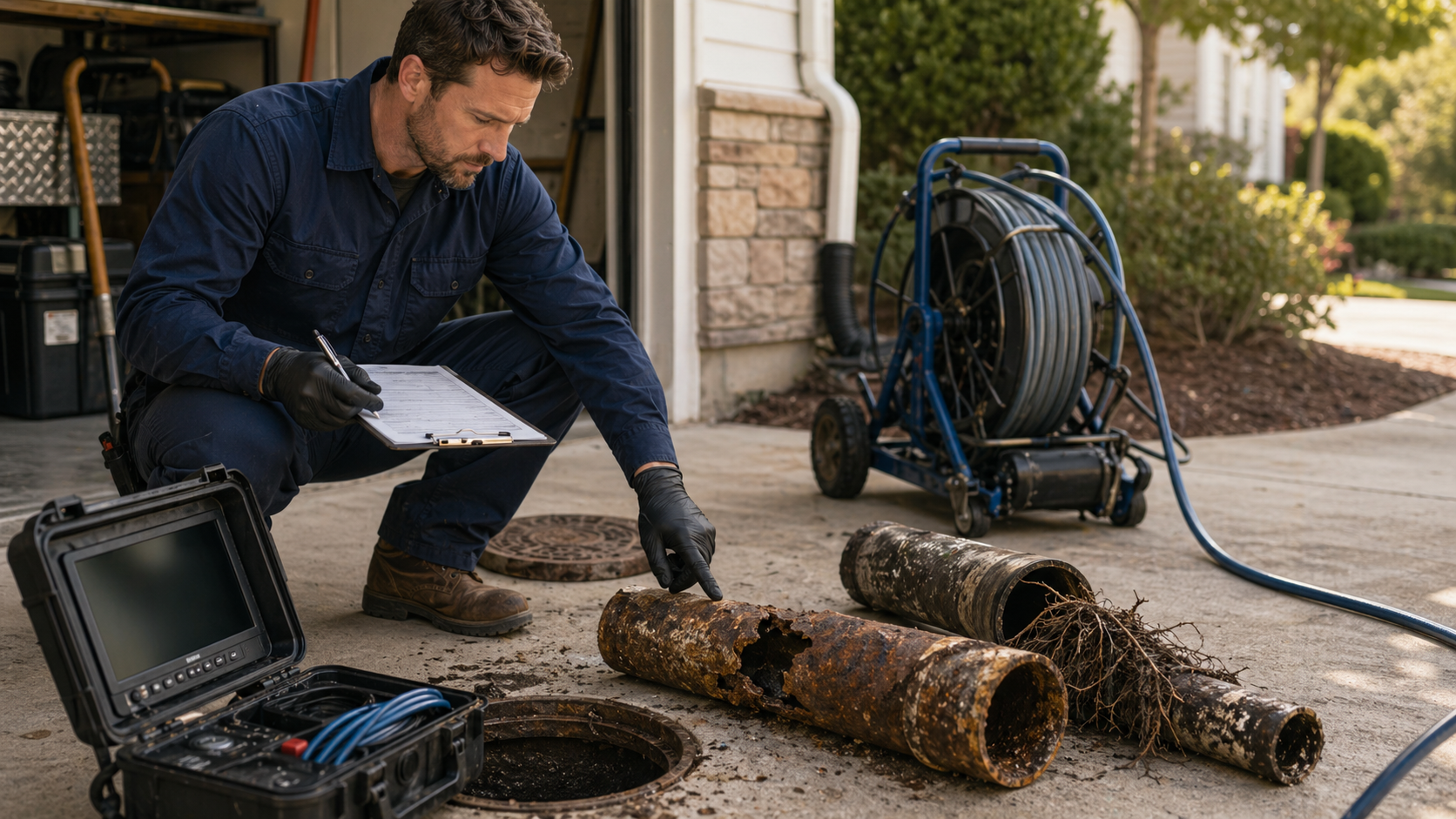
  6. Roots Tree roots enter the main line through cracked joints, separated fittings, and deteriorated pipe walls. Once inside, they grow toward the water source, forming a mass that catches debris and progressively restricts flow. Cottonwood, willow, poplar, and silver maple are aggressive root producers — and all four are common along the Wasatch Front and near irrigation ditches throughout Weber, Davis, and Salt Lake counties.
  7. Root intrusion is the most common main line blockage cause in Northern Utah homes built before 1985 with clay or cast iron pipe. The joints on older pipe materials are the entry point — roots find the moisture at the joint, penetrate through, and expand inside the line.
  8. Grease Cooking grease goes down the kitchen drain as a liquid, cools in the main line, and solidifies on the pipe walls. Over time, grease coatings harden and catch other debris — food particles, soap residue, paper products — building a restriction that narrows the pipe from the inside. A grease clog in the main line is not a single plug like a hair clog in a sink trap. It is a gradual coating that builds across a longer section of pipe.
  9. Scale and Mineral Deposits Cast iron pipes develop internal scale — layers of rust and mineral buildup that roughen the pipe walls and reduce effective diameter. In areas with hard water common in Weber and Davis counties, mineral deposits accelerate the process. A cast iron main line that was 4 inches in diameter when installed may have an effective interior of 2.5 to 3 inches after decades of scale buildup.
  10. Bellies and Low Spots A belly is a section of pipe that has settled below grade, creating a low spot where water pools, sediment collects, and debris accumulates. Bellies develop when soil shifts underneath the pipe — and the clay soil common across the Wasatch Front is particularly prone to this. Clay expands when wet and contracts when dry, and that cycle moves pipe over time.
  11. A belly does not cause an immediate clog. It creates a chronic collection point that eventually restricts flow. Cleaning a belly clears the accumulated debris, but the belly re-fills because the grade is still wrong.
  12. Foreign Objects "Flushable" wipes which are not flushable, feminine hygiene products, paper towels, children's toys, and other objects that should not be in the drain system. These can catch on a joint, a root mass, or a scaling point in the main line and create a blockage that standard fixture-level clearing cannot reach.

What Makes It Easier To Use

What a Main Line Drain Cleaning Visit Looks Like When you call Mountain West at 801-317-8104 or email [email protected] for main line drain cleaning, here is what happens.

Small details often change the interpretation. Which fixture backed up first, whether more than one drain is affected, whether the problem returned after clearing, and whether there is odor or standing water all matter.

Use these notes to describe the issue clearly. A good description is often the difference between booking a narrow cleaning visit and starting with inspection or a broader sewer conversation.

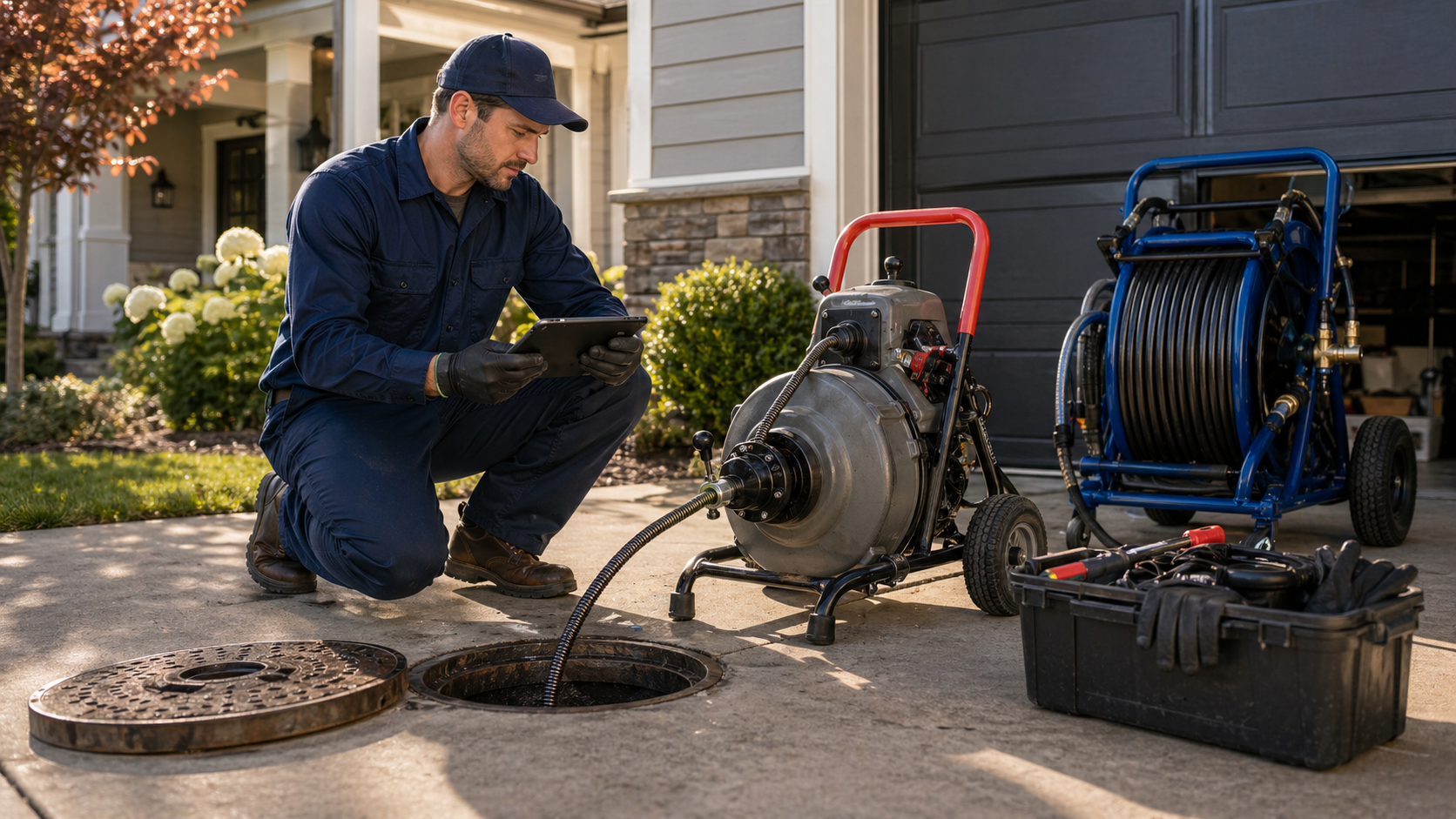
  1. Locating access. The main line is accessed through a cleanout — a capped pipe that provides direct entry into the main line, usually located outside the house near the foundation or in the basement/crawl space. If you know where your cleanout is, tell us when you call. If you do not, we find it on arrival.
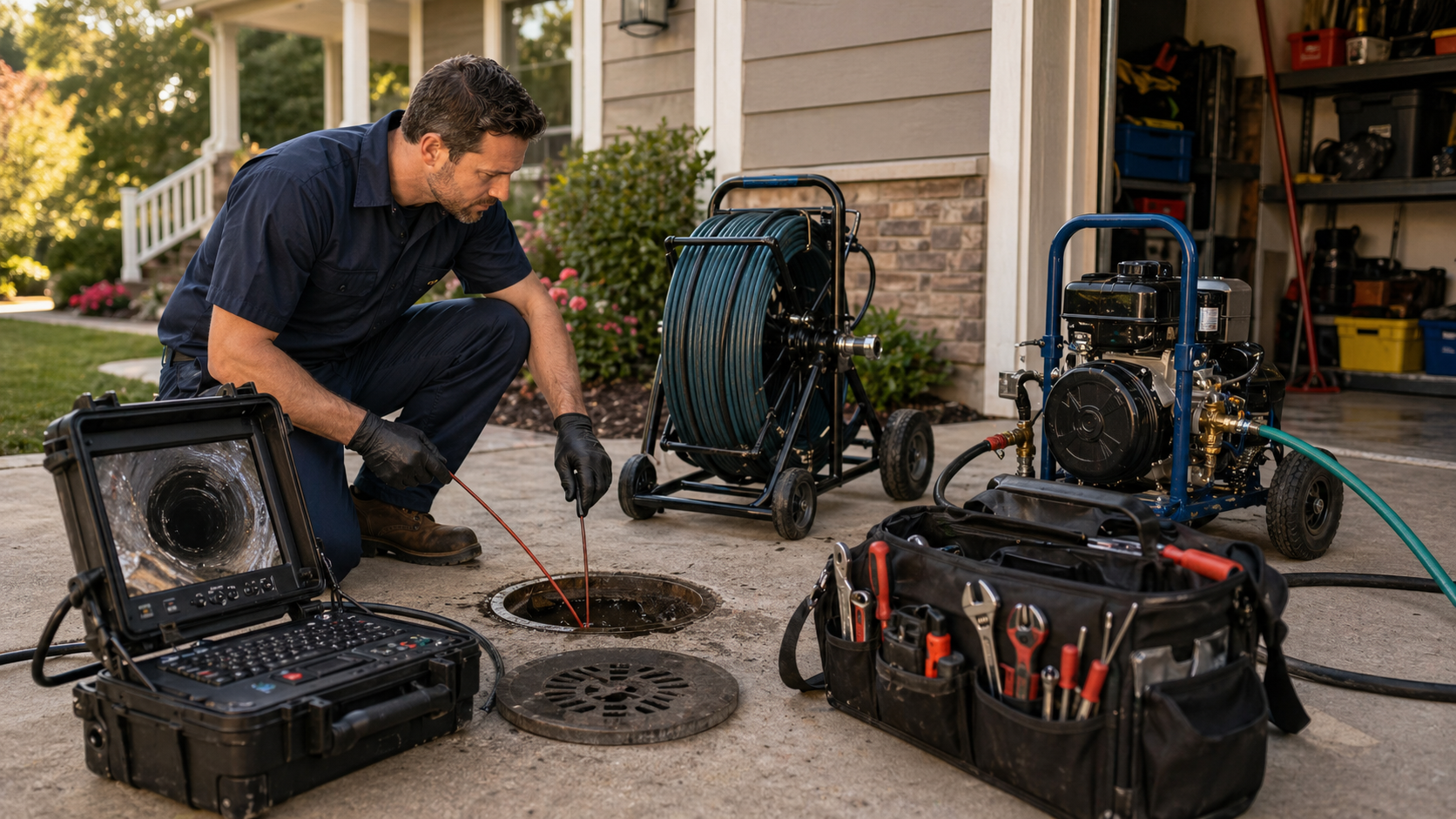
  2. Camera first. We run a sewer camera rated to scope up to 200 feet of pipe with live video review. The camera enters through the cleanout and travels the length of the main line. You watch the footage with us on screen. We are looking for the blockage type roots, grease, debris, foreign object, blockage location distance from cleanout, pipe material, pipe condition, and any structural issues cracks, offsets, bellies, collapse.
  3. The camera step is what separates main line service from blind clearing. Without it, the technician is guessing at what is in the pipe and how to remove it.
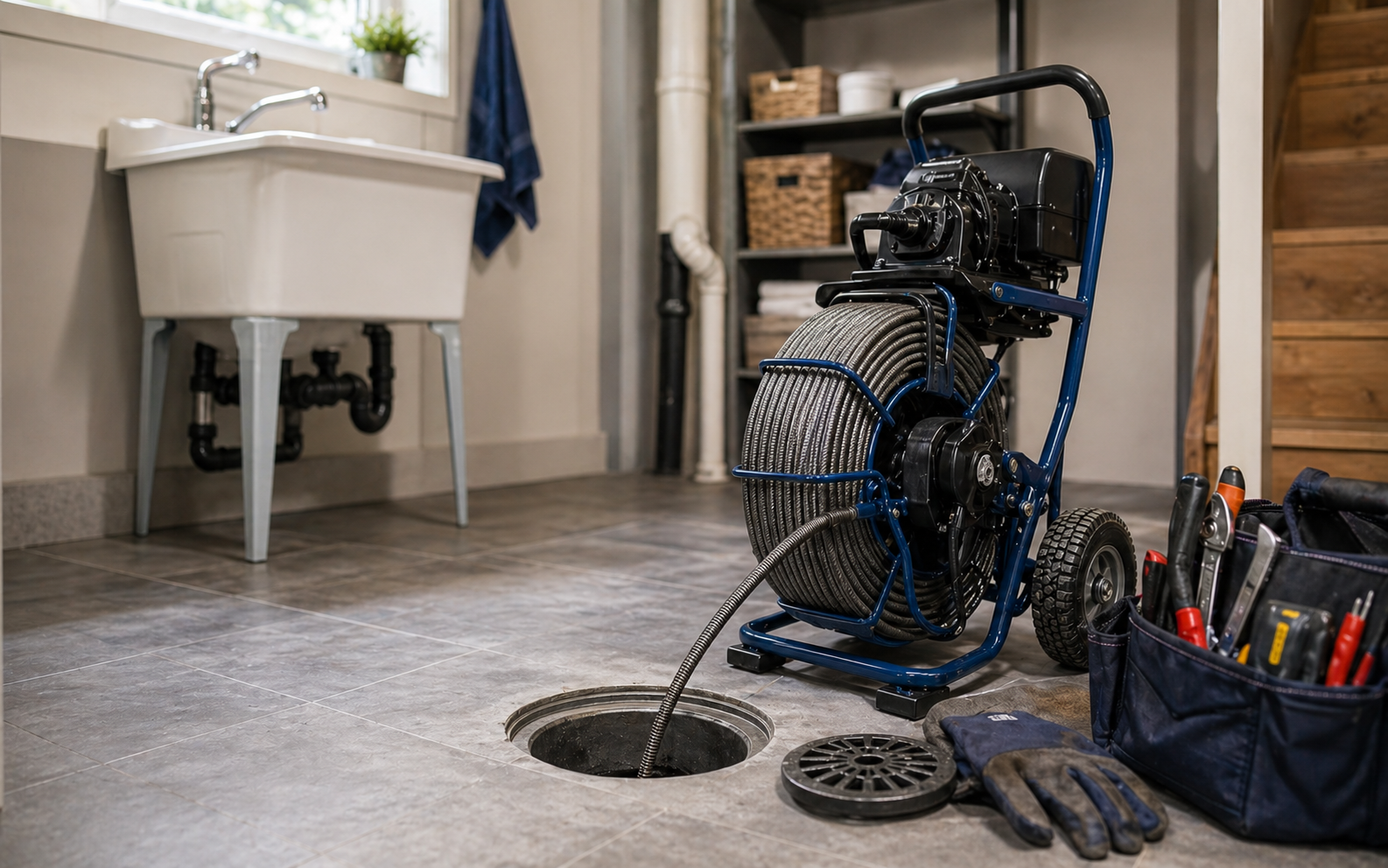
  4. i Cable/snake for mechanical blockages — foreign objects, root masses that need to be cut through, or hard obstructions. Mountain West's cable machine has 100+ feet of reach. ii Hydro jetting for buildup across a longer section — grease coating, scale, root fragments, sludge, or sediment. Mountain West's jetting unit operates at 3,850 PSI and 8 GPM with 300 feet of hose, clearing and cleaning lines from 2 to 12 inches in diameter. iii Both when the clog requires mechanical breaking first and full-line scouring after.
  5. Post-clearing camera. After the line is cleared, we run the camera again. You see the result on screen — how much buildup was removed, what the pipe walls look like now, and whether there are structural issues cracks, offsets, root entry points, bellies that cleaning does not fix.
  6. The recommendation. Every visit ends with one of three outcomes:
  7. i Line is clean, no structural issues found. No maintenance plan needed. Call if symptoms return. ii Line cleared successfully, but buildup pattern or root activity suggests it will return. We recommend a maintenance interval based on what we saw — how heavy the buildup was and how quickly it is likely to re-accumulate. iii Line has a structural issue that cleaning alone will not solve. We show you the camera footage, explain what we found collapse, offset, belly, severe cracking, and walk you through repair options. Cleaning bought you time, but the underlying defect needs a different solution.
  8. Pricing. Every job is quoted based on line length, access point condition, severity of the blockage, and whether the visit is standard or emergency. Emergency and after-hours calls carry a 15 to 35 percent premium 25 percent standard. We do not publish fixed prices because the same symptom in two different houses can involve two different jobs. Call for a quote.
  9. When Main Line Drain Cleaning Is Enough — and When It Is Not Cleaning is enough when: The blockage is buildup grease, roots, scale, debris in a structurally sound pipe. The line clears fully, the post-clearing camera shows intact pipe walls, and there are no grade problems. You may need to clean on a maintenance schedule if the buildup pattern is likely to recur, but cleaning is the right service.
  10. Cleaning is not enough when: The camera shows a structural defect — a collapsed section, a severe offset at a joint, a belly where the pipe has settled below grade, or Orangeburg pipe that has deformed. In these cases, cleaning removes the symptom the blockage but does not fix the cause the defect. The blockage will return because the pipe condition creates it. The next step is a repair conversation, not another cleaning visit.
  11. The gray zone: Root intrusion at joints in otherwise intact pipe. Cleaning removes the root mass, but roots grow back — typically in 6 to 24 months depending on species, season, and how many entry points exist. For moderate root intrusion, scheduled jetting on a maintenance cycle is often the most practical approach. For aggressive root intrusion that returns within 6 months, the pipe likely needs lining or replacement to seal the entry points permanently.

How We Apply It

Most homeowners start by calling about one slow drain. Sometimes that is the whole problem — a fixture trap or branch line clog that clears in minutes. But when the real blockage is in the main line, clearing individual fixtures does not fix anything. The water drains from the fixture, hits the main line restriction, and backs up again. This article gives you the diagnostic framework to tell the difference, explains what causes main line clogs specifically, and walks you through what a main line drain cleaning visit involves.

This is where the article connects back to real service work. The point is not to turn every concern into the biggest possible job; it is to match the symptom pattern to the least confusing next step that can actually answer the question.

Tying the topic back to main line drain cleaning keeps the advice grounded. The work should explain what was found, what is still uncertain, and why the recommended next step fits the evidence.

  1. Understand where fixture drains, branch lines, and the main line sit in your home's plumbing
  2. Use five diagnostic signs to determine whether the blockage is in a fixture or the main line
  3. Know what causes main line clogs and why they behave differently from fixture clogs

Common Questions

These follow-up questions turn the explanation into a practical decision tool. Definitions help, but the real value is knowing when the topic matters at a property.

For main line drain cleaning topics, the best next questions connect the concept to symptoms, access, inspection, and the next service decision.

How do I know if I need main line drain cleaning or just a single drain cleared?

Count the affected fixtures. If one drain is slow and everything else works normally, it is probably a fixture or branch line clog. If two or more drains in different parts of the house are slowing down, backing up, or reacting to each other gurgling, bubbling, the blockage is likely in the main line. The other strong indicator: sewage or water backing up through the lowest drain in the house floor drain, basement drain, or ground-floor shower when no one is using that fixture.

Can I clear a main line clog myself?

You can try a basic cable snake through the cleanout if you can locate and open the cleanout cap. A homeowner-grade snake 25 to 50 feet may reach a blockage close to the house. But main line clogs are often 30 to 80 feet from the cleanout, and the causes — root masses, hardened grease, or structural issues — require commercial-grade equipment. More importantly, without a camera, you do not know what you are clearing or whether the pipe has a condition that a snake could make worse like a partial collapse where forcing a cable through displaces pipe further.

My house does not have a cleanout. Can the main line still be cleaned?

Yes, but access becomes more limited. Without a cleanout, the technician typically accesses the main line by pulling a toilet — removing the toilet to use the floor flange as an access point. This works, but it adds time and scope to the visit. If your home does not have a cleanout, consider having one installed. A cleanout gives direct access to the main line for future cleaning, camera inspection, and maintenance without pulling fixtures.

How long does a main line drain cleaning visit take?

Most residential main line cleaning visits take 1 to 3 hours depending on the blockage severity, line length, and whether camera inspection is included. A straightforward grease or debris clog in a short lateral with an accessible cleanout can clear in under an hour. A heavy root mass in a long line that requires cabling, jetting, and pre- and post-clearing camera work is a longer job.

What is the difference between main line drain cleaning and sewer line cleaning?

In most residential properties, they are the same thing. The "main line" and the "sewer lateral" refer to the same pipe — the horizontal line that carries all wastewater from inside your house to the municipal sewer main in the street. "Drain cleaning" often refers to clearing individual fixture drains kitchen sink, shower, floor drain, while "main line drain cleaning" and "sewer line cleaning" both refer to clearing the shared pipe that everything flows into. If you are experiencing whole-house symptoms, either term describes the service you need.

Read This Next

These articles stay close to the same decision without repeating this one. Use them when the symptoms, timing, or service path points in a slightly different direction.

Source Log

These sources were used for background, claim checking, or local context. The article explains the topic in Mountain West's own words and does not copy outside article structure or long passages.

U.S. Environmental Protection Agencyparaphrased

Sanitary Sewer Overflows (SSOs)

Supports: Sanitary sewer overflows can back up into buildings, damage property, and create public-health concerns; sewer systems carry domestic and commercial wastewater to treatment facilities.

U.S. Environmental Protection Agencyparaphrased

Sanitary Sewer Overflow Frequent Questions

Supports: Common sewer blockage contributors include fats, oils and grease, wipes and other non-flushable products, roots entering defects, sediment, and other materials.

Clinton City, Utahparaphrased

Sewer

Supports: Local sewer maintenance programs may remove roots, grease, and debris from public lines; bubbling, gurgling, or odors can also relate to venting and sewer-maintenance conditions.

Manual review note: Use as regional public-utility context only; it does not prove the cause of a private-property problem.

Ogden Cityparaphrased

Sewer Utility Information

Supports: Local Utah utility guidance can make the private-lateral responsibility clear: property owners may be responsible for maintenance and repair from the home to the city main, including tap connection, depending on jurisdiction.

Manual review note: Local ownership rules vary by city and utility. Treat this as regional context, not legal advice for every property.

Ogden City, Utahparaphrased

Sewer Services

Supports: Ogden City cleans the entire sewage collection system every two years, with routine cleaning schedules on weekly, monthly, three-month, and six-month rotations for problem areas. The city operates three jet-vacuum sewer line cleaning trucks and a camera van for root intrusion and damage inspection.

Northern Steel Buildings & Construction, citing Utah Geological Surveyparaphrased

Expansive Clay Soils in Utah

Supports: Certain clay minerals in Utah soil can absorb water and swell significantly; the cycle of heaving and settling causes foundation and infrastructure movement.

Utah Department of Environmental Qualitybackground

Wastewater Programs

Supports: Utah wastewater programs cover municipal wastewater planning, onsite wastewater systems, operating permits, and related design requirements, reinforcing that drain and sewer issues connect to regulated infrastructure.

Related Next Steps

Next StepMain Line Drain CleaningExplore drain-cleaning resolution if main line drain cleaning may still fit a more direct clearing visit.Next StepDrain CleaningCompare whether a simpler clearing path still fits after reading about main line drain cleaning.Next StepGet A Free QuoteStart a free quote if you want service-fit or pricing guidance after this article.Next StepRead BlogCompare adjacent articles around main line drain cleaning before you choose the next path.

More for You

Follow-up blog articles chosen for this page so the next question stays close to the same decision path.

Drain Cleaning in Utah: What Affects the Price and How to Compare Quotes article image for Drain Cleaning.Blog ArticleDrain Cleaning in Utah: What Affects the Price and How to Compare QuotesOpen this if you want the drain cleaning side of the decision next.Main Line Drain Cleaning: What the Job Involves and Why It Costs More article image for Main Line Drain Cleaning.Blog ArticleMain Line Drain Cleaning: What the Job Involves and Why It Costs MoreRead this next for another main line drain cleaning angle that builds on this article.Floor Drain Backup: What It Means and Whether the Problem Is the Drain or the Main Line article image for Floor Drain Cleaning.Blog ArticleFloor Drain Backup: What It Means and Whether the Problem Is the Drain or the Main LineRead this next to see how main line drain cleaning connects into floor drain cleaning planning.When a Plumbing Clog Is Really a Main Sewer Line Problem article image for Sewer Camera Inspection.Blog ArticleWhen a Plumbing Clog Is Really a Main Sewer Line ProblemRead this next to see how main line drain cleaning connects into sewer camera inspection planning.

Quick Answers About Main Line Drain Cleaning: How to Tell When a Clog Is More Than a Fixture Problem

These are the quick answers most people want before they call, book, or decide on the next step.

What is this article about?

Most homeowners start by calling about one slow drain. Sometimes that is the whole problem — a fixture trap or branch line clog that clears in minutes. But when the real blockage is in the main line, clearing individual fixtures does not fix anything. The water drains from the fixture, hits the main line restriction, and backs up again. This article gives you the diagnostic framework to tell the difference, explains what causes main line clogs specifically, and walks you through what a main line drain cleaning visit involves. It connects the topic back to main line drain cleaning when readers are trying to decide on the right next move.

Who is this article best for?

Here is the question most homeowners are really asking: "I have a slow drain or a backup. Do I need someone to clear one drain, or is this a bigger problem?" It is most useful for readers trying to understand the issue before they book, compare services, or decide whether the symptoms point to a bigger sewer or drain problem.

What should I do after reading this article?

If the issue sounds familiar, the usual next step is to review the main line drain cleaning page or compare it with drain cleaning before deciding whether to request a quote, book service, or call for faster guidance.

How can I reach Mountain West?

Mountain West Hydro Jetting serves Northern Utah and the Salt Lake corridor. You can reach us at 801-317-8104 or [email protected].