Mountain West Jetting
Mountain West logoMountain West Hydro Jetting & Sewer Maintenance LLC

SEWER BACKUP PREVENTION: WHAT ACTUALLY HELPS?

Blog Article

Story by Mountain West Hydro JettingPublished June 18, 2026Backup PreventionServing Northern Utah and the Salt Lake corridor

Sewer Backup Prevention: What Actually Helps?

Sewer backup prevention advice is everywhere: do not pour grease down the drain, do not flush wipes, get your line cleaned. All of that is true. But it is also incomplete. Most sewer backups in Northern Utah are not caused by one bad habit — they are caused by pipe condition, root intrusion, or buildup patterns that behavior alone cannot fix. This article ranks prevention methods by what they actually prevent, so you can focus on the actions that match your line's risk profile instead of following generic advice that may not apply to your house.

Start Here

Here is the reality of sewer backup prevention: the most effective prevention step for most homeowners is one they skip — a camera inspection that tells them what their pipe actually looks like inside.

What This Article Helps You Do

  • Understand what causes sewer backups and which causes prevention can actually address
  • Rank prevention methods from least to most effective for your situation
  • Know when a backwater valve makes sense and when plumbing code requires one
  • Build a prevention plan matched to your line's actual risk profile
  • Recognize when prevention is no longer the right conversation and repair is the next step

Quick Takeaway

Sewer backup prevention has four tiers. Tier 1 behavioral costs nothing and prevents the most common user-caused blockages. Tier 2 maintenance costs money on a schedule and removes buildup before it becomes a blockage. Tier 3 diagnostic is the most underused and most valuable — a camera inspection tells you what your line actually needs. Tier 4 mechanical is a backwater valve that physically prevents sewage from flowing back into your home, regardless of what caused the blockage. The strongest prevention plan combines all four, matched to your line's risk profile.

What Actually Helps

Here is the reality of sewer backup prevention: the most effective prevention step for most homeowners is one they skip — a camera inspection that tells them what their pipe actually looks like inside.

Behavioral changes no grease, no wipes prevent you from making the problem worse. Maintenance cleaning buys time. But neither one prevents a backup caused by a pipe that is already cracked, root-infiltrated, bellied, or partially collapsed. The only way to know what your pipe looks like is to look. Everything else is guessing at the right prevention plan without knowing what you are preventing against.

What It Means In Practice

What Causes Sewer Backups — and What Prevention Can Address Not every backup cause is preventable by the homeowner. Understanding which causes you can control and which ones require professional intervention is where effective prevention starts.

Start with the normal pattern: wastewater should move away from the fixture, through the branch line, into the larger building drain or sewer lateral, and out toward the public or private collection system. Most confusion starts when one symptom is judged without locating where that pattern is breaking down.

For sewer cleaning and maintenance questions, the useful first step is separating a local fixture issue from a deeper line condition, because those two situations can look similar at the surface but lead to different next steps.

  1. Causes You Can Influence Through Behavior Grease accumulation. Cooking grease, oils, and fats poured down kitchen drains coat pipe walls, harden, and catch debris. Over time, the coating narrows the pipe and creates blockage points. This is the most controllable cause — you choose what goes down the drain.
  2. Foreign objects. "Flushable" wipes which do not break down like toilet paper, feminine hygiene products, paper towels, cotton swabs, dental floss, and anything that is not human waste or toilet paper. These catch on joints, root masses, and rough pipe surfaces in the main line and create blockages that grow over time.
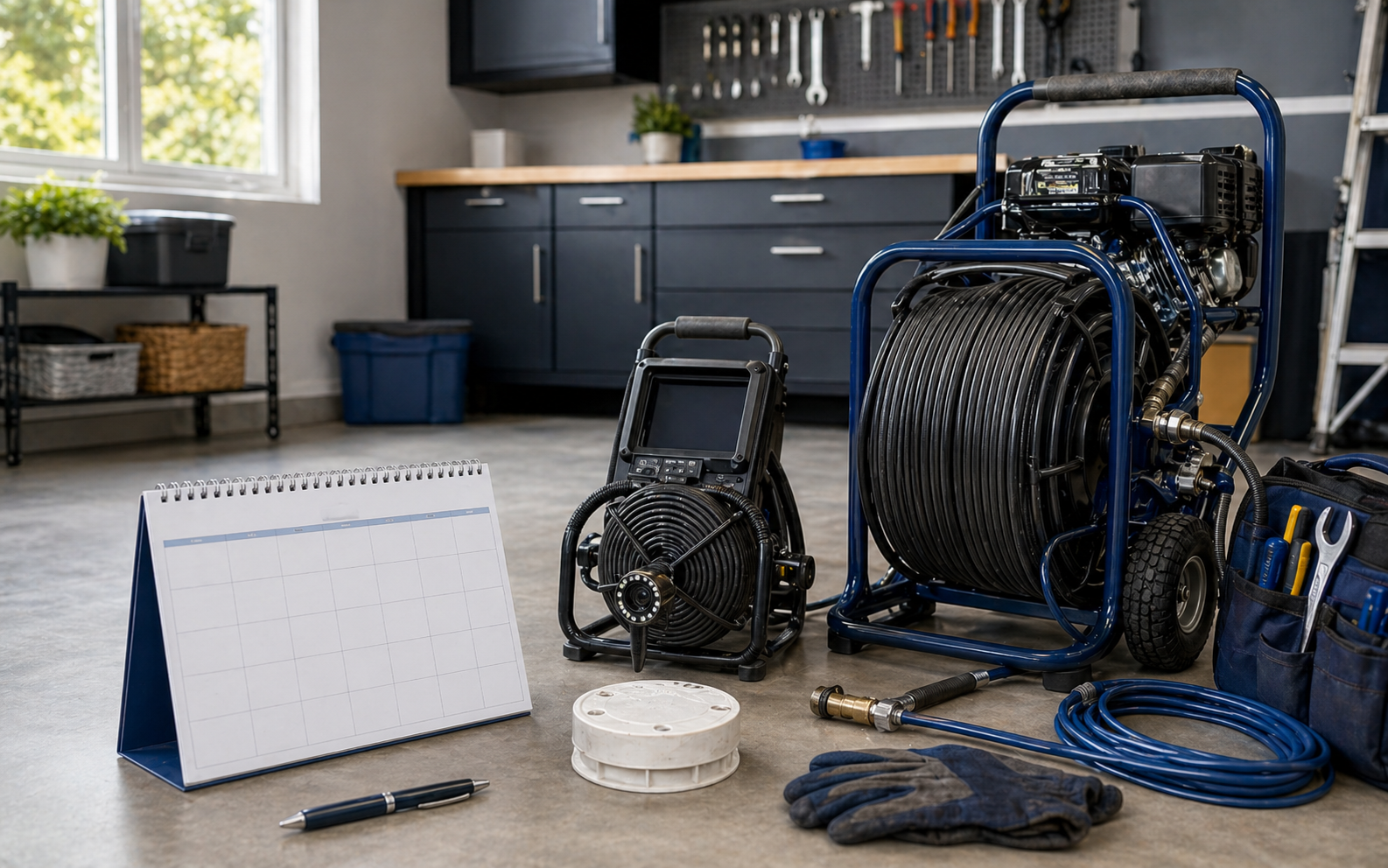
  3. Causes You Can Manage Through Maintenance Grease and scale buildup. Even with good habits, some grease and mineral scale accumulates over years. Scheduled hydro jetting strips buildup from pipe walls before it reaches the point of restriction. This is maintenance as prevention — cleaning before the line tells you it needs cleaning.
  4. Root intrusion. Tree roots enter the main line through cracked joints and deteriorated pipe walls. Once inside, they grow toward the water source and form masses that catch debris. Roots cannot be permanently prevented without sealing the entry points lining or replacement, but scheduled jetting clears root growth before it blocks the line. Cottonwood, willow, poplar, and silver maple — all common along the Wasatch Front — are aggressive root producers.
  5. Causes That Require Structural Repair Bellies and grade problems. A pipe that has settled below grade creates a low spot where water pools and debris collects. No amount of behavioral change or maintenance cleaning fixes the grade — the belly re-fills after every cleaning because the pipe slope is wrong. This is a structural problem that requires excavation to correct.
  6. Collapse, severe offset, or advanced deterioration. When the pipe has physically failed — collapsed, shifted at joints, or deteriorated to the point of structural failure — prevention in the traditional sense no longer applies. The pipe needs repair or replacement. Cleaning manages the symptom temporarily, but the backup will return because the pipe creates it.
  7. Four Prevention Tiers, Ranked by Effectiveness Tier 1: Behavioral — Free, Immediate, Limited What it prevents: User-caused blockages from grease, foreign objects, and drain misuse. What it does not prevent: Root intrusion, pipe deterioration, bellies, or any condition that exists inside the pipe regardless of what you put down the drain.
  8. i No grease down any drain. Wipe pans with a paper towel before washing. Pour cooking oil into a container and dispose of it in the trash. Even small amounts of grease accumulate inside the main line over years.
  9. ii Nothing but toilet paper and waste in the toilet. "Flushable" wipes are the single most common foreign-object cause of main line blockages. They do not break down in the pipe the way toilet paper does. They catch on joints and root masses and create blockages that require professional clearing. Do not flush them.
  10. iii Use drain screens on kitchen and bathroom sinks. A $3 mesh screen over the drain catches food scraps and hair before they enter the branch line. This prevents fixture-level clogs and reduces the debris load reaching the main line.
  11. iv Run hot water after washing dishes. Hot water helps move grease through the fixture trap and into the main line before it cools and solidifies. This is not a substitute for keeping grease out of the drain, but it reduces the amount that deposits in the trap itself.
  12. v Know what your lowest drain does. In homes with basements, the floor drain or basement shower is the first place a main line backup appears. Check it periodically. If you see standing water, slow drainage, or odor from a drain you do not use, that is an early warning worth investigating before it becomes a backup.
  13. Realistic impact: Behavioral changes reduce the frequency of user-caused blockages but have zero impact on root intrusion, pipe condition, or structural problems. If your line has already backed up from roots or pipe failure, behavioral changes alone will not prevent the next one.
  14. Tier 2: Maintenance — Moderate Cost, High Value for the Right Lines What it prevents: Buildup-related blockages from grease, scale, root growth, and debris accumulation in structurally sound pipes. What it does not prevent: Structural failures, grade problems, or advanced root intrusion where the entry points are not sealed.

How To Tell When It Fits

What maintenance looks like:

The goal is to move from guesswork to evidence. Good decisions usually come from the same sequence: define the symptom, locate the likely part of the system, check whether the issue is repeating, and decide whether cleaning, inspection, jetting, or repair planning fits.

That sequence keeps the article useful before any service conversation happens. It helps readers ask better questions and makes it harder for a vague diagnosis to sound more certain than it really is.

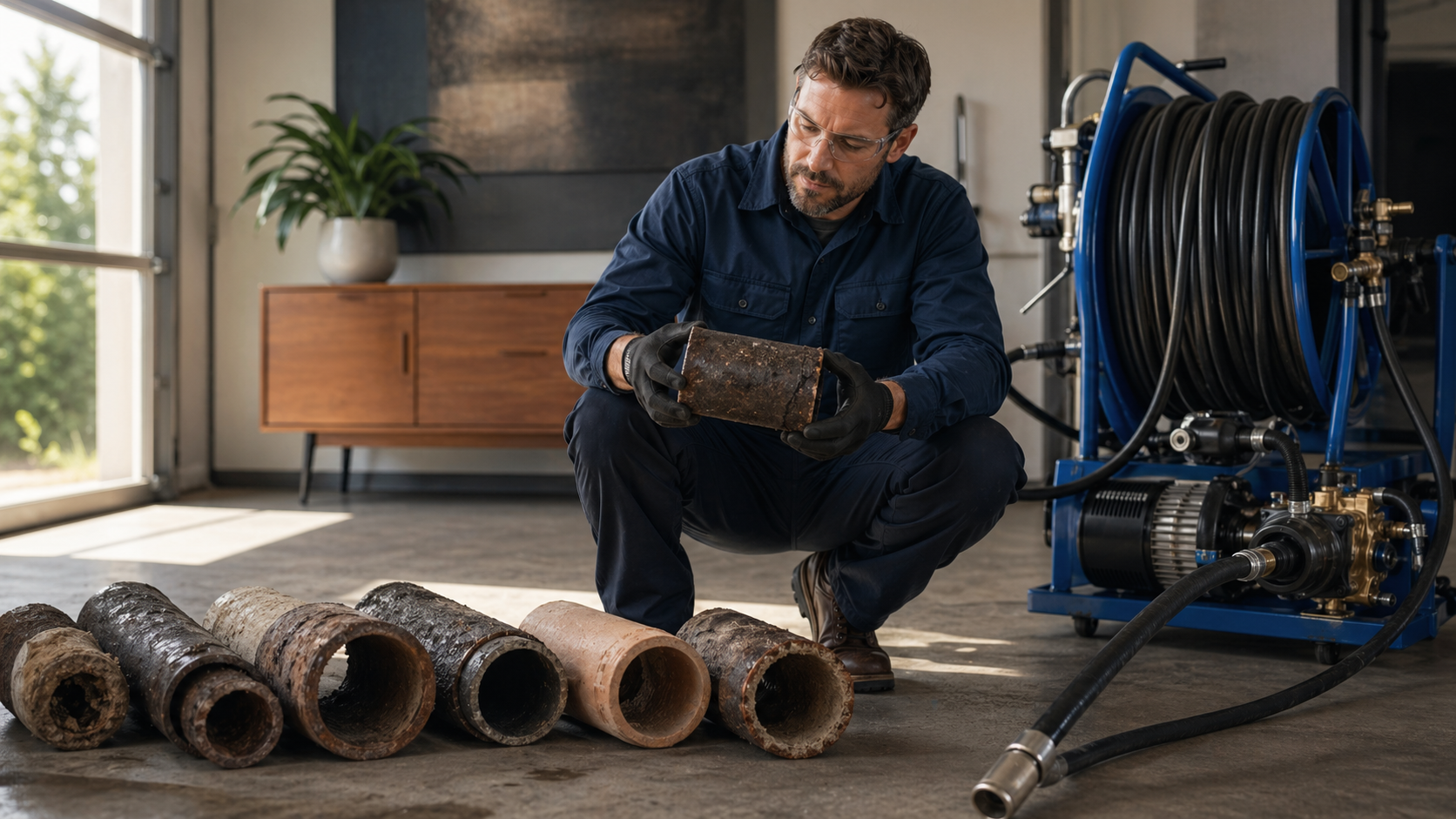
  1. i Scheduled hydro jetting. A jetting unit at 3,850 PSI and 8 GPM scours the full interior of the pipe — 360 degrees — stripping grease, scale, root fragments, and debris. Jetting on a maintenance schedule 12 to 24 months for moderate-risk lines, 6 to 12 months for high-risk clears buildup before it restricts flow.
  2. ii Enzyme treatments between cleanings. Enzyme-based drain maintenance products not chemical drain cleaners introduce bacteria that digest organic buildup — grease, soap residue, food particles — inside the pipe. They are not a substitute for professional cleaning, but they slow the rate of accumulation between jetting visits. Use monthly. Avoid chemical drain cleaners — they do not clear main line blockages and can damage older pipe materials.
  3. iii Tree and root management. If mature trees sit within 15 feet of your sewer line path, root intrusion is a matter of time on pre-1985 clay or cast iron pipe. Root barriers physical or chemical installed between the tree and the sewer line can slow root migration. Removing trees that are directly above the line eliminates the source, but that is a significant decision. At minimum, factor root exposure into your maintenance schedule — root-prone lines need shorter intervals between jetting visits.
  4. Realistic impact: Maintenance cleaning is the most cost-effective prevention method for lines with a buildup pattern in structurally sound pipes. It fails when the pipe has a structural defect that creates the blockage — cleaning buys time, but the problem returns on a predictable cycle until the defect is repaired.
  5. For maintenance scheduling by risk tier, see Sewer Line Maintenance: How Often Should Your Sewer Line Be Cleaned?
  6. Tier 3: Diagnostic — Most Underused, Most Valuable What it prevents: Surprise backups caused by conditions you did not know existed. What it does not prevent: Nothing directly — but it tells you what you are actually preventing against, which makes every other tier more effective.
  7. Why this is the most important step most homeowners skip:
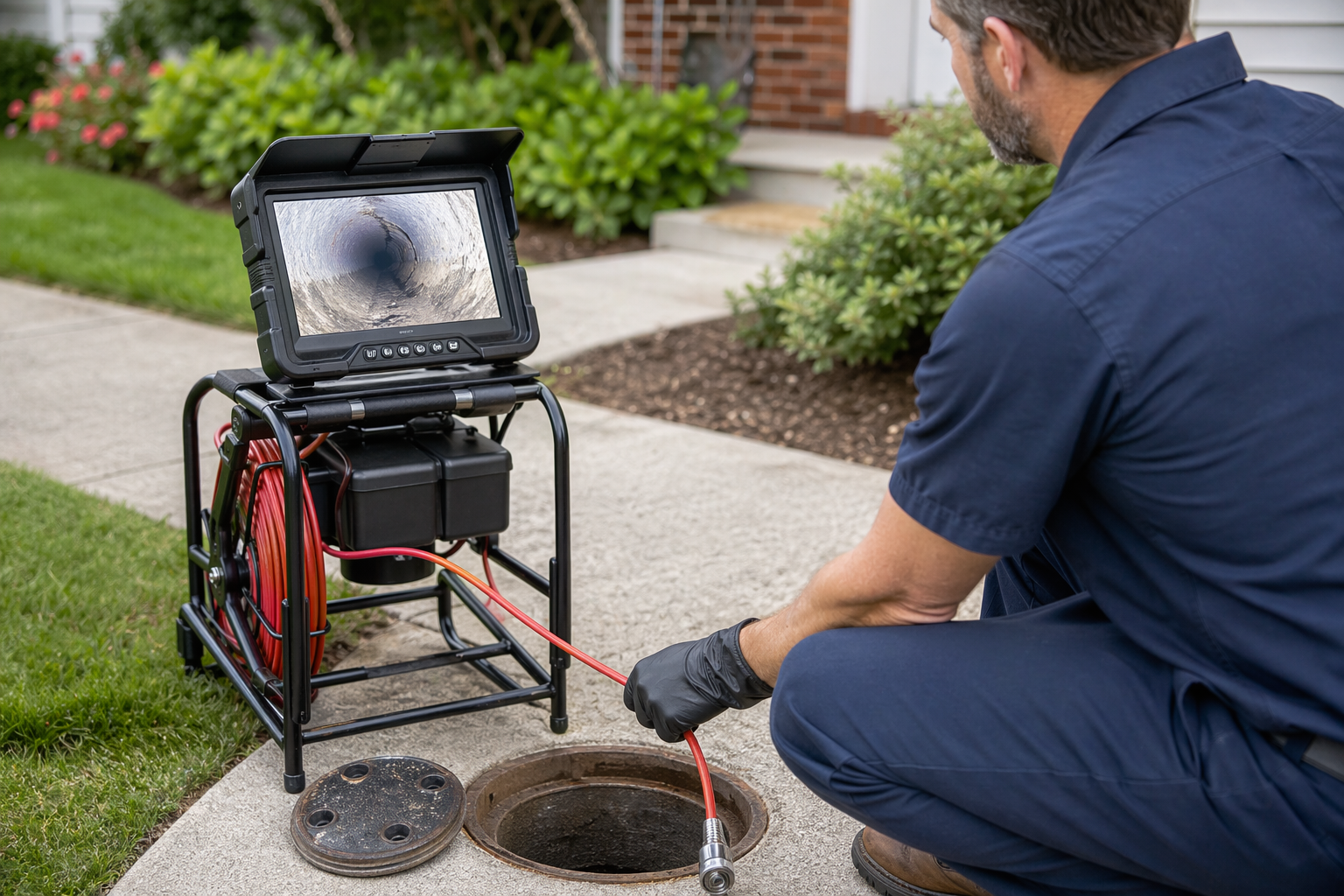
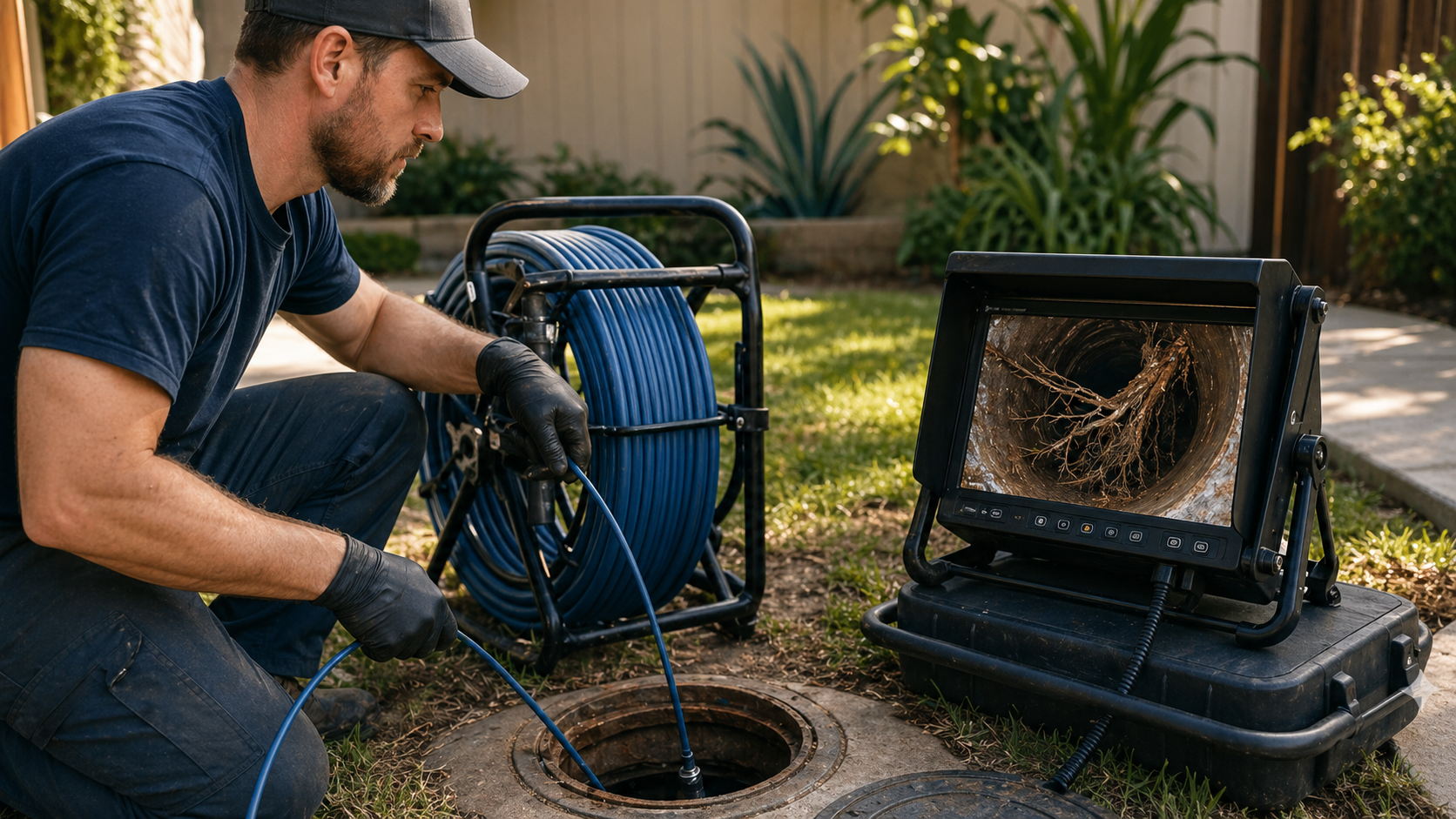
  8. A camera inspection takes 15 to 30 minutes and shows the inside of your sewer line on a live screen. It identifies pipe material, root intrusion points, grease coating, scale buildup, bellies, offsets, cracks, and any structural issue. That information is what turns generic prevention advice into a plan that fits your line.
  9. Without a camera inspection:
  10. You do not know your pipe material or condition. You do not know whether roots have entered the line. You do not know whether the line has a belly or grade problem. You are guessing at the right maintenance interval. You are guessing at whether behavioral changes are enough. With a camera inspection:
  11. You know exactly what your line looks like. You can match prevention methods to the actual condition. You can set a maintenance schedule based on what the camera showed — not a generic rule. You can catch structural issues before they cause a backup.
  12. When to get one: i After any backup — to find out what caused it and whether it will happen again. ii Before buying a home — to know the sewer line condition before closing. iii If your home was built before 1985 and you have never had the line inspected. iv If you have mature trees near the sewer line path. v When setting up a maintenance schedule — so the schedule is based on evidence.
  13. Mountain West's sewer camera scopes up to 200 feet of pipe with live video review. You watch the footage with the technician and walk away knowing what your line needs.
  14. For details on what the camera shows during a root intrusion inspection, see Sewer Camera Inspection: How Root Intrusion Is Found and What It Means.

What Makes It Easier To Use

Tier 4: Mechanical — Backwater Valves What it prevents: Sewage from flowing backward into your home through your drains — regardless of whether the blockage is in your lateral or in the city main. What it does not prevent: The blockage itself. A backwater valve does not prevent clogs. It prevents the clog from becoming an interior sewage flood.

Small details often change the interpretation. Which fixture backed up first, whether more than one drain is affected, whether the problem returned after clearing, and whether there is odor or standing water all matter.

Use these notes to describe the issue clearly. A good description is often the difference between booking a narrow cleaning visit and starting with inspection or a broader sewer conversation.

  1. How a backwater valve works:
  2. A backwater valve is a backflow prevention device designed to allow water or sewage to flow in only one direction — out of your house. A hinged flapper inside the valve rests open during normal flow, allowing waste to exit. When water flows through the system, the flapper opens allowing waste to flow from the home to the sewer. In the event of a backup, the flapper seals, preventing sewage from entering your home.
  3. When plumbing code requires one:
  4. Plumbing code requires backwater valves when a fixture is installed on a floor that is below the next upstream manhole. The obvious example is a basement floor drain. If your home has a basement with a floor drain, shower, or laundry drain, and that floor sits below the nearest upstream sewer manhole cover, code requires a backwater valve to protect those fixtures. Many older Northern Utah homes with basements were built before this requirement was consistently enforced.
  5. When to consider one even if code does not require it:
  6. i Your home has experienced a sewer backup through a floor drain or basement drain. ii You live in an area with a history of municipal sewer surcharges during heavy rainfall or snowmelt. iii Your home is on a shared sewer lateral common in older Ogden neighborhoods, 1900–1950 construction where a neighbor's blockage could back up into your house. iv You have a finished basement with significant property value at risk from sewage damage.
  7. Important limitation: When the valve is closed, water cannot flow out of your house either. If the backwater valve seals during a backup, your own fixtures above the valve will not drain until the blockage downstream is cleared. A backwater valve protects your home from sewage flooding, but it does not restore drainage — clearing the blockage does that.
  8. Maintenance: Property owners are responsible for proper operation and maintenance of their backwater valves. Inspect the valve at least once per year to ensure proper operation and flush the device with a hose to remove accumulated debris. Sewer snakes can damage backwater valves — tell your drain service provider if you have one installed so they use appropriate access.
  9. Building a Prevention Plan That Fits Your Line Prevention is not one-size-fits-all. Here is how to match the tiers to your situation.
  10. If your home was built after 1985, has PVC pipe, no mature trees near the line, and no backup history: Tier 1 behavioral is probably enough. Add a baseline camera inspection every 3 to 5 years to confirm nothing is developing. You are low risk.
  11. If your home has older pipe cast iron, clay, trees within 15 feet of the line, or one to two backups in the last five years: Tiers 1 + 2 + 3. Behavioral changes plus scheduled maintenance jetting on a 12- to 24-month cycle, set by camera inspection. This is the moderate-risk plan.
  12. If your line has backed up three or more times, has confirmed root intrusion, or has a known structural issue: All four tiers, plus a serious conversation about repair. Behavioral changes, aggressive maintenance 6 to 12 months, camera inspection after every cleaning to monitor condition, and a backwater valve to protect against interior damage while you plan repair or replacement.
  13. If your home has a basement with below-grade drains and no backwater valve: Install one. This is the single highest-value prevention investment for homes with finished basements. The cost of a backwater valve installation is a fraction of the cost of a single sewage flood cleanup and restoration.

How We Apply It

When you call Mountain West at 801-317-8104 or email [email protected] about sewer backup prevention, here is what we can do.

This is where the article connects back to real service work. The point is not to turn every concern into the biggest possible job; it is to match the symptom pattern to the least confusing next step that can actually answer the question.

Tying the topic back to sewer cleaning and maintenance keeps the advice grounded. The work should explain what was found, what is still uncertain, and why the recommended next step fits the evidence.

  1. Camera inspection. We run a sewer camera rated to scope up to 200 feet of pipe with live video review. You see the footage with us. We identify pipe material, root intrusion, grease buildup, bellies, offsets, cracks, and any structural issue. That inspection is the foundation of your prevention plan — it tells us what your line needs and what it does not.
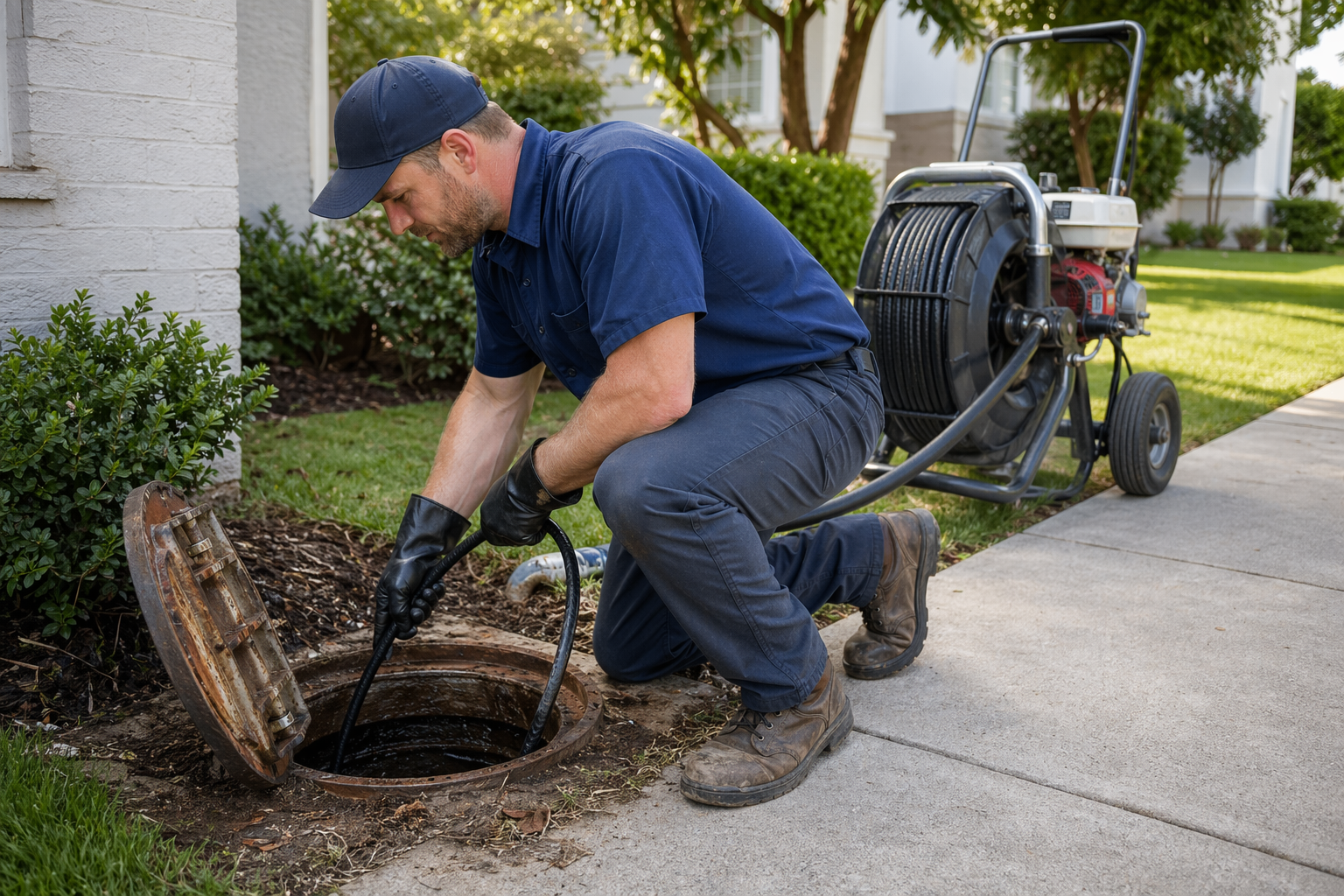
  2. Hydro jetting. Our unit operates at 3,850 PSI and 8 GPM with 300 feet of hose, clearing and cleaning lines from 2 to 12 inches in diameter. For prevention, jetting strips buildup from pipe walls before it reaches blockage level. We run the camera before and after so you see what was removed and what the pipe looks like clean.
  3. Cable clearing. Our cable machine has 100+ feet of reach for mechanical clearing of root masses, foreign objects, and hard obstructions. When a blockage needs to be broken up before jetting can scour the walls, we cable first and jet after.
  4. Maintenance scheduling. After cleaning and inspection, we recommend a maintenance interval based on what we found — not a generic rule. If the line is clean and low risk, we say so and do not sell you a maintenance plan you do not need. If the line has a buildup pattern, we tell you how long the improvement is likely to last and when to schedule the next visit.
  5. Honest assessment. If the camera shows a structural issue that no amount of prevention or maintenance will fix — a collapse, a severe belly, advanced root intrusion with pipe damage — we tell you that directly. We show you the footage, explain the options, and help you understand what repair involves. Prevention is the right conversation until it is not. When the pipe has failed, the conversation shifts to repair, and we make sure you know that clearly.
  6. Pricing. Every job is quoted based on line length, access, severity, and timing. Emergency and after-hours calls carry a 15 to 35 percent premium 25 percent standard. Call for a quote.

Common Questions

These follow-up questions turn the explanation into a practical decision tool. Definitions help, but the real value is knowing when the topic matters at a property.

For sewer cleaning and maintenance topics, the best next questions connect the concept to symptoms, access, inspection, and the next service decision.

Does pouring boiling water or baking soda down the drain really prevent backups?

Boiling water can help move grease through the fixture trap before it solidifies, but it does not affect buildup already in the main line — the water cools long before it reaches the main. Baking soda and vinegar create a mild fizzing reaction that can loosen light buildup in a fixture trap, but they have no meaningful impact on grease, roots, or scale in a 4- to 6-inch main line 30 to 100 feet long. These are fixture-level maintenance habits, not main line prevention tools.

Are enzyme drain cleaners worth using?

Yes — as a supplement, not a substitute. Enzyme-based products introduce bacteria that digest organic material grease, soap, food particles in your pipes. Used monthly, they slow the rate of buildup between professional cleanings. They do not clear an existing blockage, and they do not affect roots, scale, or structural issues. Avoid chemical drain cleaners Drano, Liquid-Plumr — they can corrode older pipe materials and do not solve main line problems.

How much does a backwater valve cost to install?

This varies significantly by property. New construction installation is simpler and less expensive because the line is accessible during building. Retrofitting an existing home typically ranges from $2,000 to $5,000 because contractors must excavate a section of the basement foundation to access the sewer line. The cost depends on where the line enters the house, the depth of the pipe, and what is above the access point concrete slab, finished basement flooring. A licensed plumber can assess your property and quote the installation. Mountain West does not install backwater valves, but we can identify during a camera inspection whether your line configuration would benefit from one.

Can I prevent root intrusion without removing trees?

You can slow it, but you cannot permanently prevent it while the roots and the entry points both exist. Root barriers — physical barriers copper or plastic sheeting buried vertically between the tree and the sewer line or chemical barriers slow-release copper sulfate applied along the line path — can redirect root growth away from the pipe. Scheduled jetting clears root growth before it blocks the line. But as long as the pipe has cracks or joint separations and a root-producing tree is within range, roots will find the moisture. The permanent fix is sealing the entry points through CIPP lining or pipe replacement.

If I have never had a backup, do I need to do anything?

If your home was built after 1985, has PVC pipe, no mature trees near the line, and no history of slow drains or backups, your risk is low. The one step worth doing is a baseline camera inspection every 3 to 5 years to confirm nothing is developing inside the pipe. That inspection costs less than a single emergency call and catches problems before they cause a backup. Beyond that, follow the Tier 1 behavioral habits — no grease, no wipes, drain screens — and pay attention to slow drains, gurgling, or odors, which are early signs that something is changing in the line.

Read This Next

These articles stay close to the same decision without repeating this one. Use them when the symptoms, timing, or service path points in a slightly different direction.

Source Log

These sources were used for background, claim checking, or local context. The article explains the topic in Mountain West's own words and does not copy outside article structure or long passages.

U.S. Environmental Protection Agencyparaphrased

Sanitary Sewer Overflows (SSOs)

Supports: Sanitary sewer overflows can back up into buildings, damage property, and create public-health concerns; sewer systems carry domestic and commercial wastewater to treatment facilities.

U.S. Environmental Protection Agencyparaphrased

Sanitary Sewer Overflow Frequent Questions

Supports: Common sewer blockage contributors include fats, oils and grease, wipes and other non-flushable products, roots entering defects, sediment, and other materials.

Centers for Disease Control and Preventionparaphrased

Safety Guidelines: Reentering Your Flooded Home

Supports: Flooded or contaminated homes can involve sewage and mold hazards, so cleanup and reentry should be treated as a health-and-safety issue rather than only a plumbing nuisance.

Ashley Valley Water & Sewer Improvement District Utahparaphrased

Sewer Backwater Valve

Supports: A backwater valve allows sewage to flow in only one direction — out of the house. Plumbing code requires backwater valves when a fixture is installed on a floor below the next upstream manhole. When a backup occurs, the flapper seals to prevent sewage from entering the home.

Ogden Cityparaphrased

Sewer Utility Information

Supports: Local Utah utility guidance can make the private-lateral responsibility clear: property owners may be responsible for maintenance and repair from the home to the city main, including tap connection, depending on jurisdiction.

Manual review note: Local ownership rules vary by city and utility. Treat this as regional context, not legal advice for every property.

Ogden City, Utahparaphrased

Sewer Services

Supports: Ogden City cleans the entire sewage collection system every two years, with routine cleaning schedules on weekly, monthly, three-month, and six-month rotations for problem areas. The city operates three jet-vacuum sewer line cleaning trucks and a camera van for root intrusion and damage inspection.

NASSCOparaphrased

Assessment

Supports: Internal television inspection is a major tool for assessing sewer-pipe condition and turning symptoms into documented findings.

Related Next Steps

Next StepSewer Cleaning And MaintenanceUse this page if the next step after what actually helps is sewer cleaning or maintenance planning.Next StepSewer Camera InspectionUse this page if what actually helps makes you want diagnostic footage before choosing the next path.Next StepGet A Free QuoteStart a free quote if you want service-fit or pricing guidance after this article.Next StepRead BlogCompare adjacent articles around what actually helps before you choose the next path.

More for You

Follow-up blog articles chosen for this page so the next question stays close to the same decision path.

Plumber Near Me for a Sewer Smell: What Service Do You Actually Need? article image for Sewer Camera Inspection.Blog ArticlePlumber Near Me for a Sewer Smell: What Service Do You Actually Need?Open this if you want the sewer camera inspection side of the decision next.Sewer Line Cleaning Near Me: What the Service Involves and What to Expect article image for Sewer Cleaning And Maintenance.Blog ArticleSewer Line Cleaning Near Me: What the Service Involves and What to ExpectRead this next for another sewer cleaning and maintenance angle that builds on this article.Sewer Line Maintenance: How Often Should Your Sewer Line Be Cleaned? article image for Sewer Cleaning And Maintenance.Blog ArticleSewer Line Maintenance: How Often Should Your Sewer Line Be Cleaned?Read this next for another sewer cleaning and maintenance angle that builds on this article.Sewer Camera Inspection Near Me: What It Shows, When You Need One, and What It Costs article image for Sewer Camera Inspection.Blog ArticleSewer Camera Inspection Near Me: What It Shows, When You Need One, and What It CostsOpen this if you want the sewer camera inspection side of the decision next.

Quick Answers About Sewer Backup Prevention: What Actually Helps?

These are the quick answers most people want before they call, book, or decide on the next step.

What is this article about?

Sewer backup prevention advice is everywhere: do not pour grease down the drain, do not flush wipes, get your line cleaned. All of that is true. But it is also incomplete. Most sewer backups in Northern Utah are not caused by one bad habit — they are caused by pipe condition, root intrusion, or buildup patterns that behavior alone cannot fix. This article ranks prevention methods by what they actually prevent, so you can focus on the actions that match your line's risk profile instead of following generic advice that may not apply to your house. It connects the topic back to sewer cleaning and maintenance when readers are trying to decide on the right next move.

Who is this article best for?

Here is the reality of sewer backup prevention: the most effective prevention step for most homeowners is one they skip — a camera inspection that tells them what their pipe actually looks like inside. It is most useful for readers trying to understand the issue before they book, compare services, or decide whether the symptoms point to a bigger sewer or drain problem.

What should I do after reading this article?

If the issue sounds familiar, the usual next step is to review the sewer cleaning and maintenance page or compare it with sewer camera inspection before deciding whether to request a quote, book service, or call for faster guidance.

How can I reach Mountain West?

Mountain West Hydro Jetting serves Northern Utah and the Salt Lake corridor. You can reach us at 801-317-8104 or [email protected].