Mountain West Jetting
Mountain West logoMountain West Hydro Jetting & Sewer Maintenance LLC

SEWER LINE CLEANING NEAR ME: WHAT THE SERVICE INVOLVES AND WHAT TO EXPECT

Blog Article

Story by Mountain West Hydro JettingPublished June 18, 2026Sewer CleaningServing Northern Utah and the Salt Lake corridor

Sewer Line Cleaning Near Me: What the Service Involves and What to Expect

If you are searching for sewer line cleaning near me, you have probably already figured out the problem is in the main line — multiple drains slowing, backups through the lowest fixture, gurgling when other fixtures run. The next question is: what does the cleaning visit actually involve? This article walks you through the full process — how the technician accesses the line, what equipment is used, how different cleaning methods work, what you see on screen during the visit, and what the results mean for your next step.

Start Here

"Sewer line cleaning" sounds like one service. It is actually a process with several steps, and the steps vary depending on what is wrong with the line, how the technician accesses it, and what they find once they are inside.

What This Article Helps You Do

  • Know what happens at each step of a sewer line cleaning service visit
  • Understand the difference between cable clearing, hydro jetting, and combination work
  • Know how access works — cleanouts, toilet pulls, and access limitations
  • Understand what changes the scope and why the same symptom can mean two different jobs
  • Know what you should walk away with — and what is missing if you do not get it

Quick Takeaway

A complete sewer line cleaning service visit has four steps: access the line, camera inspect to identify the blockage and pipe condition, clear and clean using the appropriate method, and camera inspect again to confirm the result. You should see the inside of your pipe on screen, hear a plain-language explanation of what was found, and leave with a clear recommendation — either "no follow-up needed," "schedule maintenance at this interval," or "the pipe has a structural issue that cleaning will not fix." If you do not get all four steps, the visit was incomplete.

Sewer Cleaning

"Sewer line cleaning" sounds like one service. It is actually a process with several steps, and the steps vary depending on what is wrong with the line, how the technician accesses it, and what they find once they are inside.

Some companies show up with a snake, punch a hole through the clog, and leave. That is clearing — not cleaning. Clearing restores flow. Cleaning removes what is coating the pipe walls so the flow stays restored. The difference shows up in how long the improvement lasts.

This article covers what a complete sewer line cleaning visit looks like — so you know what to expect, what to ask for, and what you should be seeing from the technician while they work.

What It Means In Practice

Step 1: The Phone Call — What to Tell the Provider The service visit starts before anyone arrives. What you describe on the phone determines what equipment the technician prioritizes and how they plan the access.

Start with the normal pattern: wastewater should move away from the fixture, through the branch line, into the larger building drain or sewer lateral, and out toward the public or private collection system. Most confusion starts when one symptom is judged without locating where that pattern is breaking down.

For sewer cleaning and maintenance questions, the useful first step is separating a local fixture issue from a deeper line condition, because those two situations can look similar at the surface but lead to different next steps.

  1. What to mention: i Which drains are affected — one fixture, multiple fixtures, or the whole house. ii Whether anything is actively backing up or just slow. iii Whether this has happened before and what was done last time. iv Whether you know where your cleanout is located. v Whether there are any access issues — buried cleanout, no cleanout, concrete or paving over the line path.
  2. This information lets the provider match the right scope before dispatching. A company that shows up without asking these questions is guessing at the job.
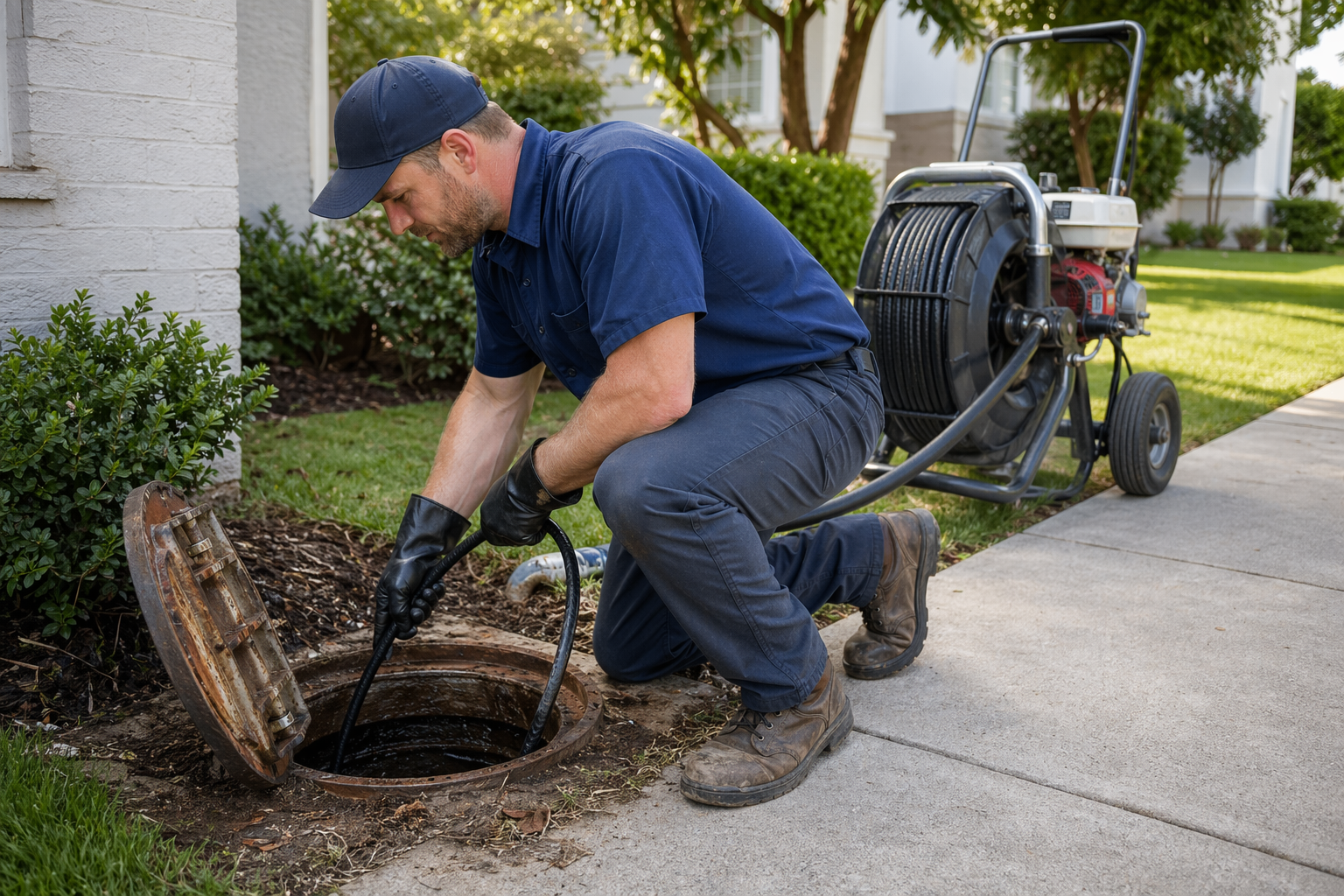
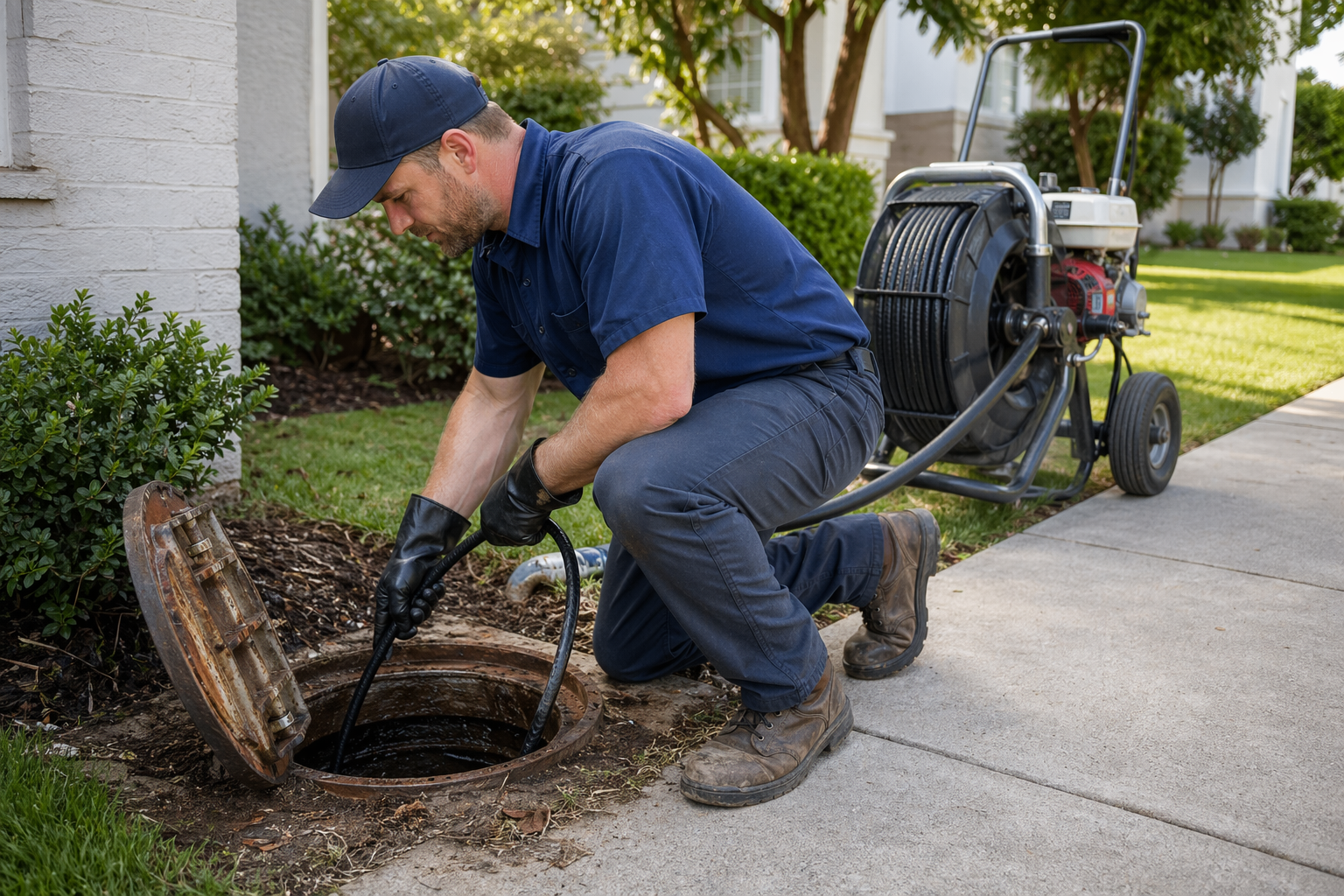
  3. Step 2: Accessing the Line The main sewer line is accessed through a cleanout — a capped pipe that provides direct entry into the main line. In most Northern Utah homes, the cleanout is located outside the house near the foundation wall, at ground level or slightly below grade.
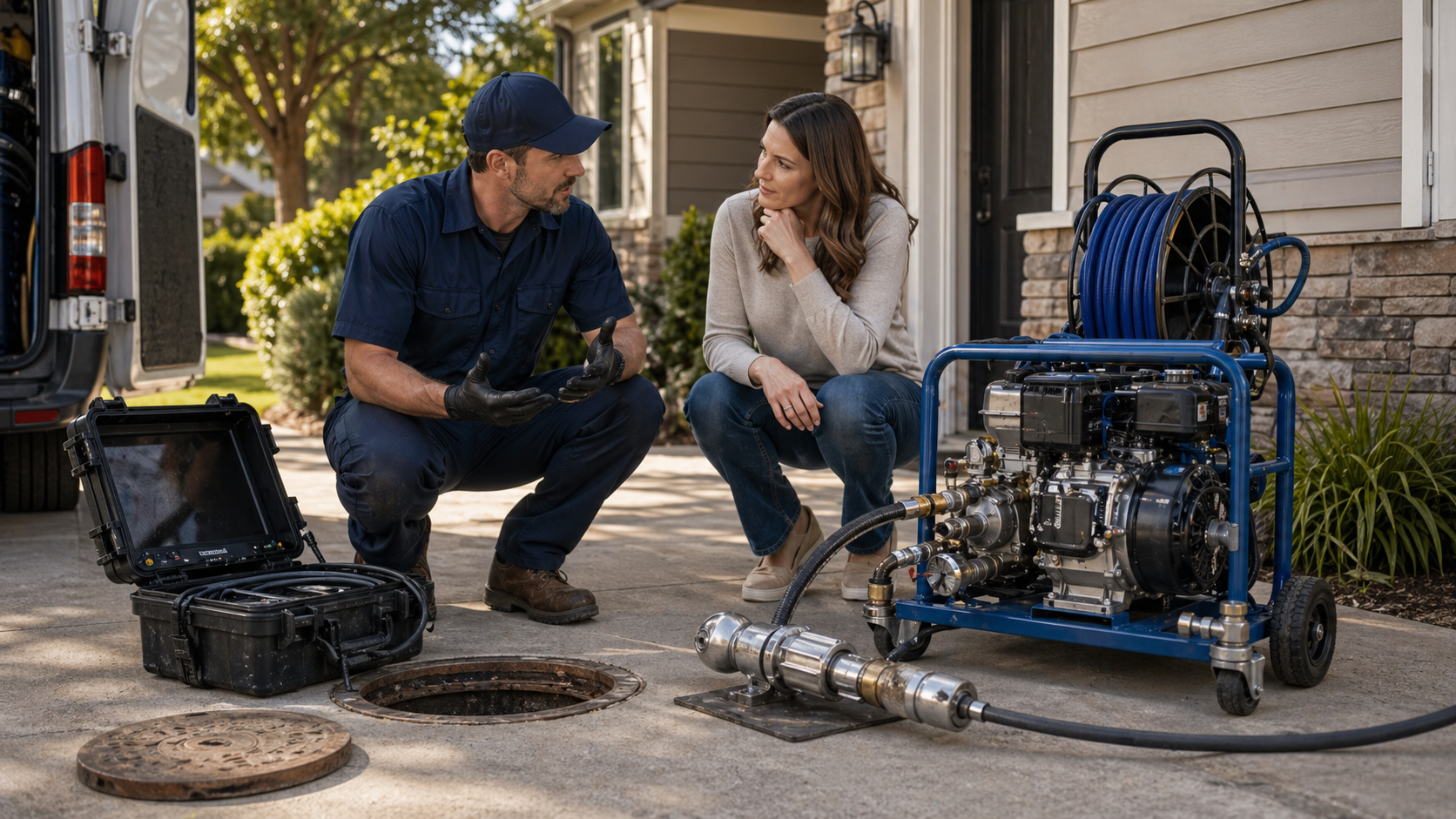
  4. When the Cleanout Is Accessible This is the straightforward scenario. The technician removes the cleanout cap, inserts the camera or cable, and has direct access to the full length of the main line. Most residential sewer line cleaning near me visits start and finish at the cleanout without any additional access work.
  5. When the Cleanout Is Buried, Corroded, or Missing Buried cleanout. Landscaping, soil buildup, or concrete has covered the cleanout over time. The technician needs to locate and uncover it before work can begin. In some cases, a metal detector or line locator can help find a buried cleanout. This adds time to the visit.
  6. Corroded cap. On older homes with cast iron or ABS cleanouts, the cap can corrode and seize. If the cap will not come off, the technician may need to cut or break it and replace it with a new cap after the work is done.
  7. No cleanout at all. Some older Northern Utah homes — particularly pre-1970 construction — were built without an exterior cleanout. In this case, the technician accesses the main line by pulling a toilet: removing the toilet from its flange and using the floor opening as an access point. This works, but it adds time and scope the toilet must be reinstalled with a new wax ring after the work is complete. If your home has no cleanout, consider having one installed — it makes every future service visit faster and less expensive.
  8. Access Through the Roof Vent Stack In rare cases, the main line can be accessed from the roof vent stack — the vertical pipe that extends through the roof for ventilation. This is a last-resort access method used when no cleanout exists and pulling a toilet is not practical. It is uncommon for sewer line cleaning but worth knowing about.
  9. Step 3: Camera Inspection — Before Cleaning Before any cleaning happens, a complete visit starts with a camera inspection. This is the step that separates professional sewer line cleaning from blind clearing.
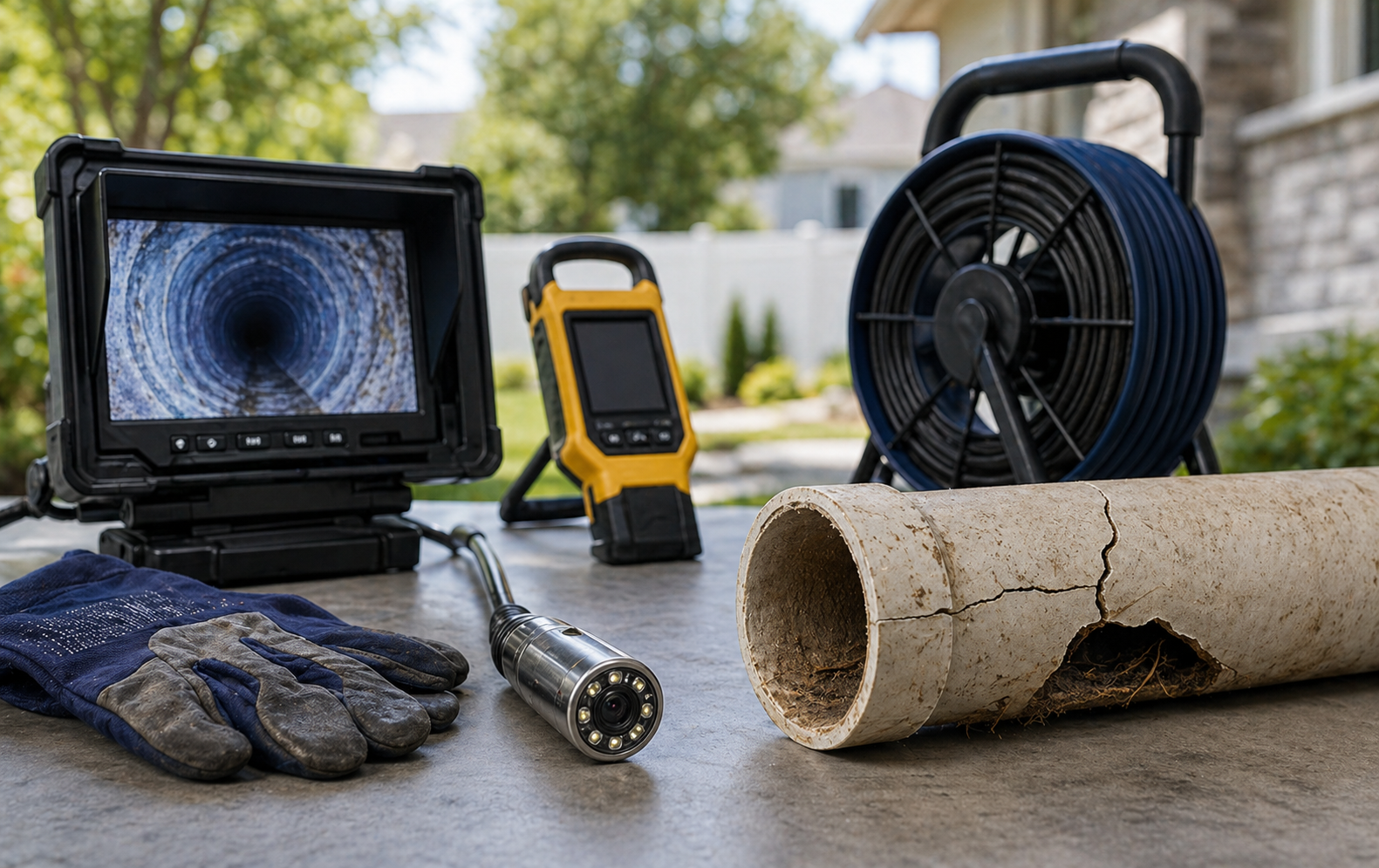
  10. What the camera does. A sewer camera is a waterproof, lighted camera head attached to a flexible push rod. It feeds into the pipe through the cleanout and advances through the main line. The technician watches a live video feed on a monitor, and you watch with them.
  11. What the camera shows: i Blockage type — roots, grease, scale, debris, foreign objects, or a combination. ii Blockage location — distance from the cleanout, measured in feet. iii Pipe material — PVC, cast iron, clay, ABS, or Orangeburg. iv Pipe condition — cracks, offsets at joints, root entry points, grease coating on walls, scale buildup, bellies low spots, or structural failure. v Pipe diameter — usually 4 to 6 inches for residential main lines.
  12. Why it matters before cleaning. The camera tells the technician what they are cleaning, what method to use, and whether the pipe can handle it. A root mass in a clay pipe with intact joints is a different job than a root mass in a clay pipe with severe offsets. Grease on a sound PVC pipe calls for full-pressure jetting. Grease on a deteriorated cast iron pipe calls for calibrated pressure. Without the camera, the technician is guessing at the method and the pressure — and guessing wrong can damage a vulnerable pipe.
  13. Mountain West's sewer camera scopes up to 200 feet of pipe with live video review.

How To Tell When It Fits

Step 4: Cleaning the Line — Three Methods Method 1: Cable Clearing Snaking What it does. A rotating cable with a cutting head feeds into the pipe and mechanically breaks through the blockage. The cable punches a path through the obstruction — root mass, debris plug, foreign object — to restore flow.

The goal is to move from guesswork to evidence. Good decisions usually come from the same sequence: define the symptom, locate the likely part of the system, check whether the issue is repeating, and decide whether cleaning, inspection, jetting, or repair planning fits.

That sequence keeps the article useful before any service conversation happens. It helps readers ask better questions and makes it harder for a vague diagnosis to sound more certain than it really is.

  1. Equipment. Mountain West's cable machine has 100+ feet of reach.
  2. When it is the right method: i Hard mechanical blockages — root masses, foreign objects, compacted debris. ii Initial breakthrough when the line is fully stopped and the blockage needs to be broken before jetting can work. iii Situations where the blockage is a discrete plug rather than wall-coating buildup.
  3. What it does not do. Cable clearing restores flow but does not clean the pipe walls. Grease coating, scale, and root fragments that are not directly in the cable's path remain in the pipe. This is why cable-only clearing often produces shorter-lasting results — the residue on the walls rebuilds the blockage.
  4. Method 2: Hydro Jetting What it does. A high-pressure nozzle at the end of a flexible hose enters the pipe and fires water jets in multiple directions — forward to break through the blockage and rearward to scour the pipe walls as the hose advances. The water strips grease, scale, root fragments, and debris from the full circumference of the pipe and flushes everything downstream.
  5. Equipment. Mountain West's hydro jetting unit operates at 3,850 PSI and 8 GPM with 300 feet of hose, clearing and cleaning lines from 2 to 12 inches in diameter. The technician selects the nozzle configuration based on the blockage type and pipe condition — different nozzles for grease, roots, and debris.
  6. When it is the right method: i Grease coating on pipe walls — jetting is the only cleaning method that strips grease from the full interior. ii Scale buildup in cast iron pipes — jetting removes the roughened surface that catches debris. iii Root fragments after cable clearing — jetting flushes root material that the cable cut but did not remove. iv Any situation where the goal is a clean pipe, not just a cleared path through the blockage.
  7. What it does not do. Jetting does not cut through hard mechanical blockages as effectively as a cable. It does not fix structural issues — cracks, offsets, and bellies remain after jetting. And it is not safe at full operating pressure on every pipe — deteriorated cast iron, damaged clay, and deformed Orangeburg may require lower pressure or a different approach.
  8. Method 3: Combination — Cable First, Jet After What it does. The cable breaks through the blockage to restore flow, and then the jetting unit scours the pipe walls to clean the full interior. This is the most thorough cleaning approach and the one used most often on main line jobs with heavy blockages.
  9. When it is the right method: i Fully stopped lines where jetting alone cannot penetrate the blockage. ii Root masses that need mechanical cutting before the jetting nozzle can pass through. iii Any job where the blockage is both a discrete plug and a wall-coating buildup — common with grease + root combinations.
  10. This is the method Mountain West uses most frequently on residential main line work. The cable opens the line, the jet cleans it, and the camera confirms the result.
  11. Step 5: Camera Inspection — After Cleaning After the line is cleared and cleaned, the camera goes back in. This post-cleaning inspection is not optional on a complete visit — it is the step that gives you the information you actually need.
  12. What you see after cleaning: i How much material was removed — the difference between the before and after footage is visible on screen. ii The condition of the pipe walls — clean PVC looks different from clean cast iron, and both look different from a pipe with structural issues. iii Root entry points — cleaned joints may show where roots were entering, even after the root mass is gone. iv Structural issues — cracks, offsets, bellies, and areas of deterioration that were hidden behind buildup are now visible. v The overall grade of the pipe — whether water flows smoothly to the exit or pools at low spots.

What Makes It Easier To Use

Why it matters. The post-cleaning camera inspection is what turns a cleaning visit into a diagnostic visit. It answers three questions: i Is the problem solved? Clean pipe, no structural issues, no grade problems. ii Will the problem come back? Root entry points still open, grease coating will rebuild, pipe material accelerates scale. iii Is there a bigger issue? Collapse, severe offset, belly, or pipe condition that cleaning will not fix long-term.

Small details often change the interpretation. Which fixture backed up first, whether more than one drain is affected, whether the problem returned after clearing, and whether there is odor or standing water all matter.

Use these notes to describe the issue clearly. A good description is often the difference between booking a narrow cleaning visit and starting with inspection or a broader sewer conversation.

  1. What Changes the Scope of a Sewer Line Cleaning Near Me Visit Two homes with the same symptom — "my drains are backing up" — can need two very different jobs. Here is what moves the scope.
  2. Blockage severity. Light grease buildup clears faster than a dense root mass packed with debris. Heavier blockages require more time, more passes with the jetting nozzle, and sometimes cable work before jetting can begin.
  3. Line length. A 40-foot lateral on a small lot is a shorter job than a 100-foot lateral on a deep lot. More hose out, more pipe to clean, more camera footage to review.
  4. Pipe material and condition. Newer PVC lines can handle full jetting pressure. Older cast iron or clay lines may require the technician to start at lower pressure and calibrate based on what the camera shows. Pressure calibration for fragile pipes adds time and care to the job.
  5. Access. A clean, accessible cleanout is the fastest entry point. A buried, corroded, or missing cleanout adds time. A toilet pull adds scope and cost removal, reinstallation, new wax ring.
  6. Timing. Emergency and after-hours calls carry a 15 to 35 percent premium 25 percent standard, 30 percent for jobs involving excavation access. Scheduling during normal business hours on a non-emergency basis gets the standard rate.
  7. What the camera finds. If the pre-cleaning camera reveals a structural issue — collapsed section, major offset, advanced deterioration — the scope may shift from cleaning to inspection-only, with the recommendation changing from "clean the line" to "here is what repair involves." The cleaning visit becomes a diagnostic visit, and that is the right outcome.
  8. What You Should Walk Away With A complete sewer line cleaning service visit should leave you with all of the following. If any are missing, the visit was not complete.
  9. A working line. Flow is restored. Multiple drains that were slow or backing up are now draining normally.
  10. A visual record. You saw the camera footage — both before and after cleaning. You know what the blockage looked like, what the pipe looks like clean, and whether there are any structural issues.
  11. A plain-language explanation. The technician told you, in words you understood, what they found, what they did, and what it means for the line going forward.
  12. One of three recommendations: i Line is clean and structurally sound. No follow-up needed. Call if symptoms return. ii Line cleaned successfully, but the buildup pattern will return. Here is the recommended maintenance interval based on what the camera showed — root growth rate, grease accumulation pattern, or scale condition. Schedule the next visit before symptoms return. For how to set that interval, see Sewer Line Maintenance: How Often Should Your Sewer Line Be Cleaned? iii Line has a structural issue that cleaning will not fix. Here is the camera footage showing the defect — collapse, offset, belly, or advanced deterioration. Here is what repair or replacement involves and what the options are. Cleaning bought you time, but the next conversation is about repair. For what that looks like, see Sewer Line Repair: Warning Signs Your Pipe Needs More Than Cleaning.

How We Apply It

When you call Mountain West at 801-317-8104 or email [email protected] for sewer line cleaning near me, here is what you get.

This is where the article connects back to real service work. The point is not to turn every concern into the biggest possible job; it is to match the symptom pattern to the least confusing next step that can actually answer the question.

Tying the topic back to sewer cleaning and maintenance keeps the advice grounded. The work should explain what was found, what is still uncertain, and why the recommended next step fits the evidence.

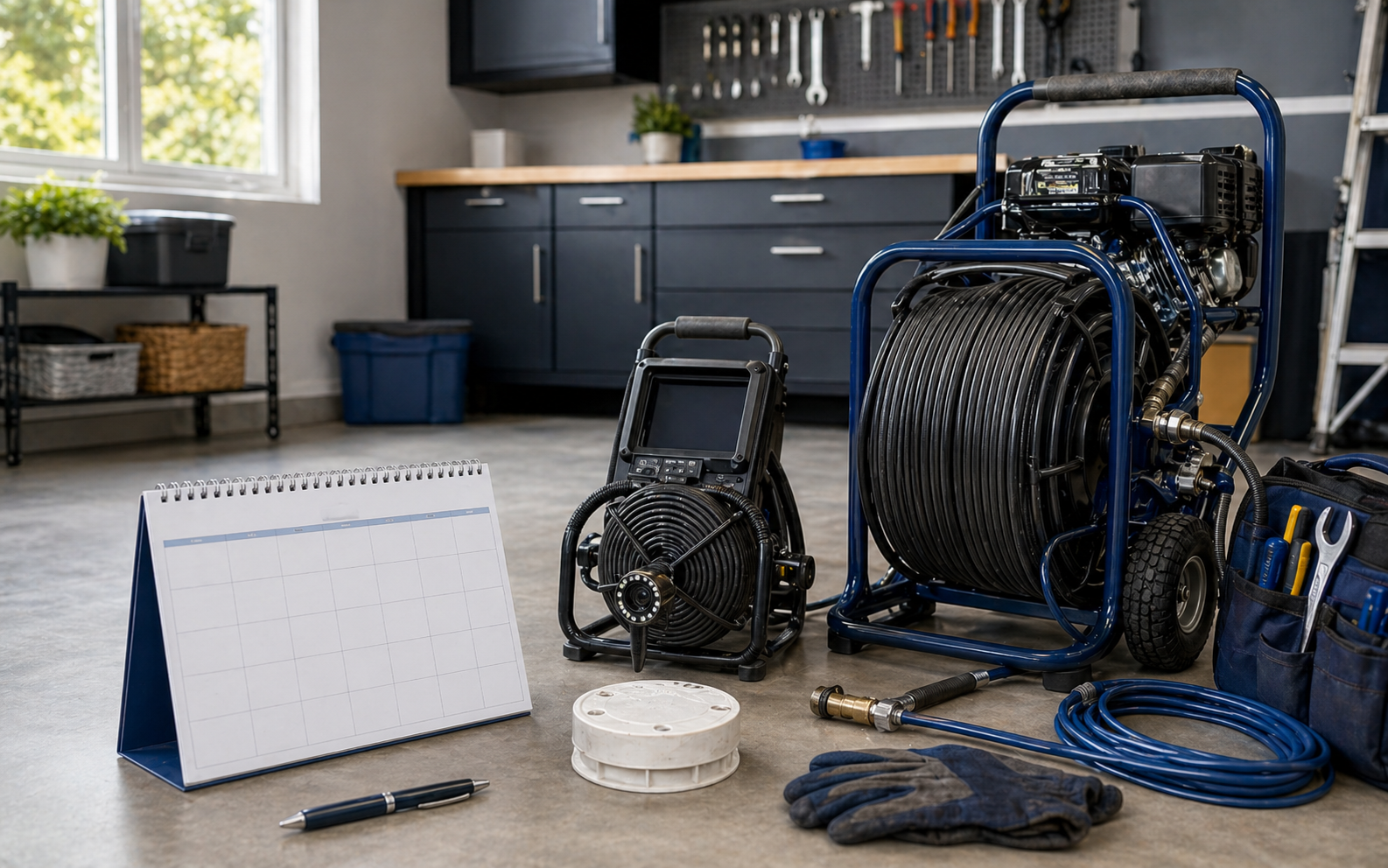
  1. Equipment on every truck. No second trips. i Cable machine — 100+ feet of reach for mechanical clearing. ii Hydro jetting unit — 3,850 PSI, 8 GPM, 300 feet of hose, lines 2 to 12 inches. iii Sewer camera — up to 200 feet with live video review on screen.
  2. The full process. Access through your cleanout. Camera before cleaning. Cable or jetting or both based on what the camera shows. Camera after cleaning. You watch the footage with us, before and after.
  3. The full explanation. We tell you what we found, what we did, and what we recommend. If the line is clean and low risk, we say so. If it needs a maintenance schedule, we tell you the interval and why. If it has a structural issue, we show you the footage and explain the options.
  4. No upselling. If cable clearing is all the line needs, we do cable clearing. We do not jet a line that does not need jetting, and we do not recommend maintenance on a line that does not need it.
  5. Pricing. Quoted based on line length, access, severity, and timing. Emergency and after-hours calls carry a 15 to 35 percent premium. Call for a quote.

Common Questions

These follow-up questions turn the explanation into a practical decision tool. Definitions help, but the real value is knowing when the topic matters at a property.

For sewer cleaning and maintenance topics, the best next questions connect the concept to symptoms, access, inspection, and the next service decision.

What is the difference between sewer line clearing and sewer line cleaning?

Clearing means restoring flow — punching a hole through the blockage so water can pass. Cleaning means removing buildup from the pipe walls so the full diameter is restored. A cable clears. A hydro jetting unit cleans. Clearing is faster and cheaper. Cleaning lasts longer because it removes the wall residue that rebuilds the next blockage. If your line keeps clogging after cable visits, it needs cleaning, not another clearing.

How long does a sewer line cleaning visit take?

Most residential visits take 1 to 3 hours. A straightforward grease or debris clog in a short lateral with an accessible cleanout can clear and clean in under an hour. A heavy root mass in a long line that requires cabling, jetting, and two camera passes is a longer job. The biggest variables are blockage severity, line length, and access — a buried or missing cleanout adds time before any cleaning begins.

Will I be able to use my drains during the visit?

During active cleaning, do not run water or flush toilets. The technician is working inside the pipe through the cleanout, and water entering the line during the process interferes with the work and can create a mess at the access point. The technician will tell you when the line is clear and normal use can resume — usually before they leave.

What is the difference between sewer line cleaning and drain cleaning?

Scale and location. Drain cleaning typically means clearing individual fixture drains — a kitchen sink, a bathroom drain, a floor drain — and the short branch lines connecting them. Sewer line cleaning means cleaning the main line that carries all wastewater from the house to the city sewer main. The main line is larger 4 to 6 inches in residential properties, longer 30 to 100+ feet, and requires heavier commercial equipment. When multiple drains are affected, the problem is almost always in the main line — not in individual fixture drains.

Read This Next

These articles stay close to the same decision without repeating this one. Use them when the symptoms, timing, or service path points in a slightly different direction.

Source Log

These sources were used for background, claim checking, or local context. The article explains the topic in Mountain West's own words and does not copy outside article structure or long passages.

U.S. Environmental Protection Agencyparaphrased

Sanitary Sewer Overflows (SSOs)

Supports: Sanitary sewer overflows can back up into buildings, damage property, and create public-health concerns; sewer systems carry domestic and commercial wastewater to treatment facilities.

U.S. Environmental Protection Agencyparaphrased

Sanitary Sewer Overflow Frequent Questions

Supports: Common sewer blockage contributors include fats, oils and grease, wipes and other non-flushable products, roots entering defects, sediment, and other materials.

Ogden Cityparaphrased

Sewer Utility Information

Supports: Local Utah utility guidance can make the private-lateral responsibility clear: property owners may be responsible for maintenance and repair from the home to the city main, including tap connection, depending on jurisdiction.

Manual review note: Local ownership rules vary by city and utility. Treat this as regional context, not legal advice for every property.

Clinton City, Utahparaphrased

Sewer

Supports: Local sewer maintenance programs may remove roots, grease, and debris from public lines; bubbling, gurgling, or odors can also relate to venting and sewer-maintenance conditions.

Manual review note: Use as regional public-utility context only; it does not prove the cause of a private-property problem.

Utah Division of Occupational and Professional Licensing DOPLparaphrased

S410 Specialty Contractor License

Supports: The S410 classification covers boiler, pipeline, waste water, and water conditioner contractor work under Utah Code R156-55a-301, authorizing sewer, sewer lines, sewage disposal, septic tank, and drainage work.

Utah Department of Environmental Qualitybackground

Wastewater Programs

Supports: Utah wastewater programs cover municipal wastewater planning, onsite wastewater systems, operating permits, and related design requirements, reinforcing that drain and sewer issues connect to regulated infrastructure.

Related Next Steps

Next StepSewer Cleaning And MaintenanceUse this page if the next step after sewer cleaning is sewer cleaning or maintenance planning.Next StepSewer Lateral CleaningUse this page if the next step after sewer cleaning is sewer cleaning or maintenance planning.Next StepGet A Free QuoteStart a free quote if you want service-fit or pricing guidance after this article.Next StepRead BlogCompare adjacent articles around sewer cleaning before you choose the next path.

More for You

Follow-up blog articles chosen for this page so the next question stays close to the same decision path.

Sewer Line Maintenance: How Often Should Your Sewer Line Be Cleaned? article image for Sewer Cleaning And Maintenance.Blog ArticleSewer Line Maintenance: How Often Should Your Sewer Line Be Cleaned?Read this next for another sewer cleaning and maintenance angle that builds on this article.Sewer Backup Prevention: What Actually Helps? article image for Sewer Cleaning And Maintenance.Blog ArticleSewer Backup Prevention: What Actually Helps?Read this next for another sewer cleaning and maintenance angle that builds on this article.Sewer and Drain Cleaning Services Near Me: How to Compare and What to Look For article image for Sewer Cleaning And Maintenance.Blog ArticleSewer and Drain Cleaning Services Near Me: How to Compare and What to Look ForRead this next for another sewer cleaning and maintenance angle that builds on this article.Plumber Near Me for a Sewer Smell: What Service Do You Actually Need? article image for Sewer Camera Inspection.Blog ArticlePlumber Near Me for a Sewer Smell: What Service Do You Actually Need?Read this next to see how sewer cleaning and maintenance connects into sewer camera inspection planning.

Quick Answers About Sewer Line Cleaning Near Me: What the Service Involves and What to Expect

These are the quick answers most people want before they call, book, or decide on the next step.

What is this article about?

If you are searching for sewer line cleaning near me, you have probably already figured out the problem is in the main line — multiple drains slowing, backups through the lowest fixture, gurgling when other fixtures run. The next question is: what does the cleaning visit actually involve? This article walks you through the full process — how the technician accesses the line, what equipment is used, how different cleaning methods work, what you see on screen during the visit, and what the results mean for your next step. It connects the topic back to sewer cleaning and maintenance when readers are trying to decide on the right next move.

Who is this article best for?

"Sewer line cleaning" sounds like one service. It is actually a process with several steps, and the steps vary depending on what is wrong with the line, how the technician accesses it, and what they find once they are inside. It is most useful for readers trying to understand the issue before they book, compare services, or decide whether the symptoms point to a bigger sewer or drain problem.

What should I do after reading this article?

If the issue sounds familiar, the usual next step is to review the sewer cleaning and maintenance page or compare it with sewer lateral cleaning before deciding whether to request a quote, book service, or call for faster guidance.

How can I reach Mountain West?

Mountain West Hydro Jetting serves Northern Utah and the Salt Lake corridor. You can reach us at 801-317-8104 or [email protected].