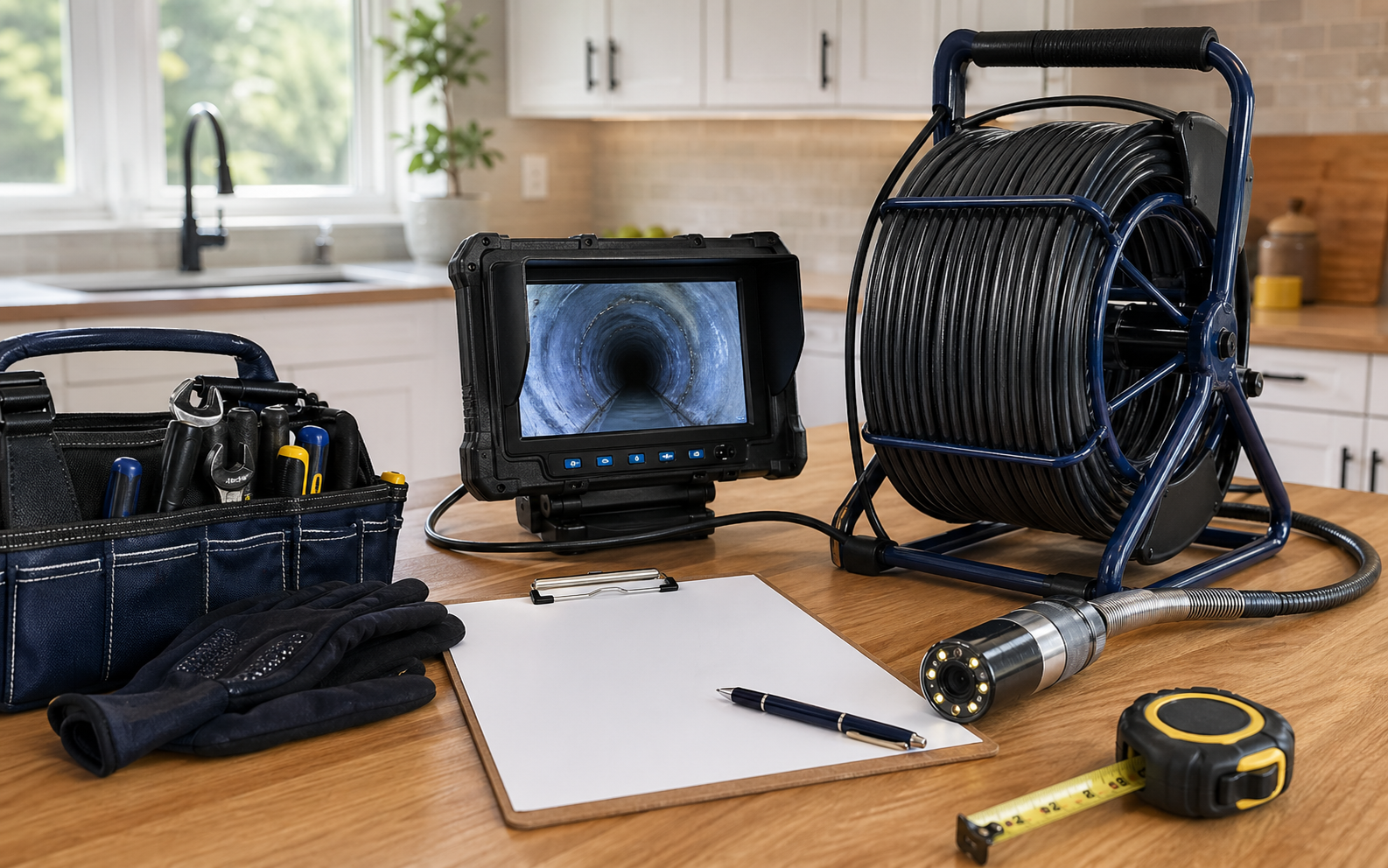
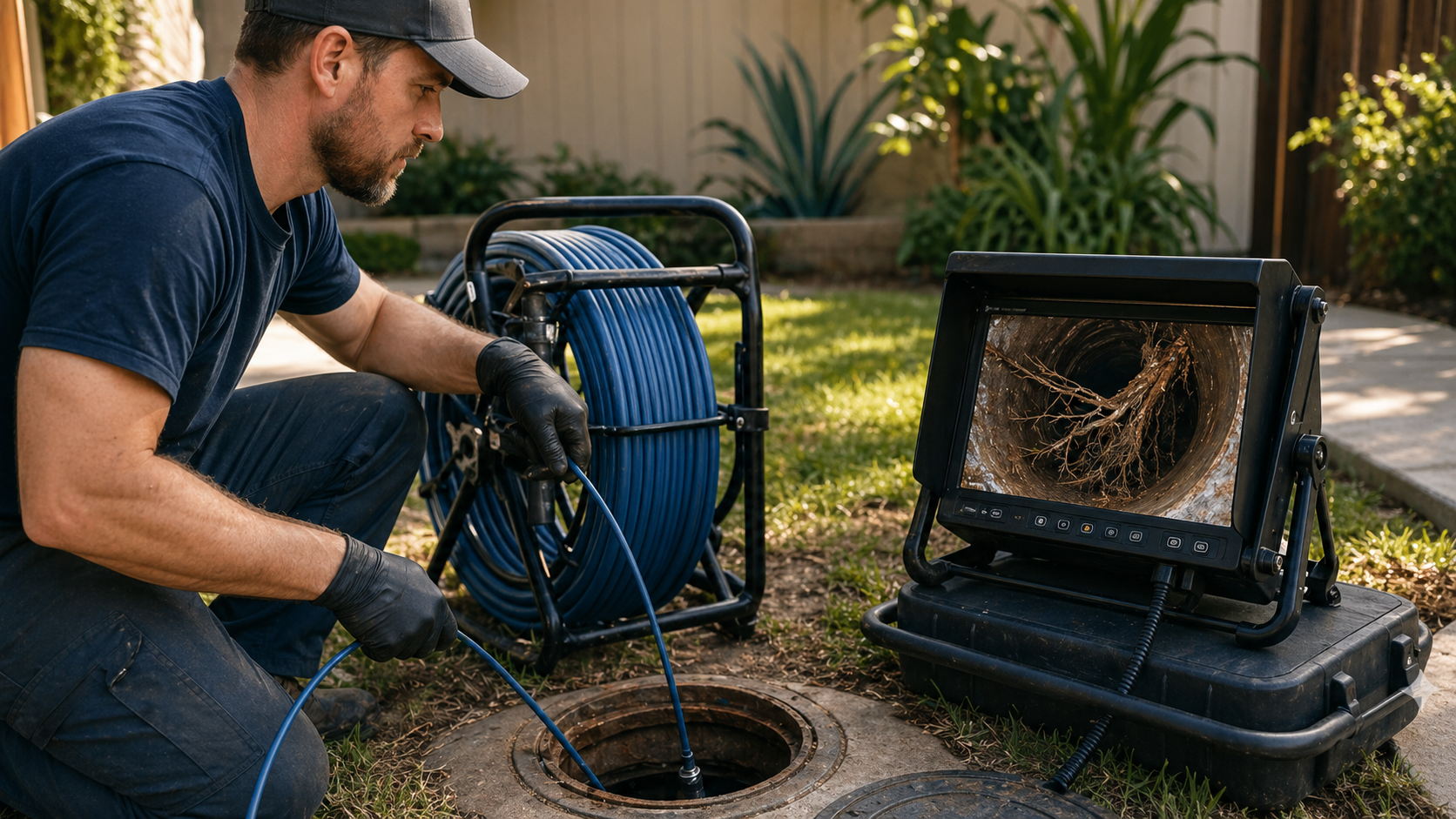
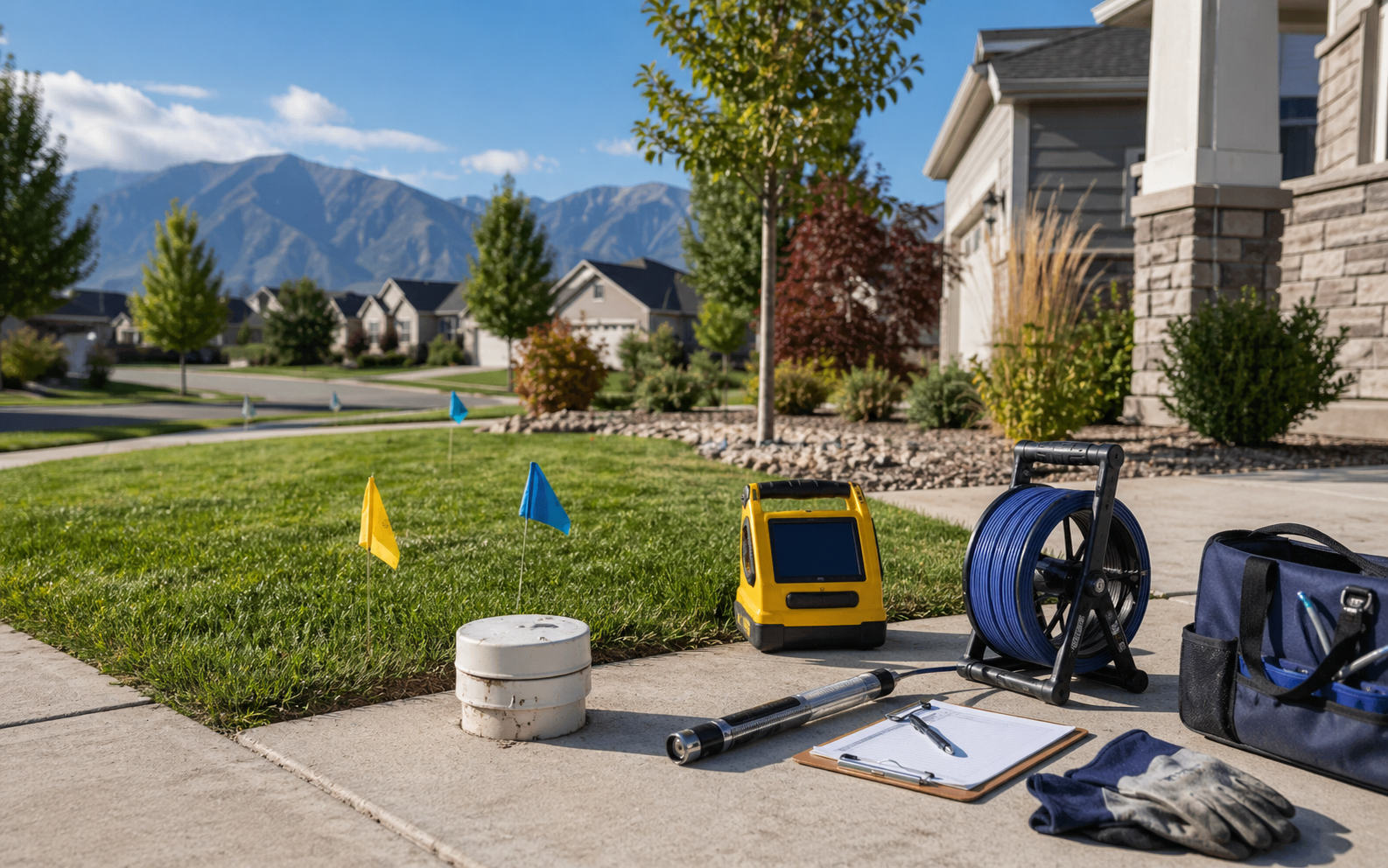
When one drain is slow, the problem is usually at that fixture or in its branch line. When multiple drains across the house are slow, gurgling, or backing up together, the problem is almost always in the main sewer lateral - the single pipe that every branch line in the building feeds into. That lateral runs underground from the foundation to the city connection, and when it is restricted or damaged, nothing above it works correctly.
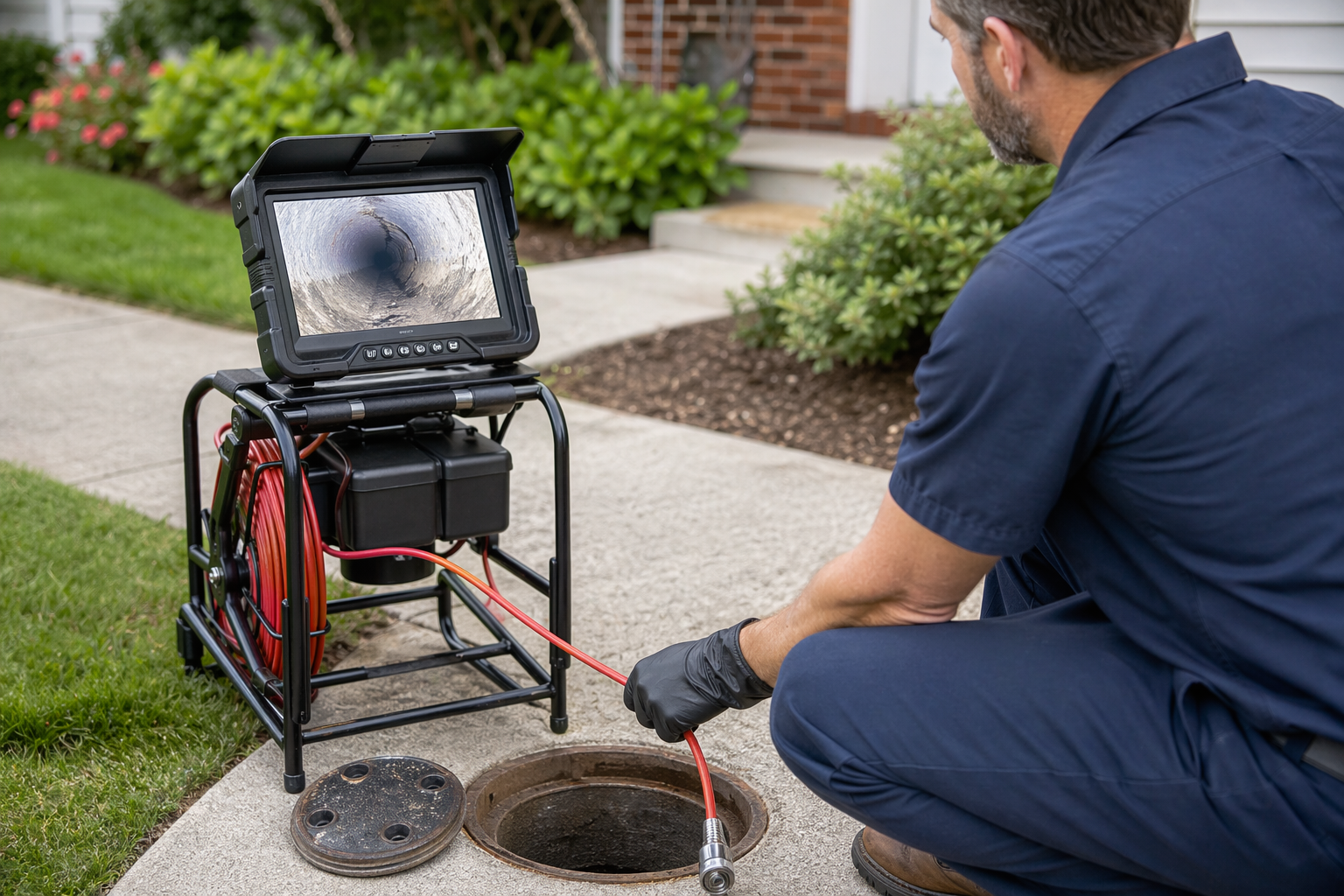
The challenge with main line problems is that the symptoms show up everywhere except where the actual defect is. The kitchen backs up, so someone cleans the kitchen line. The basement drain gurgles, so someone clears the basement line. Each individual clearing restores flow temporarily - but the problem returns because the real restriction was never in those branch lines. It was 80 feet downstream in the shared lateral where grease hardened against a rough joint, or where roots entered through a crack that no one has ever seen. A main line sewer camera inspection skips the branch-by-branch guessing and goes directly to the pipe that matters - the one run that serves the entire property.
- How to recognize main line symptoms versus branch drain problems, and why multi-fixture drainage issues almost always trace to the shared lateral
- What the camera documents inside the main sewer run and how each finding connects to the whole-property symptoms you are experiencing
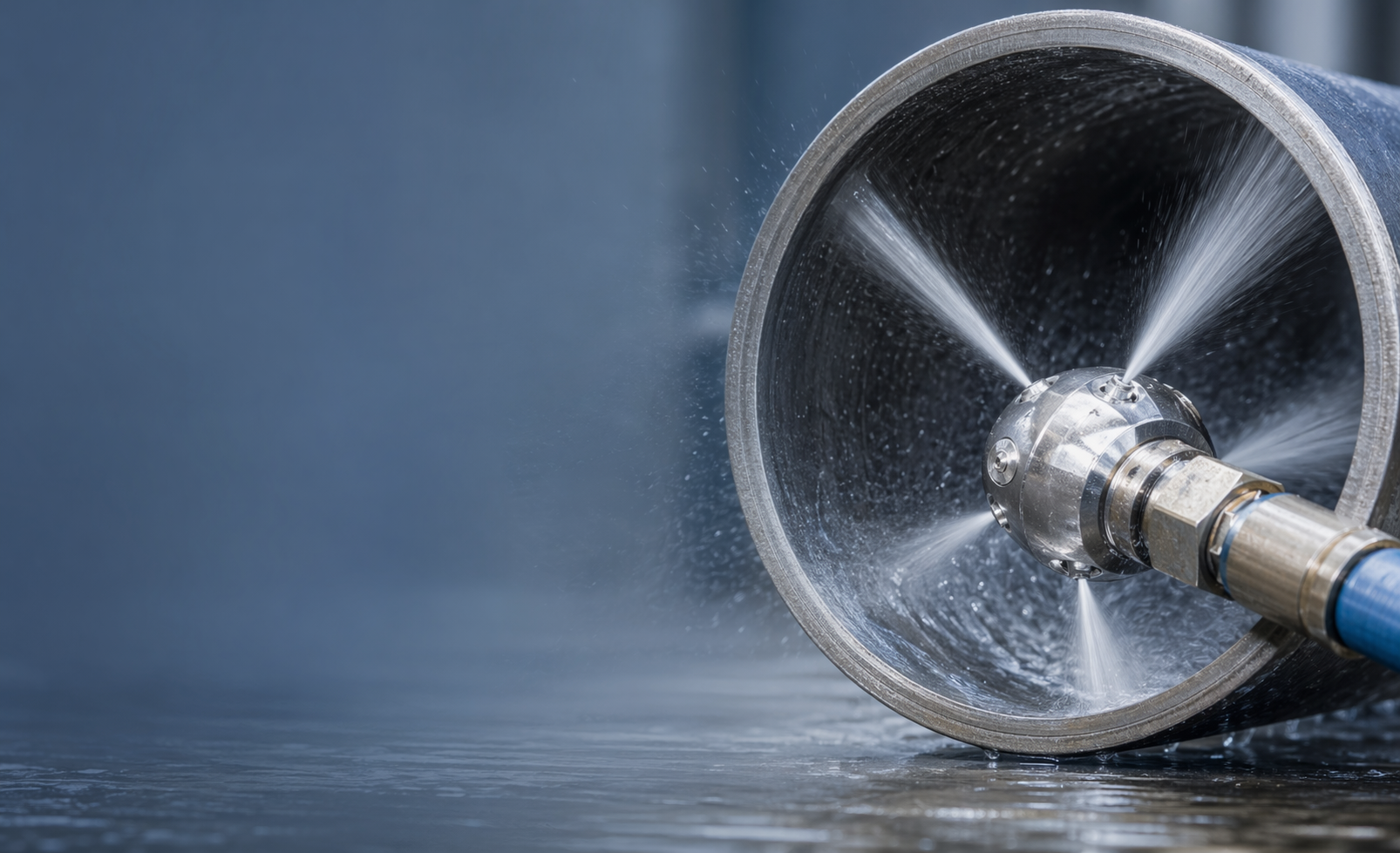
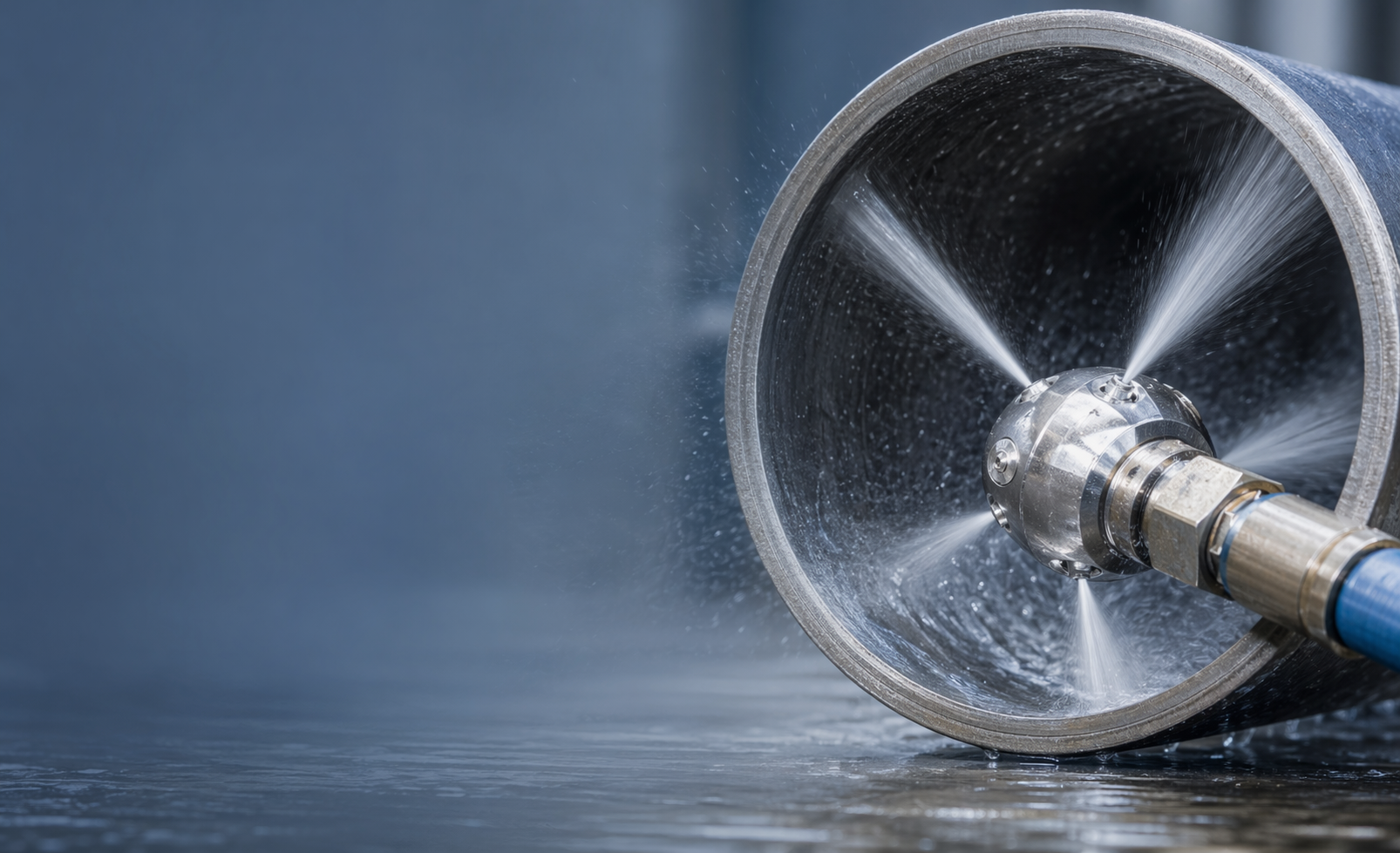
- How the visit works when the main line is partially or fully blocked and needs clearing before the camera can pass
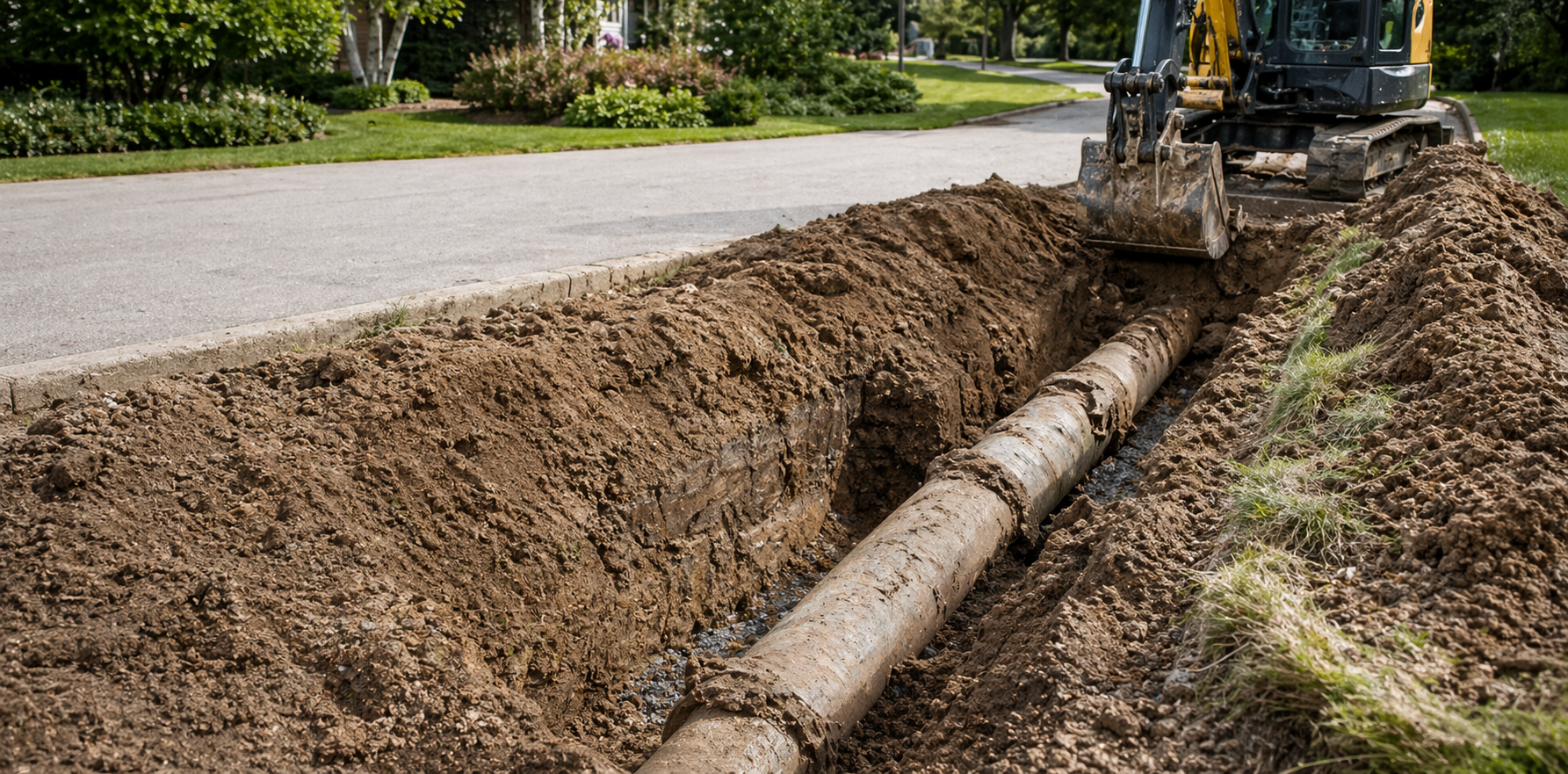
- What the footage tells you about whether the lateral needs cleaning, repair at a specific section, or a larger-scope assessment
Clearing individual branch drains when the main lateral is the problem is like mopping a floor while the pipe above it is still leaking. The camera puts eyes on the pipe that actually controls whether the house drains.