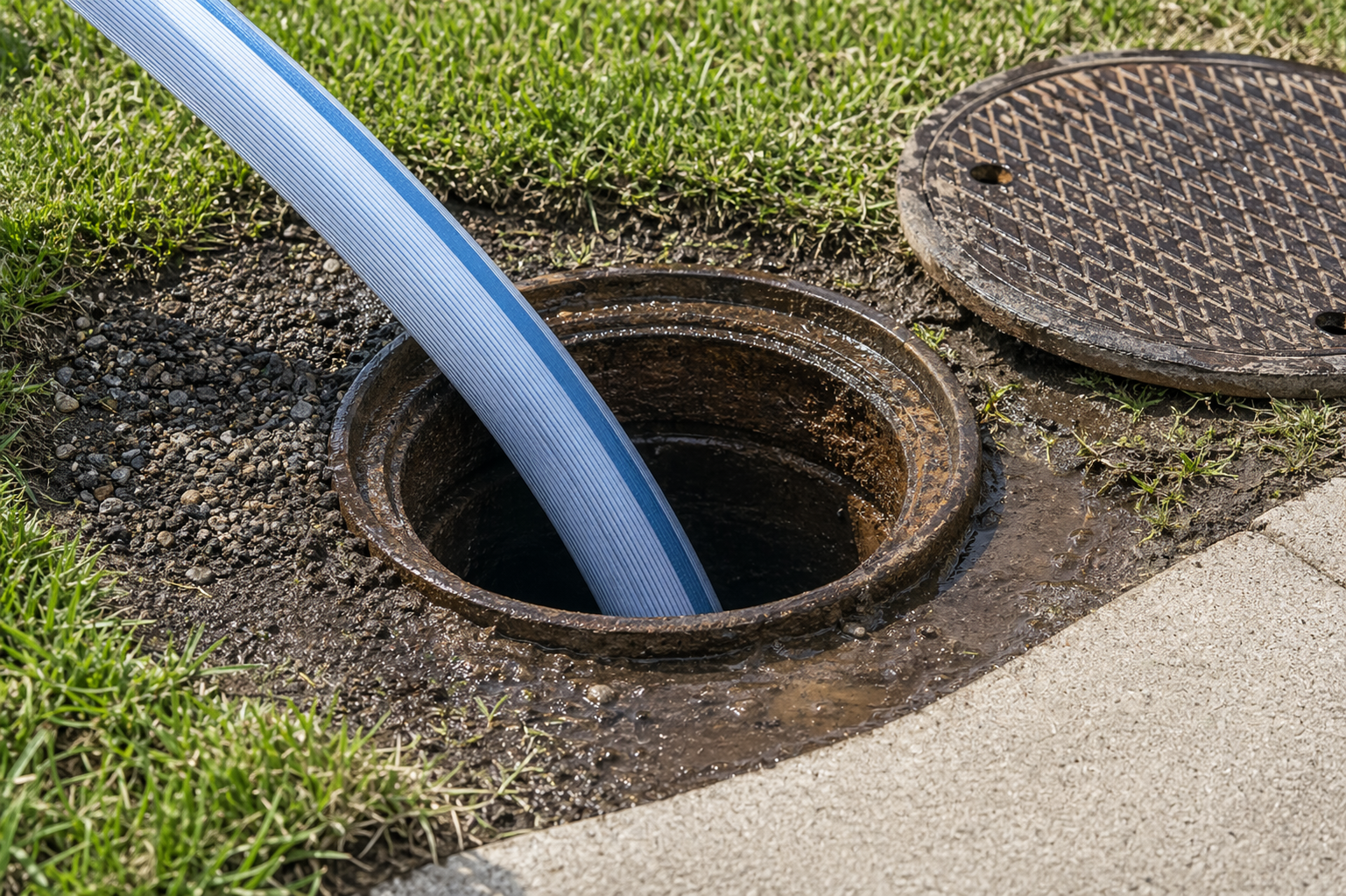
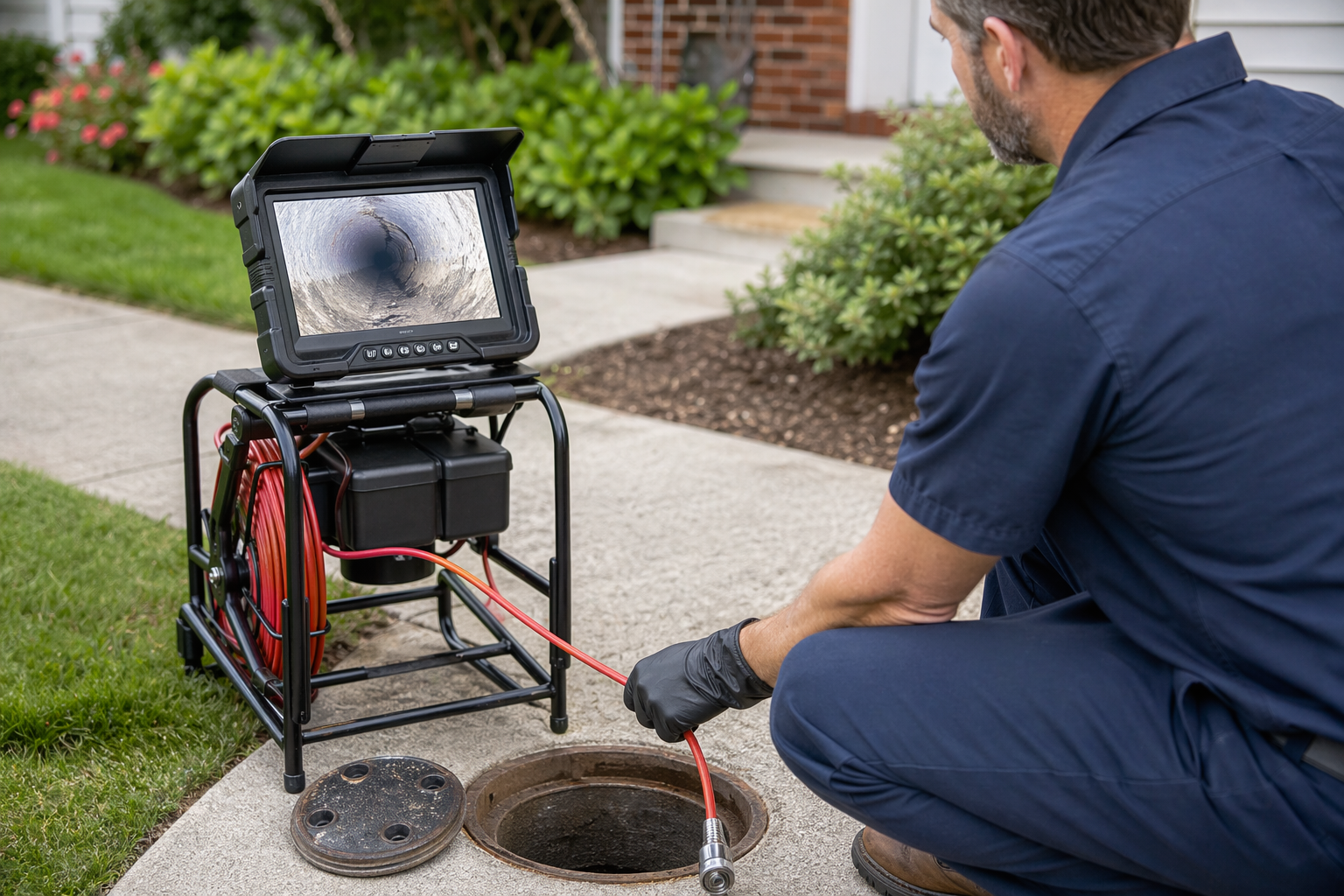
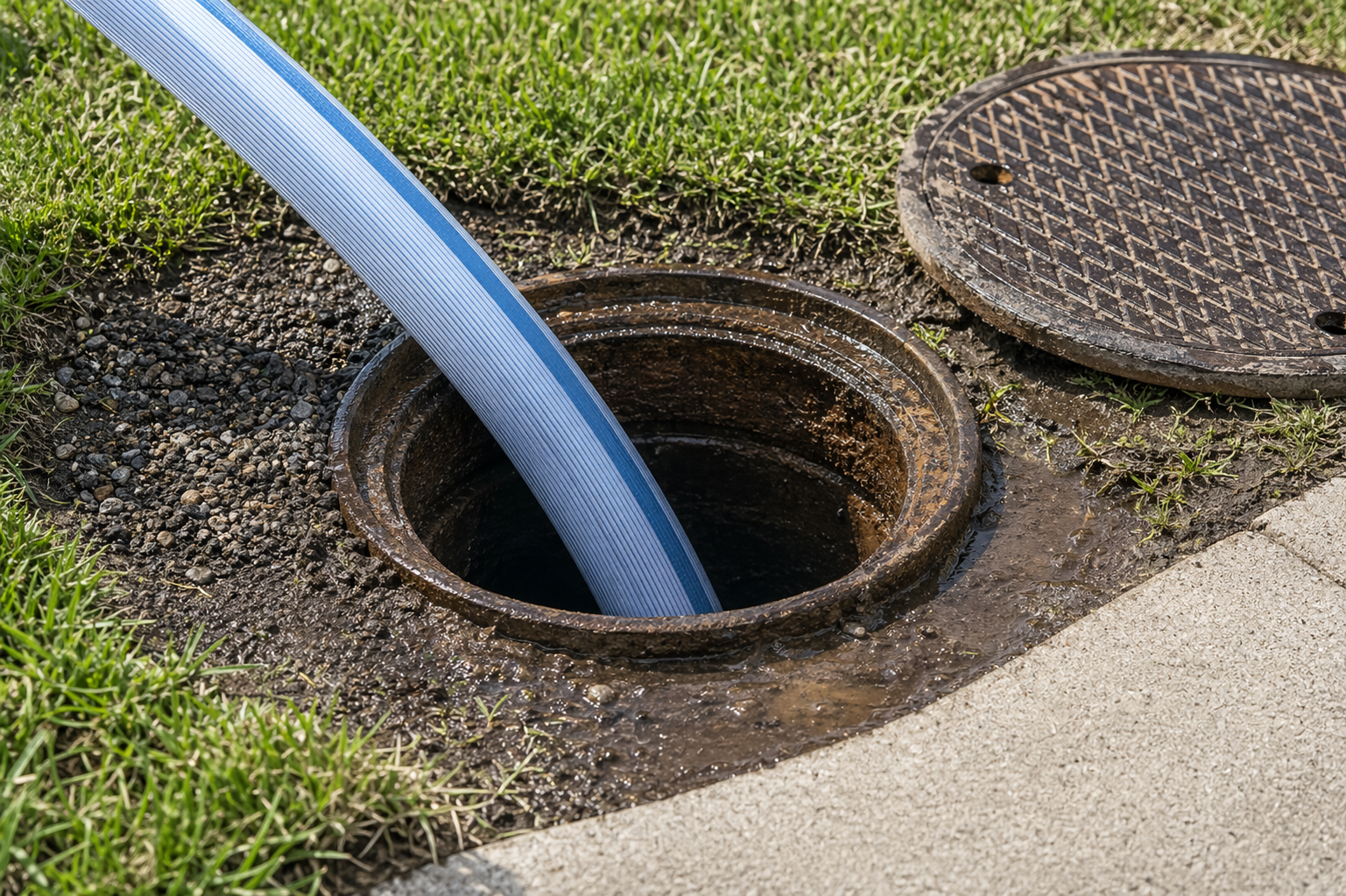
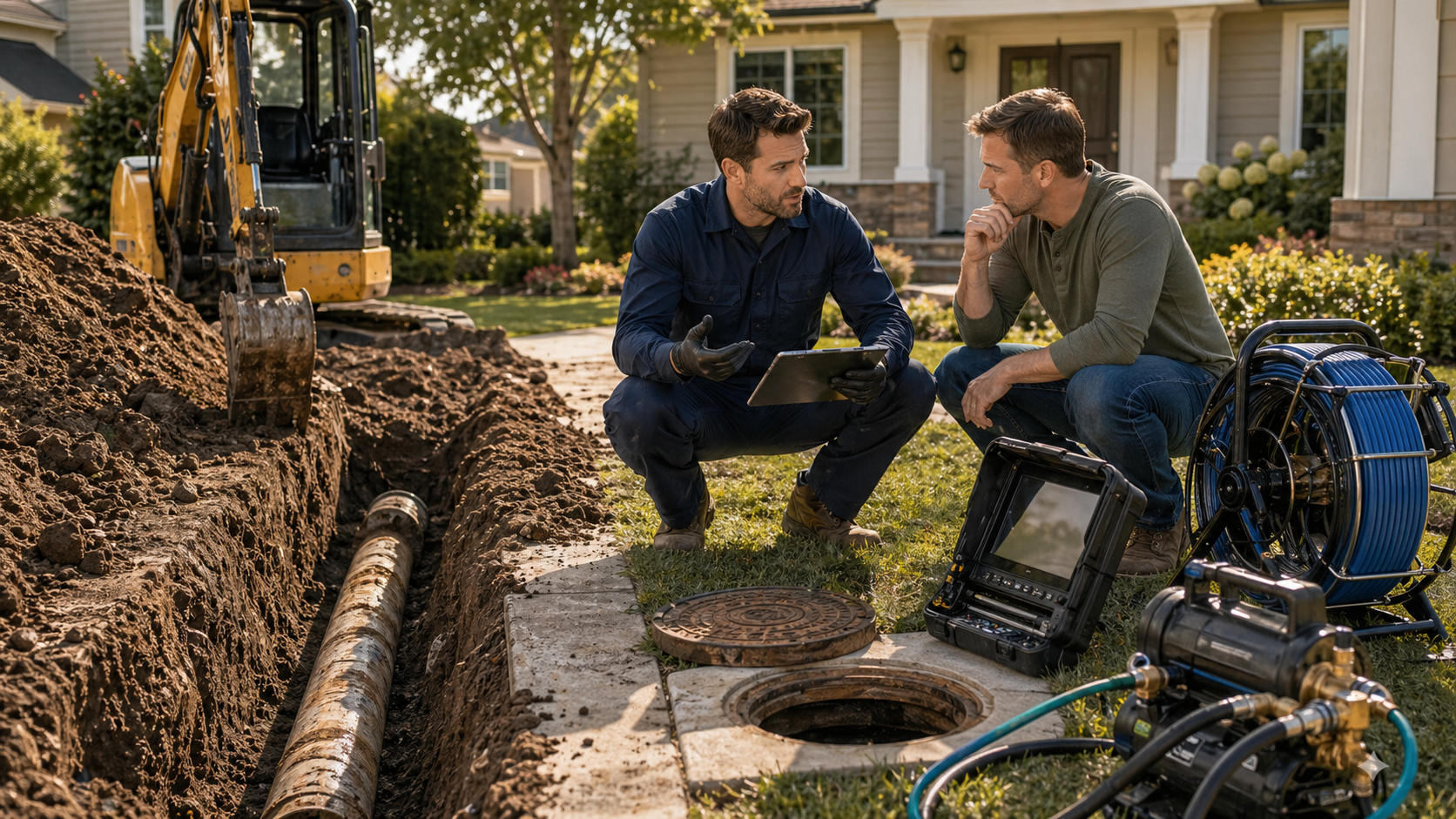
No dig sewer repair uses one of two methods depending on the pipe condition and the type of damage. Both enter the pipe through an existing access point - typically the cleanout - and both avoid a full open trench above the line. The camera inspection determines which method applies.
Pipe lining CIPP - A resin-saturated liner is inserted into the existing pipe, positioned inside the damaged section, inflated against the pipe walls, and cured in place. Once hardened, the liner forms a jointless structural tube bonded to the inside of the old pipe. The existing pipe stays in the ground and serves as a host. Lining works when the pipe is cracked, has separated joints, or has root entry points - but the walls are still intact enough to hold their shape. It does not work on collapsed or severely deformed pipe.
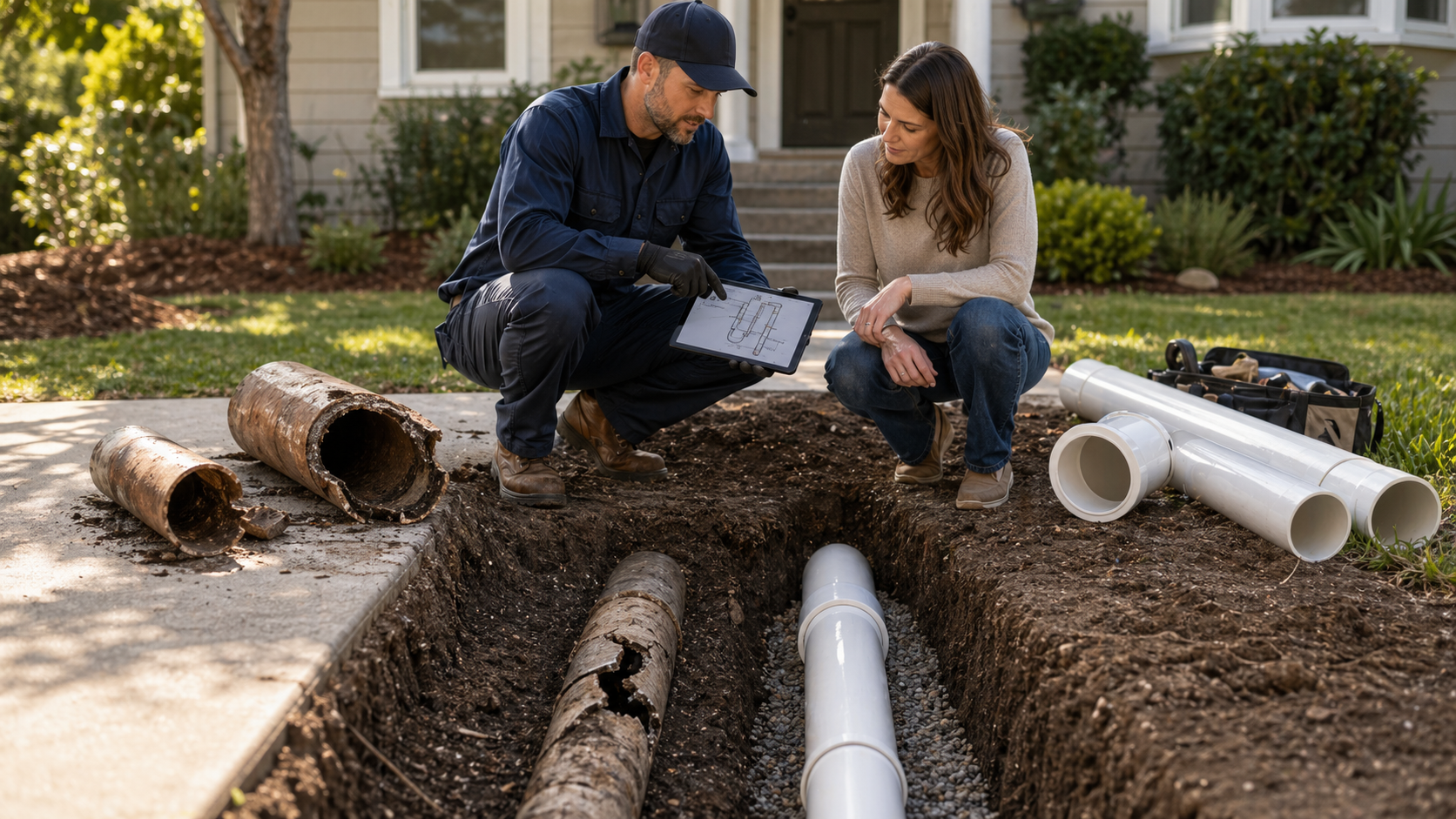
Pipe bursting - A bursting head is pulled through the old pipe, fracturing it outward into the surrounding soil while simultaneously pulling new pipe into place behind it. The old pipe is destroyed and replaced with a new one in the same path. Bursting works when the pipe needs full replacement but the path is still viable - no sharp bends, no obstacles that would block the bursting head. It requires access pits at each end of the run but not a full open trench between them.