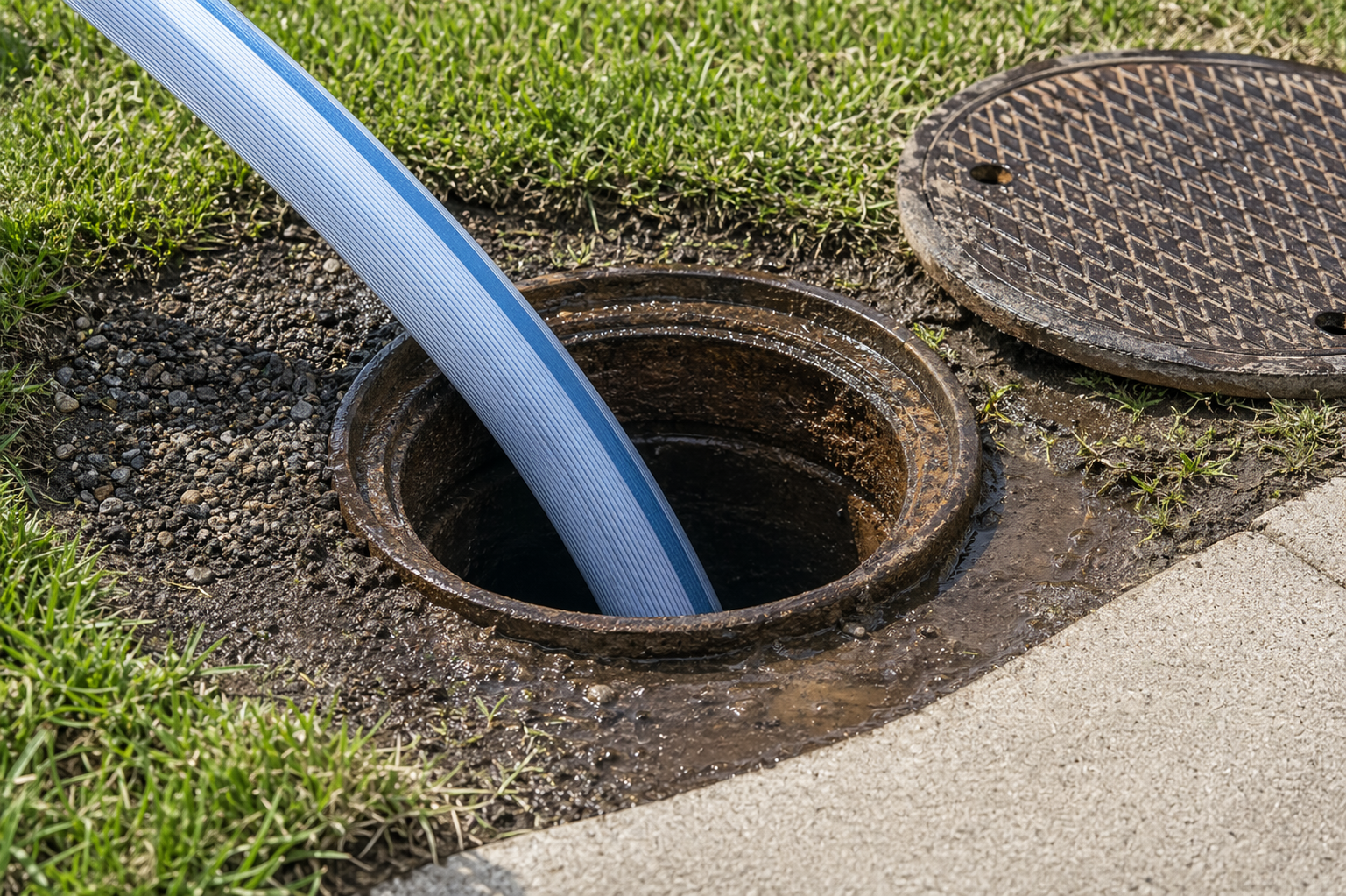
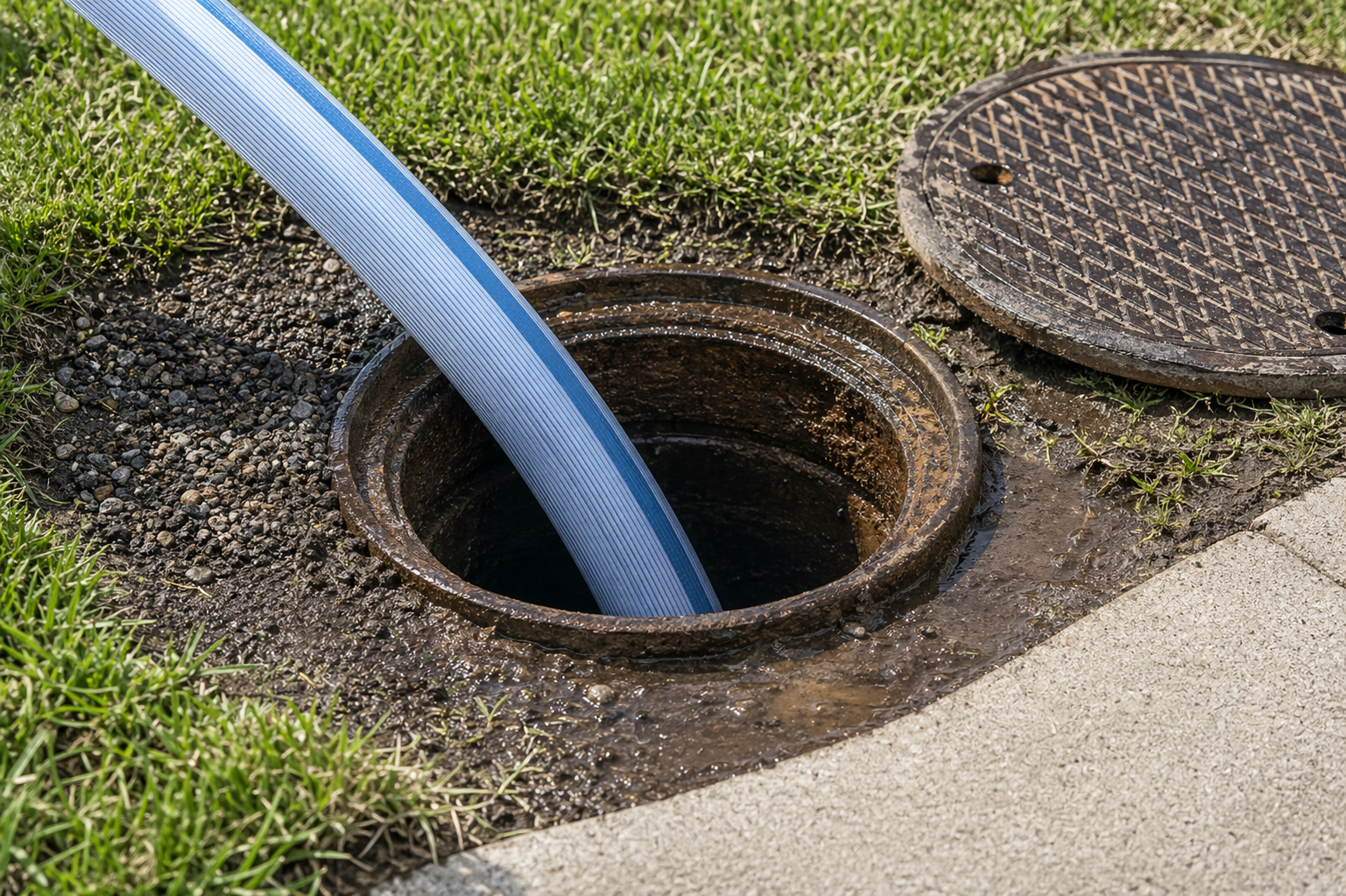
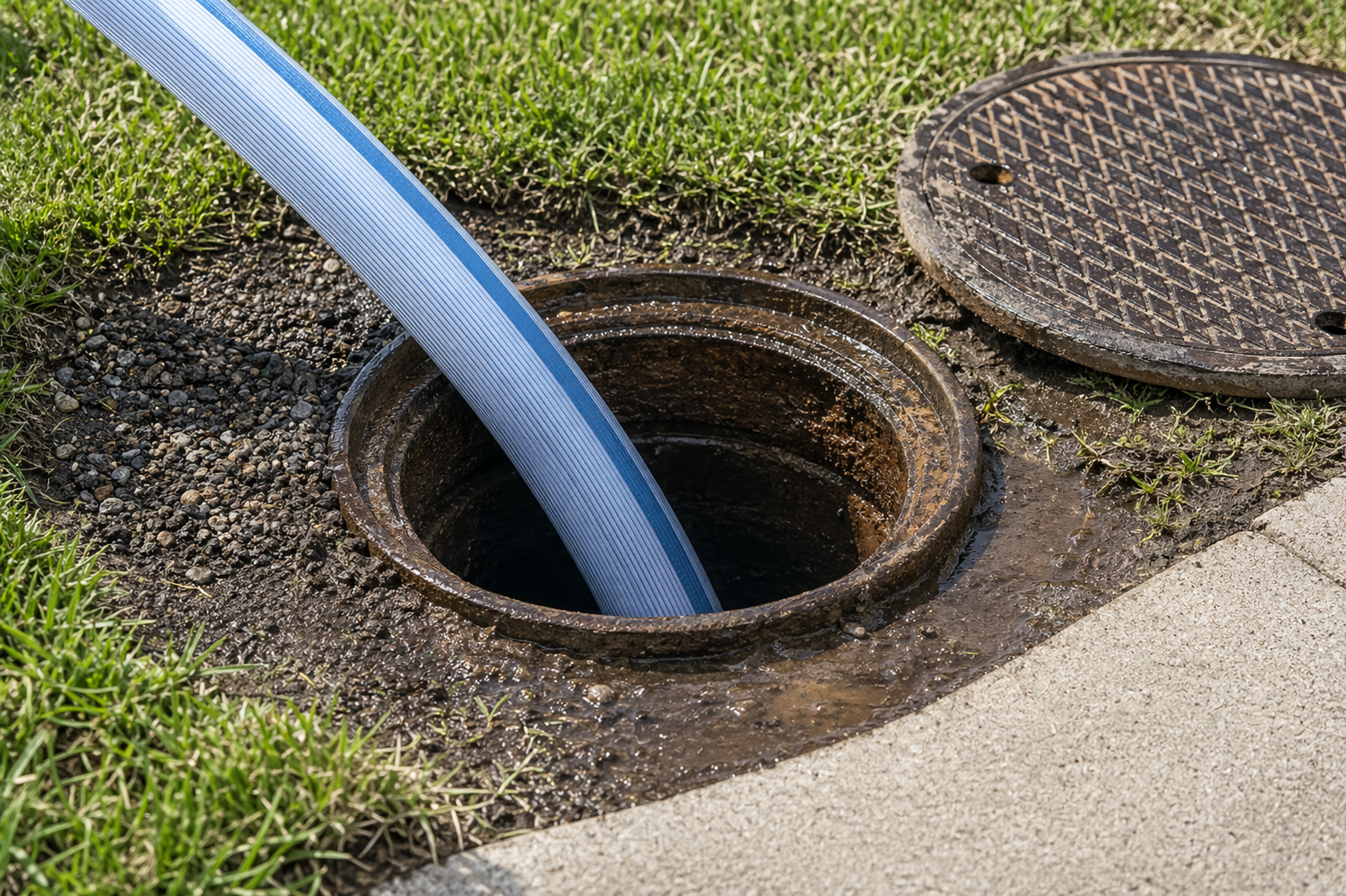
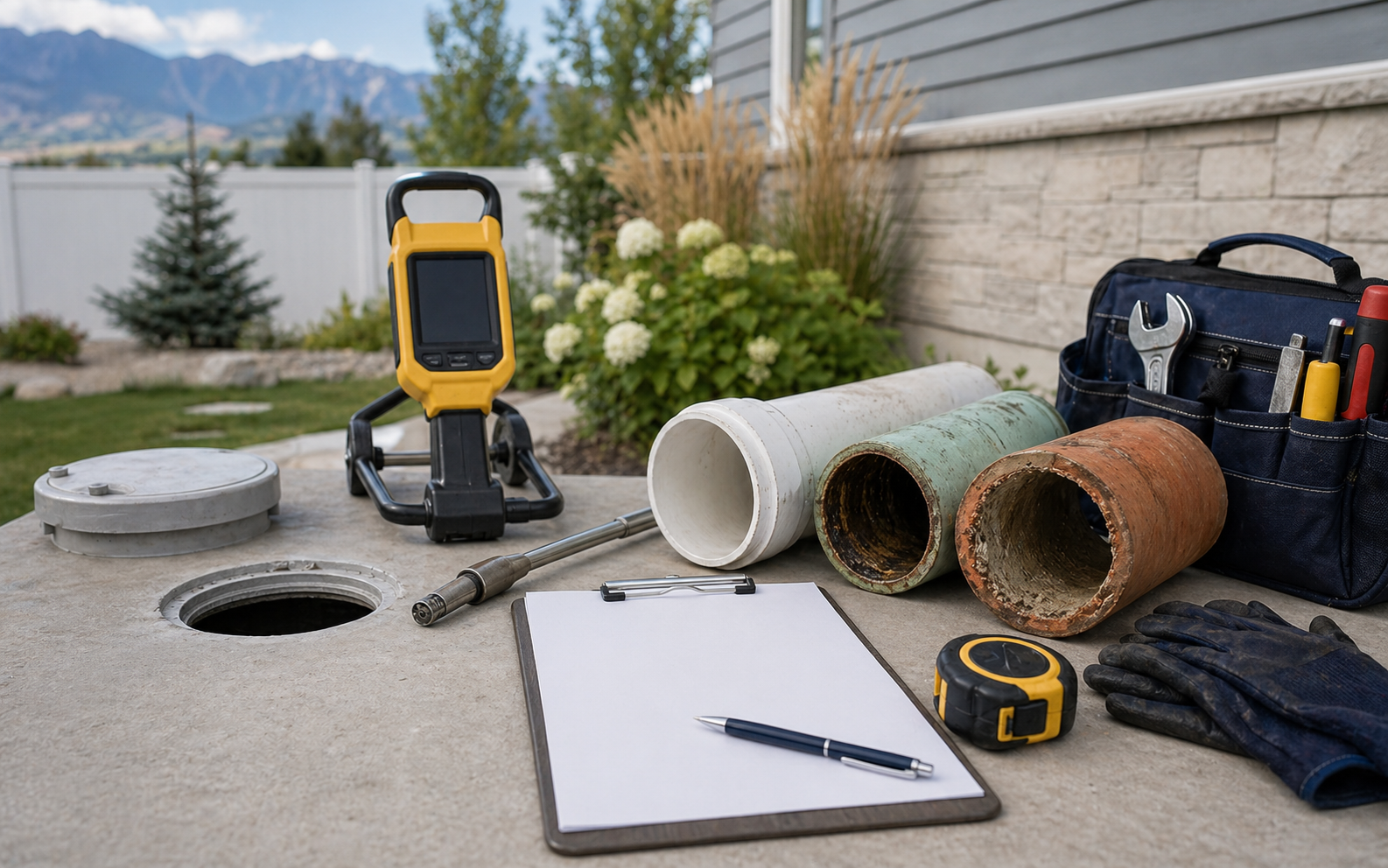
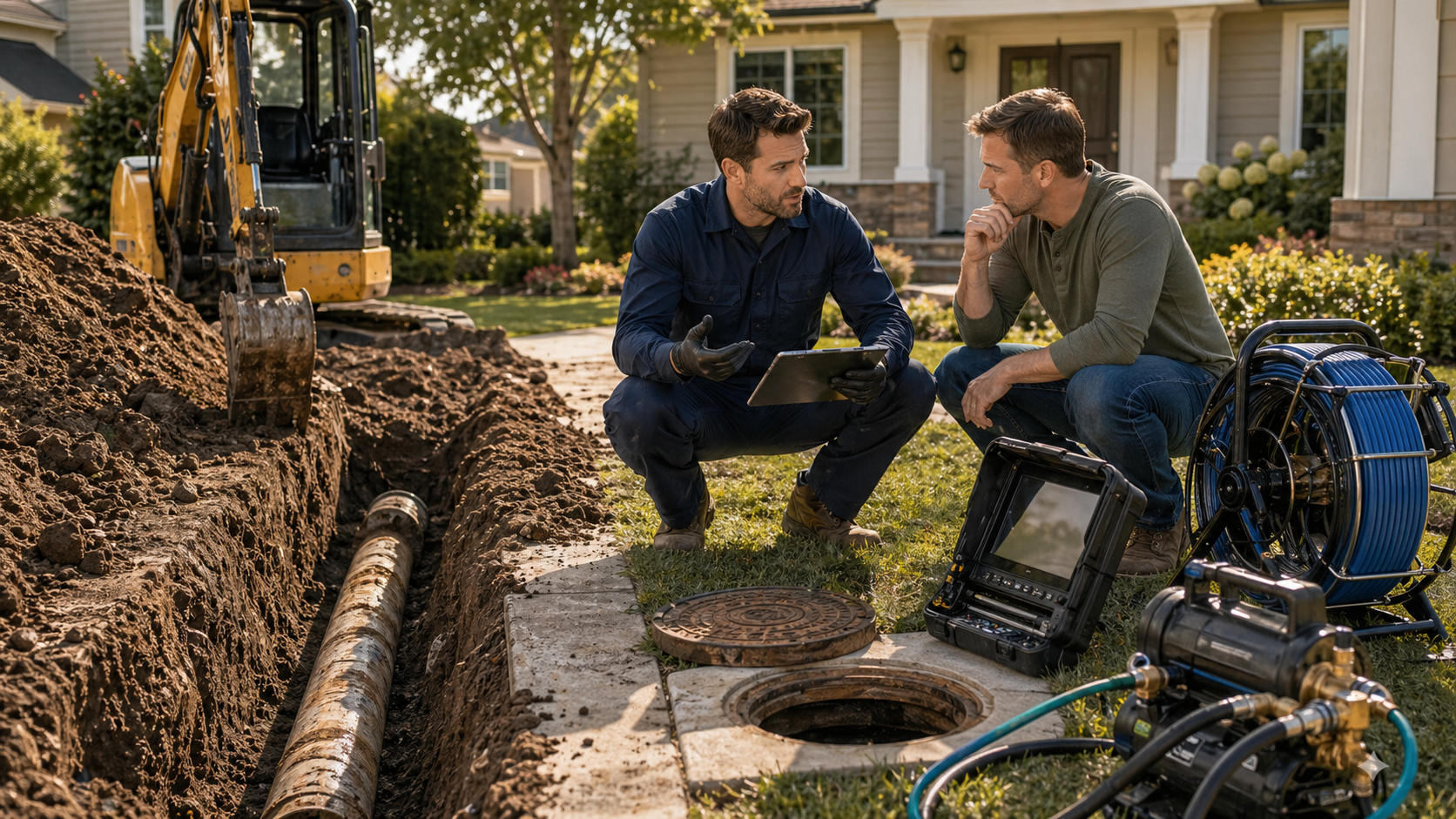
Every trenchless sewer line repair starts the same way: jetting the line clean, then running the camera to assess the pipe condition. The camera footage determines three things - whether trenchless is viable at all, which method fits lining or bursting, and what section of the line needs treatment.
If the pipe qualifies for lining: The existing pipe is intact enough to serve as a host. A resin-saturated liner is inserted through the cleanout, positioned inside the damaged section, inflated against the pipe walls, and cured in place. The result is a jointless structural tube bonded to the inside of the old pipe - sealing every crack, joint gap, and root entry point it covers. No excavation. No surface disturbance.
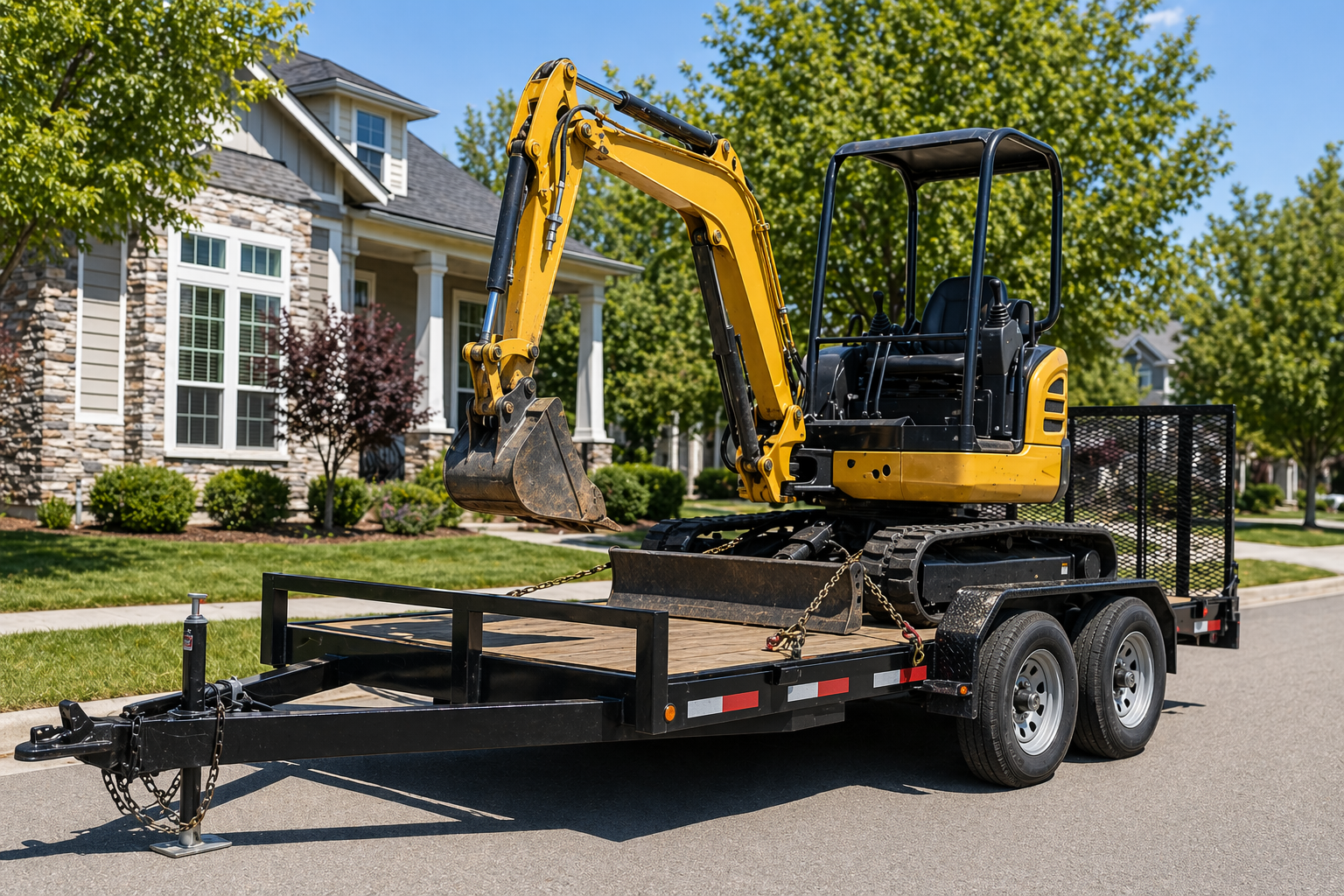
If the pipe qualifies for bursting: The pipe needs full replacement, not internal rehabilitation. Access pits are dug at each end of the run. A pulling cable is threaded through the old pipe. A bursting head - attached to new HDPE pipe - is pulled through, fracturing the old pipe outward into the surrounding soil while the new pipe follows into the cleared path. Two small pits. No trench between them. New pipe from end to end.
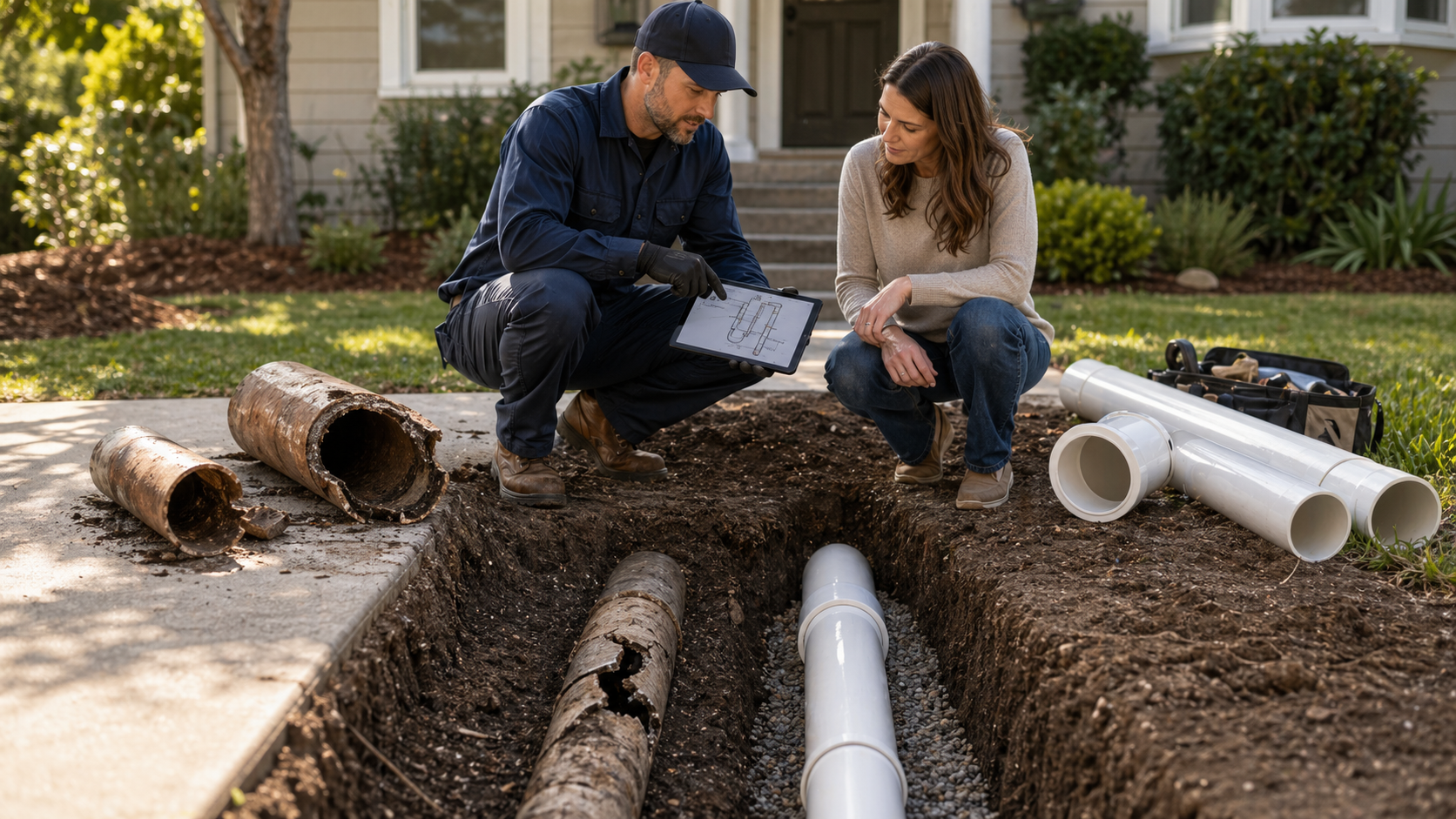
If the pipe qualifies for neither: The camera shows conditions that prevent both methods - full collapse, severe deformation, sharp bends, or obstructions. Mountain West explains what the camera found, why trenchless is not viable, and what conventional method fits. The crew handles excavation and replacement under the same license without referring you to a different company.